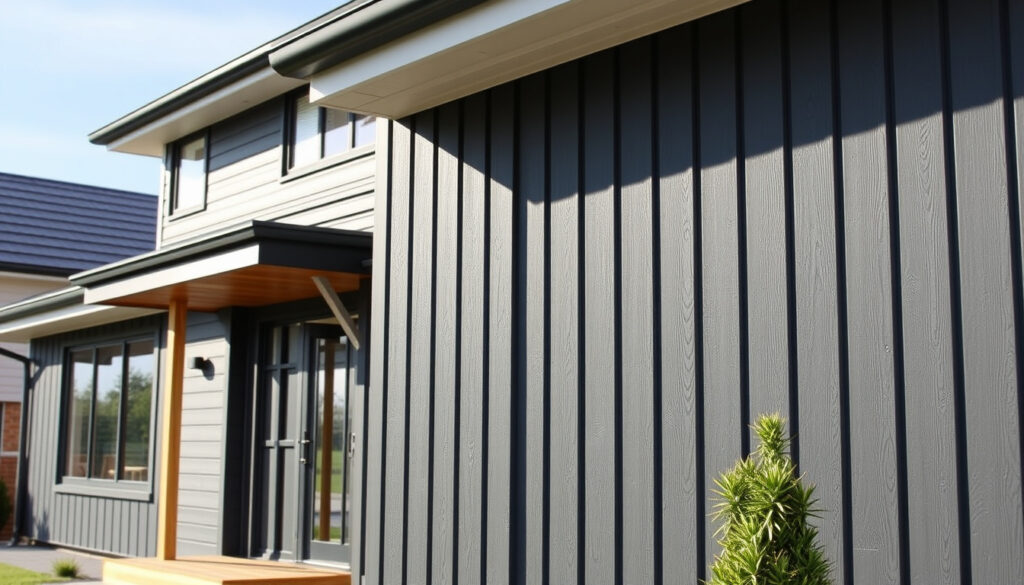
James Hardie Linea Weatherboard: Specs, Install & Reviews
Linea Weatherboard is James Hardie’s fibre cement answer to timber’s maintenance headaches—16mm thick, 4200mm long, and engineered to survive New Zealand’s harsh coastal conditions without the rot, warp, or endless repainting cycles. Most articles repeat the marketing copy; this one focuses on the specs, installation details, and the compliance pathway that makes it specifiable on the job site.
Material: fibre cement · Dimensions: 4200 × 180 × 16mm · Thickness: 16mm · Usage: external or internal · Key Feature: low maintenance
Quick snapshot
- Fibre cement composition with 16mm thickness (James Hardie NZ Official)
- 25-year product warranty backed by manufacturer (James Hardie NZ Official)
- Non-combustible, achieves up to 60-minute fire resistance when specified (James Hardie NZ Official)
- Exact pricing per square metre varies by region and supplier
- Independent user reviews and reported problem frequency remain largely undocumented
- Long-term field performance data beyond warranty claims not publicly available
- Installation Guide last updated August 2024 (Scribd latest guide)
- CodeMark certification remains current for buildings up to 25m height (Scribd latest guide)
- CodeMark update expected as NZBC clause amendments take effect
- Growing adoption in multi-storey residential as cavity fix engineering clarifies
These specifications form the baseline for comparing Linea against other weatherboard options in New Zealand and Australian contexts.
| Specification | Value |
|---|---|
| Material | fibre cement |
| Standard Size | 4200 × 180 × 16mm |
| Coverage | 180mm |
| Durability | withstands harsh climate |
| Installation | provides wall bracing |
| Warranty | 25 years |
| Fire Resistance | up to 60 minutes |
“Made to withstand our harsh and unpredictable climate, Linea™ Weatherboard is both tough and beautiful.”
— James Hardie NZ product description
Is James Hardie Linea Weatherboard Good?
The short answer for most homeowners and builders in Australia and New Zealand is yes—but the qualification matters. Linea Weatherboard delivers on the core promise of fibre cement: it doesn’t rot, swell, or require repainting every few years the way timber weatherboards do.
Durability and Maintenance
James Hardie engineered Linea Weatherboard specifically for harsh environments, including coastal conditions where salt spray tests other cladding materials (James Hardie NZ Official). The board is resistant to fire, rot, and moisture damage—three of the main failure modes that plague traditional timber cladding in the Antipodes.
Bracing systems have been independently tested by SCION, with results showing wind resistance of 75–130 BU’s/m and earthquake resistance of 67–101 BU’s/m (Productspec Technical Spec PDF). These figures matter for New Zealand’s seismic and wind zones, particularly in areas classified as Very High wind zones under NZBC.
The 25-year warranty isn’t marketing—it’s backed by a manufacturer with decades of fibre cement expertise and compliance with both CodeMark and BRANZ Appraisal. For homeowners tired of repainting or replacing rotted timber, Linea eliminates that maintenance cycle entirely.
Real-World Usage Examples
The product has gained traction with renovation specialists, including Three Birds Renovations, which has featured Linea Weatherboard in exterior transformations. Trade sellers across Australia and New Zealand stock the product specifically because builders request it for projects ranging from single-storey extensions to multi-storey apartments.
The durability, low maintenance and design flexibility set this product apart from its weatherboard alternatives, according to James Hardie’s own positioning (James Hardie NZ Official).
“Linea™ Weatherboards are the weatherboard that weathers well.”
— James Hardie BIM documentation
What is James Hardie Linea?
Linea Weatherboard is James Hardie’s premium fibre cement weatherboard product designed for both residential and commercial applications. It occupies a specific niche: it delivers the classic horizontal lap lines of traditional weatherboard while leveraging fibre cement’s dimensional stability and fire resistance.
Key Features
The board comes pre-primed, ready for paint application and suitable for dark colour schemes—a consideration that matters in New Zealand and Australian design contexts where dark exterior claddings have grown popular. The tongue and groove short ends enable clean butt joins off-stud, reducing the need for structural support at every joint (Plaster Wholesalers Australia).
Linea Weatherboard is classified as lightweight cladding and non-combustible, which influences its suitability for bushfire-prone areas in Australia and specific compliance requirements under NZBC E2/VM2 (James Hardie NZ Official).
The non-combustible classification means Linea can be used in applications where fire-rated cladding is required—a growing concern as Australian state governments tighten bushfire building requirements and New Zealand updates its compliance pathways.
Dimensions and Variants
Three verified dimensions define the Linea range: 4200mm length, 16mm thickness, and two width options—150mm and 180mm (James Hardie NZ Official). The effective cover for the 150mm width is approximately 40mm, requiring roughly 25 planks per metre of wall height (James Hardie NZ Direct Fix Spec PDF).
Direct fix installation is suitable for all wind zones up to Very High (VH) under NZBC, while cavity-fixed applications can reach up to 25m building height with inter-storey drift span/180 maximum and ULS wind pressures not exceeding 3.2 kPa (NZ Building Gov Codehub). The implication is that most residential projects in New Zealand can use direct fix without engineering input, but multi-storey projects require the cavity route with compliance documentation.
What is Linea Weatherboard Made Of?
Linea Weatherboard is manufactured from fibre cement—a composite of cement, sand, and cellulose fibres. The cellulose reinforcement provides tensile strength while the cement matrix delivers durability and fire resistance.
Composition Details
The exact formulation is proprietary to James Hardie, but the resulting product resists expanding, contracting, and warping even in harsh Australian climate conditions (Plaster Wholesalers Australia). This dimensional stability distinguishes fibre cement from timber, which swells with moisture and shrinks when dry.
GreenTag, CodeMark, and BRANZ Appraisal certifications confirm the product meets environmental standards and building code requirements for New Zealand applications (James Hardie NZ Official).
Benefits of Fibre Cement
The material properties translate to practical advantages: no rotting if water penetrates behind the cladding, no warping under temperature stress, and no combustible material that could feed a structure fire. Compared to vinyl siding, fibre cement offers superior durability and fire resistance, though at a higher material cost. What this means for specifiers is that Linea earns its price premium through reduced lifecycle costs rather than initial savings.
What Goes Under James Hardie Linea Cladding?
Proper substrate preparation determines whether Linea Weatherboard performs as specified. The installation system requires either direct fix or cavity fix approaches, each with distinct substrate requirements.
Preparation Requirements
Structural bracing must be in place before Linea boards are fixed. The installation requires Hardie PVC Starter Strip fixed 10–20mm up from the bottom weatherboard at 600mm centres (Linea Weatherboard Installation Guide Scribd). This starter strip establishes the first board’s position and provides a drainage plane.
Minimum insulation R-values vary by climate zone: Zone 1–2 requires R2.0, while Zone 3 requires R2.2 (Productspec Technical Spec PDF). These values ensure the wall assembly meets current energy efficiency requirements under the building code.
Sealing Practices
Sealing under weatherboards is required in specific conditions, particularly where the bottom edge meets the slab or where boards terminate at windows and doors. The tongue and groove short ends require sealant applied to the front of the tongue before joining (James Hardie YouTube Installation Video).
For external corners, installers mitre boards at 45 degrees with a 4–10 degree compound cut, prime the cut ends, and join with sealant (Linea Weatherboard Installation Guide Scribd). Face nailing to corner studs should be positioned 60mm back from the board end. The catch for architects is that this corner detail requires careful sequencing—priming before assembly, not after—and site supervision to ensure compliance.
Linea Weatherboard is not suitable for curved wall applications (James Hardie NZ Direct Fix Spec PDF). Projects with curved facades require alternative cladding solutions—factor this into design decisions early to avoid costly late-stage substitutions.
What Are the Downsides of Hardie Board?
No building material is without trade-offs, and Linea Weatherboard has constraints that matter depending on project scope, budget, and location.
Common Problems
Independent user reviews and reported problem frequency remain largely undocumented in publicly available sources. The manufacturer and trade sellers highlight durability and low maintenance, but this self-reported data may not capture installation failures or long-term field performance issues (James Hardie NZ Official).
The lack of independent user review data is a genuine gap—homeowners considering Linea Weatherboard have limited community-sourced feedback compared to products with longer market histories in Australia and New Zealand. The pattern suggests that product performance claims come predominantly from the manufacturer rather than third-party validation.
Comparison to Alternatives
Versus timber weatherboard, Linea costs more upfront but saves on maintenance cycles. Versus vinyl siding, fibre cement costs significantly more but offers superior fire resistance and durability in harsh conditions. The price difference versus brick veneer or rockcote is smaller but depends on finishes specified. The implication is that Linea occupies the mid-to-premium niche for homeowners who want timber aesthetics without timber’s upkeep burden.
Upsides
- 25-year warranty backed by established manufacturer
- Non-combustible and fire resistant up to 60 minutes
- Resistant to rot, moisture, and warping
- Pre-primed for fast paint application, accepts dark colours
- CodeMark and BRANZ certified for NZBC compliance
- Provides structural wall bracing when installed per specification
- Tested bracing up to 130 BU’s/m for wind resistance
Downsides
- Higher upfront cost than timber or vinyl alternatives
- No curved wall applications permitted
- Limited independent user review data available
- Pricing per m² varies significantly by region and supplier
- Requires specific substrate preparation and insulation values
- Installation requires certified fixing methods per wind zone
How to Install James Hardie Linea Weatherboard
Step-by-step installation follows a consistent sequence regardless of fix method. The procedure below synthesises official James Hardie documentation for both Australian and New Zealand contexts.
Two distinct methods exist: direct fix (boards fixed straight to framing or sheathing) and cavity fix (boards fixed to battens creating a drainage cavity). Direct fix suits all wind zones up to Very High; cavity fix enables higher building applications up to 25m.
- Step 1: Prepare Substrate and Starter Strip
Fix Hardie PVC Starter Strip 10–20mm up from the slab edge, spacing fixings at 600mm centres (Linea Weatherboard Installation Guide Scribd). Ensure substrate is level and structural bracing is complete. Install any required insulation to meet Zone 1–2 (R2.0) or Zone 3 (R2.2) requirements.
- Step 2: Position First Board
Position the first board with 20–50mm overhang using the pre-marked slab edge as reference (Dahlsens Installation Guide Aug21). The board must be level—this establishes the entire wall’s appearance.
- Step 3: Fix Boards with 30mm Lap
Install subsequent boards with 30mm nominal lap over the board below, fixing to every stud (James Hardie AU Installation Guide PDF). Concealed fixing uses 25mm brad nails; face fixing is acceptable where required by wind zone or engineering specification.
- Step 4: Handle Corners and Joints
For external corners, mitre boards at 45 degrees with 4–10 degree compound cut, prime all cut ends, and join with sealant (Linea Weatherboard Installation Guide Scribd). Face nail to corner studs 60mm back from board end. External slimline boxed corners are fixed with 40mm nails at 400mm vertical centres.
For tongue and groove short ends joining off-stud, apply sealant to the front of the tongue before engaging the joint (James Hardie YouTube Installation Video).
- Step 5: Complete Finishing
Inspect all joints for consistent sealant application. Allow sealant to cure per manufacturer specifications before painting. The pre-primed surface accepts standard exterior paints; darker colours are explicitly supported unlike some competing fibre cement products.
James Hardie Linea Weatherboard Specifications
Five key specifications define Linea Weatherboard’s performance envelope and determine suitability for specific project requirements across Australia and New Zealand.
| Specification | Value | Source |
|---|---|---|
| Thickness | 16mm | James Hardie NZ Official |
| Length | 4200mm | James Hardie NZ Official |
| Width Options | 150mm, 180mm | James Hardie NZ Official |
| Board Lap | 30mm nominal | James Hardie AU Installation Guide PDF |
| Planks per Metre (150mm) | ~25 | James Hardie NZ Direct Fix Spec PDF |
| Starter Strip Offset | 10–20mm from bottom | Linea Weatherboard Installation Guide Scribd |
| Corner Nail Centres | 400mm vertical | Linea Weatherboard Installation Guide Scribd |
| Warranty | 25 years | James Hardie NZ Official |
| Max Fire Resistance | 60 minutes | James Hardie NZ Official |
| Max Building Height (Cavity) | 25m | NZ Building Gov Codehub |
| Wind Zones (Direct Fix) | All zones to Very High | James Hardie NZ Direct Fix Spec PDF |
| Certifications | CodeMark, BRANZ Appraisal, GreenTag | James Hardie NZ Official |
Related reading: Pink Batts Wall Insulation · Products Offered by Bunnings Warehouse Christchurch Airport
Frequently asked questions
What are James Hardie Linea Weatherboard specifications?
Linea Weatherboard measures 4200mm in length, 16mm thick, and available in 150mm or 180mm widths. The board is fibre cement with CodeMark and BRANZ Appraisal certifications, 25-year warranty, and up to 60-minute fire resistance rating when installed per the Fire and Acoustic Design Manual.
What is the price of James Hardie Linea Weatherboard per m²?
Exact pricing per square metre is not publicly standardised—it varies by region, supplier, and order volume in both Australia and New Zealand. Contact local trade suppliers or request a quote from James Hardie directly for project-specific pricing.
What is James Hardie Linea Weatherboard thickness?
The board is 16mm thick, verified across multiple official James Hardie sources and technical specification documents.
How do you install James Hardie Linea Weatherboard?
Installation follows a five-step process: prepare substrate and install starter strip 10–20mm up from slab at 600mm centres; position first board with 20–50mm overhang; fix subsequent boards with 30mm lap to every stud using concealed or face fixing; handle corners with 45-degree mitres, priming ends and sealing joints; complete finishing with inspection and painting. The installation guide was most recently updated in August 2024.
What are common Linea weatherboard problems?
Publicly documented problem frequency is limited—the manufacturer and trade sources emphasise durability and low maintenance. Common installation issues that could cause problems include insufficient starter strip spacing, inadequate sealing at joints, and failure to fix to every stud. The product is not suitable for curved walls.
Is James Hardie Linea Weatherboard suitable for internal use?
Yes, Linea Weatherboard is rated for both external and internal applications. Internal uses include feature walls and accent surfaces where the weatherboard aesthetic is desired within the building envelope.
What is the difference between Linea 180mm and 150mm?
The primary difference is coverage width: 180mm provides wider board coverage, while 150mm offers a narrower profile. Both variants share the same 16mm thickness and 4200mm length. The 150mm width requires approximately 25 planks per metre of wall height at standard 30mm lap.
For homeowners in Australia and New Zealand weighing cladding options, the choice between Linea Weatherboard and alternatives comes down to budget, maintenance expectations, and compliance requirements. Timber weatherboards cost less upfront but demand ongoing repainting and carry rot risk in damp climates. Vinyl offers a middle price point but lacks fibre cement’s fire resistance credentials. Linea’s 25-year warranty and CodeMark certification provide the compliance pathway that specifiers and council consent officers require—and that’s often the deciding factor for renovation projects requiring building consent.
More related posts
 Five Nights at Freddy’s Age Rating & True Story Guide
 How Long Does SHEIN Take to Ship to NZ – Times, Costs and Couriers
 Flight Attendant Course NZ: Training, Salary & Requirements 2025
 Kindle Paperwhite 12th Gen Review: Worth the Upgrade
 Lottery Winner Financial Ruin: Why They Go Broke Fast
 Best Stovetop Coffee Maker: Reviews & Buying Guide
 Maggie Baugh Keith Urban: Dating Rumors and Tour Split