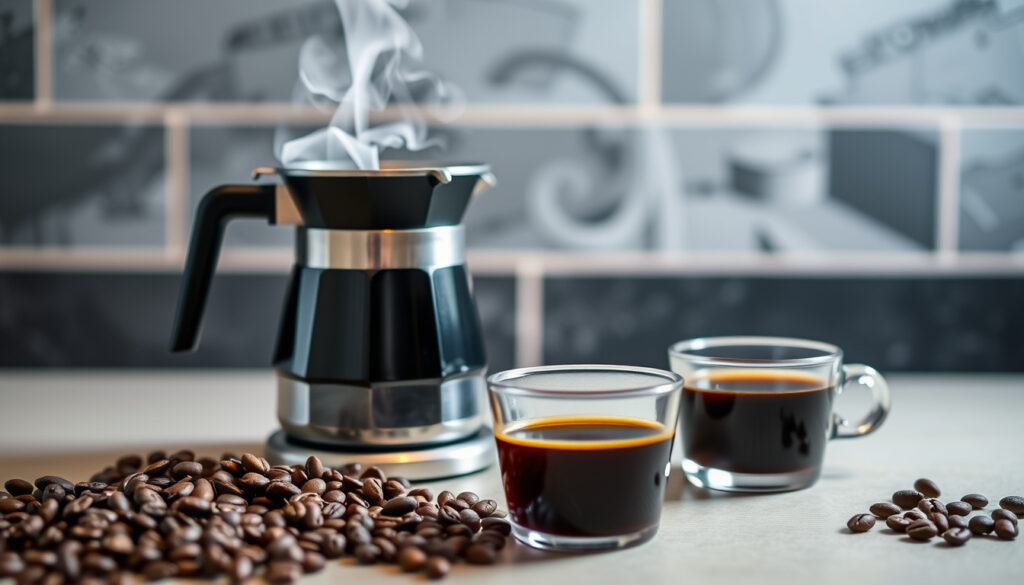
Best Stovetop Coffee Maker: Reviews & Buying Guide
Anyone who’s watched a stovetop coffee maker gurgle its way to a finished brew knows the ritual has a charm all its own, and that unassuming pot—most often called a moka pot—has been a fixture in kitchens since 1933. In an era of £3,000 espresso machines, the stove top coffee maker offers a compelling alternative: rich, concentrated coffee at a fraction of the cost, and this guide will help you choose the best model and brew without bitterness.
Invented: 1933 ·
Common name: Moka pot ·
Best-selling: Bialetti Moka Express ·
Price range: £15–£150
Quick snapshot
- Moka pot invented by Alfonso Bialetti in 1933 (Bialetti Customer Support)
- Stovetop coffee makers are not espresso machines (Blue Bottle Coffee)
- Whether all aluminum moka pots are safe for induction stoves without an adapter (Joybuy Germany)
- 1933: First moka pot invented by Alfonso Bialetti (Bialetti Customer Support)
- 2020s: Induction-compatible models introduced (Arekore Shop)
- More brands launching stainless-steel induction models
- Growing demand for adapter-free compatibility
Five key facts about stovetop coffee makers, one pattern: the technology has barely changed in 90 years, but the materials and heat-source compatibility have evolved significantly.
| Attribute | Detail |
|---|---|
| Invented | 1933 |
| Material | Aluminum or Stainless Steel |
| Brewing Method | Moka |
| Popular Brands | Bialetti, Gnali & Zani, Cuisinox |
| Heat Sources | Gas, electric, ceramic, induction (select models) |
| Capacity Range | 1 to 18 cups |
| Price Range | £15–£150 |
| Coffee Grind | Medium-fine, not tamped |
| Typical Brew Time | 3–5 minutes |
| Best-selling Model | Bialetti Moka Express |
Do stove top coffee makers make good coffee?
The short answer: yes, and many coffee enthusiasts prefer moka pot coffee over drip. The longer answer depends on what you define as “good.” A stovetop coffee maker produces a strong, rich brew with a concentrated body and a distinctive crema-like foam. It is not true espresso—espresso requires 9 bars of pressure, while a moka pot operates at roughly 1–2 bars—but it lands closer to espresso than drip coffee does on both strength and mouthfeel.
What makes a moka pot coffee different from espresso?
- Pressure: Moka pots use steam pressure (~1–2 bar), not a pump (9 bar). Source: Blue Bottle Coffee (specialty roaster & brew authority)
- Grind: Medium-fine, coarser than espresso. Source: Methodical Coffee (specialty coffee retailer)
- Yield: A moka pot produces about 40–50 ml per “cup” (a demitasse serving), not a full espresso shot volume.
What this means: moka pot coffee is not a substitute for a latte base, but it delivers a bolder, more satisfying cup than most drip machines. If you drink black coffee, the stovetop method is a noticeable upgrade.
Is stovetop coffee as good as drip coffee?
Drip coffee is clean, mild, and high-volume. Moka pot coffee is intense, slightly syrupy, and low-volume. They serve different moments. The moka pot wins when you want a small, strong cup that wakes you up fast. The trade-off: you get one or two servings at a time, not a full carafe.
Moka pot coffee is stronger and more flavorful than drip, but it yields small servings and requires active attention. A drip machine wins on convenience; a moka pot wins on taste per ounce.
The implication: if you prioritise flavour over volume, the moka pot is a clear win.
What are stove top coffee makers called?
Stovetop coffee makers are most commonly called moka pots—a name that traces back to the port of Mocha in Yemen, a historic hub for coffee trade. The design was popularized by Bialetti, an Italian brand that turned the octagonal aluminum pot into a global icon.
Why is it called a moka pot?
- The name “Moka” references Mocha, Yemen, a major coffee port. Source: Joybuy Germany (coffee equipment retailer)
- Bialetti trademarked the name “Moka Express” in the 1930s.
Other names for stovetop coffee makers
- Moka pot — universal term
- Stovetop espresso maker — marketing term, not technically accurate
- Bialetti pot — brand-generic usage in Italy and beyond
- Macchinetta — Italian slang, literally “little machine”
The pattern: the industry has settled on “moka pot” as the standard term, but e-commerce listings often use “stovetop espresso maker” to help shoppers find it. Knowing the right name helps you search for replacement parts and accessories.
Which is the best stovetop coffee maker?
Three models dominate the market, each suited to a different stove type and budget. The table below shows how they compare.
Three contenders, one pattern: material dictates heat-source compatibility, and that should be your first filter.
| Model | Material | Heat Sources | Price (approx) | Best For |
|---|---|---|---|---|
| Bialetti Moka Express | Aluminum | Gas, electric, ceramic | £25–£40 | Classic design, best value |
| Bialetti Venus | Stainless steel | All including induction | £40–£60 | Induction stoves, durability |
| Bialetti Moka Induction | Stainless steel + aluminum core | All including induction | £50–£70 | Induction, heat retention |
| Generic budget moka pot | Aluminum | Gas, electric, ceramic | £15–£20 | Entry-level, occasional use |
Best overall: Bialetti Moka Express
The Moka Express is the best-selling stovetop coffee maker in the world, and for good reason. Its octagonal aluminum body distributes heat evenly, and the design has remained unchanged for decades. It works on gas, electric, and ceramic hobs, but not on induction unless you use an adapter plate. Source: Bialetti Customer Support (official manufacturer guidance).
Best budget: Stovetop coffee maker under £20
Generic aluminum moka pots from brands like Gnali & Zani cost between £15 and £20 and perform similarly to the Bialetti for the first year. The main difference is build quality: cheaper pots may have thinner aluminum that warps over time. If you’re testing the waters, a budget pot is a low-risk start.
Best induction-compatible: Bialetti Venus
The Bialetti Venus is made entirely of stainless steel, which makes it ferromagnetic and therefore compatible with induction hobs. According to Joybuy Germany (coffee equipment retailer), the Venus is the go-to recommendation for induction households. The Moka Induction model goes a step further with a stainless exterior and aluminum interior for better heat retention, as detailed by Arekore Shop (Italian coffee equipment specialist).
If you have an induction hob, skip the classic Moka Express and buy a Venus or Moka Induction. An adapter plate adds thermal lag and reduces control—a native induction model is worth the extra £20.
The catch: even the best budget model won’t match the longevity of a Bialetti, so factor in replacement costs.
TL;DR: For gas/electric hobs, the Bialetti Moka Express at £30 is the smartest buy. For induction, the Venus adds £20–£30 but eliminates adapter hassle. Budget pots work but may warp over time.
How to make coffee with a stove top coffee maker?
Brewing great coffee with a moka pot is simple once you understand the mechanics. The method below is adapted from multiple specialty-coffee sources and removes the guesswork.
Step-by-step guide to using a moka pot
- Fill the bottom chamber with water up to the safety valve. According to Blue Bottle Coffee (specialty roaster & brew authority), that’s about 345 g for a standard 6-cup pot.
- Insert the filter basket and fill it with medium-fine ground coffee. Do not tamp. Methodical Coffee (specialty coffee retailer) emphasizes that tamping creates too much resistance.
- Screw the top chamber on tightly. Blue Bottle Coffee says a loose seal lets steam escape and ruins pressure.
- Place on low to medium heat. High heat burns the coffee before it extracts. Multiple guides, including Blue Bottle Coffee, recommend medium-low for a gas stove.
- Keep the lid open while brewing. Latteholic (coffee blog) notes that an open lid lets you see the flow and remove it at the right moment.
- Remove from heat when you hear a gurgling or hissing sound. That’s the sign that most of the water has passed through. Running the bottom chamber under cold water stops extraction immediately—a trick recommended by Methodical Coffee.
Common mistakes to avoid
- Using boiling water in the chamber — some guides recommend pre-boiled water to reduce heat exposure, but starting with room-temperature water and using low heat gives more control. Source: Methodical Coffee (specialty coffee retailer)
- Overfilling past the valve — water above the safety valve can cause sputtering and bitter extraction.
- Cranking the heat to speed it up — this is the #1 cause of bitter, metallic-tasting moka pot coffee.
A properly brewed moka pot produces coffee that rivals a cafetiere or pour-over in flavor complexity. A rushed, overheated brew tastes like burned rubber. The difference is 90 seconds of patience.
The pattern: low heat and timely removal are the two non-negotiable steps for a clean cup.
TL;DR: Fill water to the valve, use medium-fine grind without tamping, brew on low heat, and remove at the first gurgle. Cold water stops extraction instantly.
What are the disadvantages of using a stove top coffee maker?
Stovetop coffee makers have real trade-offs. Knowing them before you buy saves frustration.
Cleaning and maintenance
- Moka pots require hand washing. Soap can strip the aluminum seasoning, and dishwashers cause corrosion. Source: Methodical Coffee (specialty coffee retailer)
- Aluminum models can react with acidic coffee, leaving a metallic taste if not properly seasoned.
- The rubber gasket needs replacement every 6–12 months.
Risk of bitter coffee if overheated
This is the most common complaint. Because the brew chamber is sealed, pressure builds until the water pushes through. If the heat is too high, the coffee overheats and extracts bitter compounds. Blue Bottle Coffee (specialty roaster & brew authority) stresses that low heat and removing the pot at the first gurgle are non-negotiable for a clean cup.
Not true espresso
No matter how good a moka pot brew is, it is not espresso. The crema is cosmetic, not the result of emulsified oils under pressure. If you need milk-based drinks with a true espresso base, a stovetop maker will not satisfy you. A used espresso machine or an Aeropress may be a better fit.
Upsides
- Affordable — £15 to £70 for a quality pot that lasts years
- No electricity needed — works on any stove (with model caveats)
- Small footprint — fits in any kitchen
- Strong, concentrated coffee in under 5 minutes
Downsides
- Not induction-compatible unless you buy a stainless model
- Requires hand washing and gasket replacement
- Easy to overheat and make bitter coffee
- Small servings — not for a crowd
The implication: if you value convenience above all, a moka pot may frustrate; if you enjoy the ritual and want strong coffee, it’s a rewarding choice.
Clarity: what we know and what remains open
Confirmed facts
- The moka pot was invented by Alfonso Bialetti in 1933. Source: Bialetti Customer Support (official manufacturer guidance)
- Stovetop coffee makers are not espresso machines — they operate at much lower pressure. Source: Blue Bottle Coffee (specialty roaster & brew authority)
- Classic aluminum moka pots are not suitable for induction hobs on their own because aluminum is not ferromagnetic. Source: Arekore Shop (Italian coffee equipment specialist)
What remains unclear
- Whether all aluminum moka pots can be safely used on induction stoves with a universal adapter plate — results vary by adapter quality and hob sensitivity. Source: Joybuy Germany (coffee equipment retailer)
- How long a generic budget moka pot lasts compared to a Bialetti — longitudinal data is scarce.
- Whether Bialetti’s Venus and Moka Induction models are truly necessary for induction stoves, or if an adapter plate works just as well. Source: Arekore Shop (Italian coffee equipment specialist)
What experts say about stovetop coffee makers
“The Bialetti Moka Express is the best moka pot we tested. It’s affordable, durable, and produces consistently good coffee.”
— Serious Eats (editorial review site)
“Remove the pot from heat as soon as you hear a gurgling sound. That’s the signal that the extraction is done, and leaving it on the burner will turn your coffee bitter.”
— Blue Bottle Coffee (specialty roaster & brew authority)
“Running the bottom chamber under cold water is the fastest way to stop extraction and avoid over-extraction.”
— Methodical Coffee (specialty coffee retailer)
The common thread: all three experts agree that heat control is the critical variable.
Summary
The stovetop coffee maker is not a compromise—it’s a deliberate choice for anyone who values strong, concentrated coffee without the expense of a full espresso setup. The catch is that you have to match the model to your stove. For gas, electric, or ceramic hobs, the classic Bialetti Moka Express at £30 is the smartest buy in coffee. For induction households, the Venus or Moka Induction adds £20–£30 but removes the need for a clumsy adapter plate. For the UK buyer in 2026, the choice is clear: if you drink black coffee and want café quality at home for under £50, buy a moka pot. If you need milk drinks or fuss-free convenience, keep looking.
hometechvista.com, youtube.com, methodicalcoffee.com, latteholic.com, youtube.com, youtube.com, youtube.com, chronic-coffee.com
Frequently asked questions
What is the best coffee grind for a moka pot?
Medium-fine, similar to table salt. Finer than drip coffee but coarser than espresso. Do not tamp the coffee into the basket. Source: Methodical Coffee (specialty coffee retailer)
How to clean a moka pot?
Rinse with warm water after each use. Do not use soap on aluminum models—it removes the protective seasoning. Replace the silicone gasket every 6–12 months. Source: Methodical Coffee (specialty coffee retailer)
Can you use a moka pot on an induction stove?
Only if the pot has a ferromagnetic base. The classic Bialetti Moka Express (aluminum) does not work on induction. The Bialetti Venus (stainless steel) and Moka Induction (stainless + aluminum core) are compatible. Source: Bialetti Customer Support (official manufacturer guidance)
How many cups does a moka pot make?
A “cup” in moka pot terms is a demitasse serving of about 40–50 ml. A 6-cup pot produces roughly 240–300 ml of brewed coffee, or about 2 regular mugs.
Is a moka pot the same as an espresso machine?
No. A moka pot uses steam pressure (1–2 bar) while an espresso machine uses a pump (9 bar). The coffee is strong and concentrated but not true espresso. Source: Blue Bottle Coffee (specialty roaster & brew authority)
How long does a stovetop coffee maker last?
A well-maintained aluminum moka pot can last 10–20 years. The rubber gasket and filter plate are consumables and need occasional replacement. Stainless steel models last even longer.
Can I use a stovetop coffee maker on a gas stove?
Yes. The Bialetti Moka Express and most aluminum models are designed for gas, electric, and ceramic hobs. Keep the flame low and centered to avoid burning the handle. Source: Bialetti Customer Support (official manufacturer guidance)
More related posts
 Auckland Airport Park and Ride Rates, Options & Savings
 The Breakfast Club Pt Chev: Menu, Reviews, and What to Order
 KFC Bucket Prices NZ: Latest on Jumbo, XL Buckets & Deals
 Five Nights at Freddy’s Age Rating & True Story Guide
 Ms Rachel Toys in New Zealand: Where to Buy, Prices & More
 12 Days of Christmas: Song Meaning, Gifts, and Dates Explained
 Samsung Galaxy A51 to Buy: Price, Specs & Worth in 2025
 78 Fahrenheit to Celsius: Warm or Cool