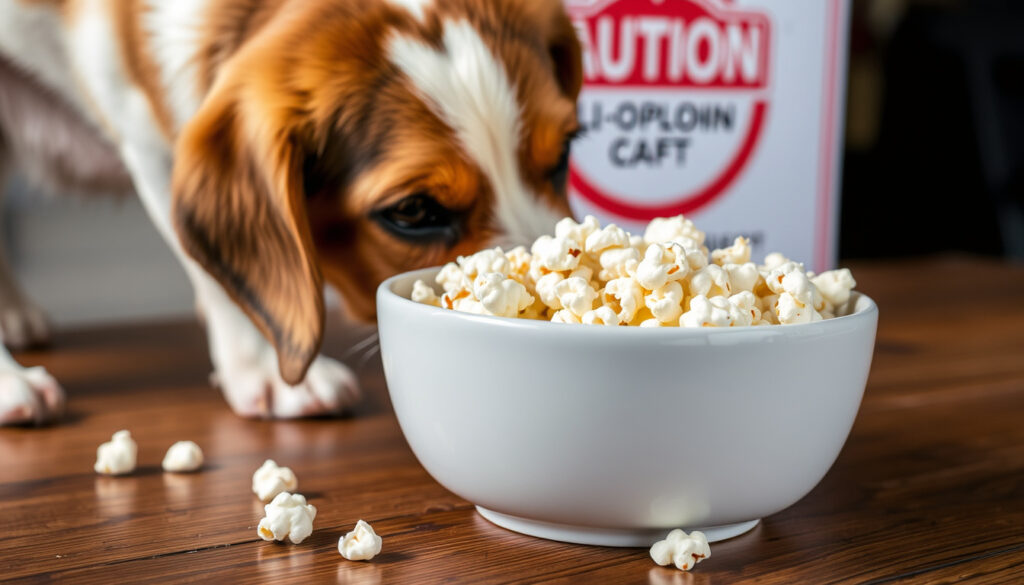
Can Dogs Eat Popcorn? Safety and Risks Explained
A movie night snack is only complete with a bowl of popcorn, and your dog probably eyes it as much as you do, but before you toss a piece their way, it’s worth knowing what’s safe and what’s not. Plain, air-popped popcorn is generally fine in small amounts, but the butter, salt, and unpopped kernels hiding in that bowl can cause real problems.
Safe condition: Plain, air-popped, unseasoned popcorn is safe for dogs in small amounts ·
Dangerous toppings: Butter, salt, oil, cheese, and artificial flavorings are unsafe ·
Choking hazard: Unpopped kernels and hard hulls can cause choking or intestinal blockage ·
Feeding frequency: Only an occasional treat, not part of daily diet
Quick snapshot
- Plain air-popped popcorn is safe in small amounts (American Kennel Club (dog health authority))
- Butter and salt are harmful (PetMD (veterinary resource))
- Unpopped kernels pose choking and blockage risk (Hill’s Pet (pet nutrition experts))
- Whether popcorn is a reliable laxative for dogs – fiber may cause soft stools but evidence is anecdotal (Rover (pet care platform))
- Symptoms from unsafe popcorn (e.g., vomiting, diarrhea) can appear within 30 minutes to 4 hours (PetMD (veterinary resource))
- Blockage from kernels may take 12–24 hours to become apparent (American Kennel Club (dog health authority))
- If your dog eats unsafe popcorn, assess amount and symptoms, then contact your veterinarian (Purina (pet nutrition experts))
- For safe treats, prepare air-popped popcorn with no toppings and remove all unpopped kernels (Hill’s Pet (pet nutrition experts))
Four key facts about popcorn safety at a glance – notice the pattern: the preparation method determines whether this snack is friend or foe.
| Factor | Details |
|---|---|
| Safe type | Plain, air-popped, unseasoned |
| Unsafe types | Buttered, salted, flavored, microwave bags |
| Choking risk | Unpopped kernels and hard hulls |
| Laxative effect | High fiber can cause loose stools in excess |
Is Popcorn Safe for Dogs?
What makes popcorn safe or unsafe?
- Plain, air-popped popcorn is safe in small quantities (Purina (pet nutrition experts)).
- Toppings like butter and salt are not safe (American Kennel Club (dog health authority)).
- Choking hazard from unpopped kernels and hulls (Hill’s Pet (pet nutrition experts)).
- Popcorn itself is not toxic, but preparation methods can make it harmful (PetMD (veterinary resource)).
The implication: Popcorn is a blank canvas – what you add to it determines whether it’s a harmless treat or a health risk. Without butter and salt, the danger drops dramatically.
Can Popcorn Kill Dogs?
Choking risks
- Unpopped kernels can get stuck in a dog’s teeth and cause choking (American Kennel Club (dog health authority)).
- Hard hulls can lodge in the throat or esophagus (PetMD (veterinary resource)).
Dangers of unpopped kernels
- Kernels can cause intestinal blockage if swallowed whole (Rover (pet care platform)).
- Blockage may require surgical removal (Chewy (pet food retailer)).
Butter and salt toxicity
- Excessive butter can trigger pancreatitis due to high fat content (American Kennel Club (dog health authority)).
- Salt can cause sodium ion poisoning in large quantities – symptoms include vomiting, diarrhea, and lethargy (Purina (pet nutrition experts)).
A few buttered pieces won’t kill a healthy dog, but a whole bowl – especially with kernels – can escalate quickly. The real killer isn’t popcorn itself; it’s the toppings and the unpopped kernels that turn a snack into a hazard.
The trade-off: A moment of shared joy can become a vet visit. Remove the kernels and skip the toppings – that’s the difference between safe and sorry.
Is Popcorn a Laxative for Dogs?
Fiber content in popcorn
- Popcorn contains dietary fiber – about 1 gram per ounce (Rover (pet care platform)).
- Too much fiber can cause loose stools or diarrhea (PetMD (veterinary resource)).
Digestive effects
- Not a reliable laxative – fiber may soften stools but evidence is anecdotal (Rover (pet care platform)).
- Consult a vet for persistent digestive issues instead of relying on popcorn (Purina (pet nutrition experts)).
If your dog has constipation, a few pieces of plain popcorn might help, but it’s a hit-or-miss remedy – and too much will backfire. A vet-recommended stool softener is a safer bet.
The pattern: Popcorn’s fiber is a double-edged sword – a little can help, but a lot will hurt. Keep portions small if you’re testing the laxative theory.
What Toppings Should Dogs Avoid?
Butter
- Butter is high in fat and can trigger pancreatitis (American Kennel Club (dog health authority)).
- Even small amounts can cause vomiting and diarrhea (Chewy (pet food retailer)).
Salt
- Salt can cause sodium ion poisoning – toxic dose is about 2–3g per kg of body weight (PetMD (veterinary resource)).
- Signs: excessive thirst, urination, tremors, seizures (Purina (pet nutrition experts)).
Oil
- Oils add unnecessary fat and calories (Hill’s Pet (pet nutrition experts)).
- Can cause gastrointestinal upset in sensitive dogs (Rover (pet care platform)).
Cheese
- Many dogs are lactose intolerant – cheese can cause digestive upset (Chewy (pet food retailer)).
- Adds fat and calories without nutritional benefit (PetMD (veterinary resource)).
The safest popcorn for dogs is the one you steal from the bowl before anyone adds anything. If you want to share, set aside a few plain, air-popped pieces before seasoning the rest.
The trade-off: Convenience (buying buttered popcorn) vs safety – you can’t have both. Prepping plain popcorn at home gives you control over what goes into your dog’s mouth.
How Much Popcorn Can a Dog Eat?
Portion sizes for small vs large dogs
- Small dogs (under 10 lbs): 1–2 pieces (Purina (pet nutrition experts)).
- Medium dogs (10–50 lbs): 3–5 pieces (Hill’s Pet (pet nutrition experts)).
- Large dogs (50+ lbs): up to 10 pieces (American Kennel Club (dog health authority)).
Frequency
- Occasional treat only – not part of daily diet (Chewy (pet food retailer)).
- Count toward daily calorie intake – 10 pieces of popcorn = about 6 calories (Rover (pet care platform)).
Why this matters: A few pieces once in a while won’t hurt, but making it a daily habit adds empty calories and increases the risk of gastrointestinal upset. Treats should never exceed 10% of daily calories.
Upsides
- Plain popcorn is a low-calorie treat (6 cal per 10 pieces)
- Contains some fiber, which can aid digestion in small amounts
- Can be used as a training reward in tiny portions
Downsides
- Choking hazard from unpopped kernels and hulls
- Toppings (butter, salt, oil) can cause pancreatitis or sodium poisoning
- Easy to overfeed – portion control is hard at a movie night
Confirmed Facts vs. What’s Unclear
Confirmed facts
- Plain air-popped popcorn is safe in small amounts
- Butter and salt are harmful
- Unpopped kernels pose choking and blockage risk
- Popcorn should not replace balanced dog food
What’s unclear
- Whether popcorn is a reliable laxative for dogs – fiber may cause soft stools but evidence is anecdotal (Rover (pet care platform))
Expert Perspectives
“Plain, air-popped popcorn is safe for dogs to eat in small quantities. Buttered popcorn or popcorn with other toppings is not safe for your dog.”
“Completely plain, air-popped popcorn is safe for dogs to eat in small portions. It should be served with no oils, butters, salts, sugars, or other added ingredients.”
“Plain, air-popped popcorn is safe for dogs only in moderation. Dogs should not be given popcorn with added toppings.”
Final Verdict
Popcorn is not a dog-safe food in its typical human form. For dog owners who want to share the movie-night experience, the safe route is clear: air-pop plain popcorn, remove every unpopped kernel, and limit the portion to a handful of pieces. The real danger isn’t the popcorn itself – it’s the butter, salt, and unpopped kernels that turn a harmless treat into a health risk. For the 63 million U.S. households with dogs, the choice is simple: prep a separate dog-safe bowl, or keep the popcorn for yourself.
poppingtons.com, alamocitypopcorn.com, chewy.com, yahoo.com, avma.org, pumpkin.care, facebook.com
For a comprehensive overview of safe popcorn preparation and topping risks, detailed popcorn safety guide provides thorough guidance.
Frequently asked questions
Can dogs eat popcorn if they have diabetes?
Plain popcorn has a low glycemic index but still contains carbohydrates. For diabetic dogs, any treat should be discussed with a vet – the fiber can help regulate blood sugar, but the carbs may spike it. Start with one piece and monitor response.
Can dogs eat popcorn if they are overweight?
Popcorn is low-calorie compared to many treats (6 cal per 10 pieces), but it adds up. For overweight dogs, it’s better to avoid extra treats altogether and stick to veterinary-recommended diet foods.
What are the signs of popcorn poisoning in dogs?
Symptoms from unsafe popcorn include vomiting, diarrhea, lethargy, excessive thirst, tremors, and seizures (from salt poisoning). If you see these, contact your vet immediately.
Can dogs eat popcorn with garlic powder?
No. Garlic is toxic to dogs – it can cause oxidative damage to red blood cells and lead to anemia. Even a small amount of garlic powder on popcorn is dangerous.
How should I prepare popcorn for my dog?
Use an air popper or microwave a plain bag (no oil, no butter). Let it cool, then remove all unpopped kernels and hard hulls. Serve a few pieces as a treat, not a meal.
Related reading
- Air New Zealand Pet Travel 2025 – what to know about flying with your dog
- Is Canola Oil Bad for You? – another “is it safe?” guide in the same style
More related posts
 Manchester United vs Aston Villa Lineups (March 2026)
 How Long Does SHEIN Take to Ship to NZ – Times, Costs and Couriers
 ICC T20 World Cup 2026: Schedule, Winners & Tickets
 Adidas Ultraboost NZ 2025: Price, Models & Where to Buy
 Google TV Streamer 4K Review: Worth the Upgrade
 And Then There Were None: Plot, Killer, Movie & Controversy
 Double Garage Size NZ: Dimensions, Costs & Consent Rules
 Five Nights at Freddy’s Age Rating & True Story Guide