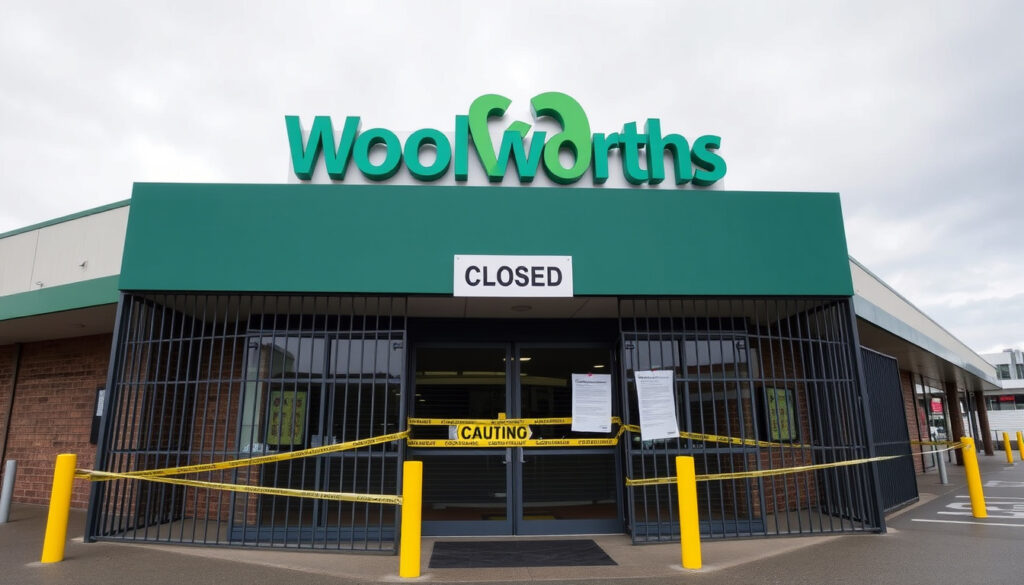
Woolworths Dunedin Closed Supermarket – Full Timeline and Court Fine
Woolworths Dunedin has experienced two significant closures in recent years, each stemming from very different circumstances. The incidents—a medical emergency at the Cumberland Street branch and a severe rat infestation at the South Dunedin store—have drawn attention to food safety protocols and corporate accountability within New Zealand’s retail sector. The February 2024 closure of the South Dunedin branch, which lasted 18 days, resulted in the company facing legal proceedings under the Food Act 2014.
These events have raised questions among local residents about supermarket safety standards and the effectiveness of escalation procedures within large retail operations. The company, which rebranded from Countdown in 2023, operates multiple stores throughout the Otago region. Both closures received detailed coverage from regional and national media outlets, with court proceedings concluding in March 2026.
Woolworths Dunedin Closures: Key Facts at a Glance
The South Dunedin incident proved the more consequential, prompting both a lengthy closure and subsequent legal action. Court documents revealed that the infestation had been building for months before management took decisive action. Staff had logged approximately 112 rat sightings during the October to December 2023 period, yet the issue was not escalated to food safety personnel until January 2024.
Judge David Robinson, presiding over the March 2026 sentencing in the Dunedin District Court, identified systemic failures in how staff were trained to recognize and report food safety hazards. The company’s response to the crisis, which included implementing what the judge described as “gold standard” procedures, became a central element of the sentencing discussion.
Key points established through court proceedings
- Staff first reported rat sightings in October 2023
- Approximately 112 sightings were logged over three months
- A rat chewing through forklift wiring prompted daily pest control visits in January 2024
- The food safety team was notified on January 9, 2024
- 23 rats were captured during the 18-day closure period
- Woolworths pleaded guilty to charges under the Food Act 2014
The maximum possible fine under the Food Act 2014 for this category of offense reaches $200,000. The $33,000 penalty imposed reflected factors including the company’s early guilty plea, cooperation with authorities, and documented efforts to improve procedures following the incident. Woolworths’ lawyer told the court the company had invested significantly in upgraded pest management systems and staff training programs.
| Fact | Details |
|---|---|
| Store affected | Woolworths Dunedin South (formerly Countdown) |
| Closure duration | 18 days in February 2024 |
| Initial sighting | October 2023 |
| Total sightings logged | Approximately 112 (October–December 2023) |
| Rats caught during closure | 23 |
| Food safety escalation | January 9, 2024 |
| Court outcome | $33,000 fine (March 2026) |
| Legislation breached | Food Act 2014 |
What Led to the South Dunedin Store Closure
The closure of the Woolworths South Dunedin branch on February 2024 marked the culmination of a four-month period during which rat activity within the store progressively worsened. Staff members began documenting sightings in the store’s incident register shortly after the initial reports, creating a paper trail that would later feature prominently in court proceedings.
According to evidence presented during the sentencing, New Zealand Food Safety investigators determined that store management had initially treated the problem as a maintenance issue rather than a food safety concern. This misclassification contributed to delays in implementing appropriate control measures and prevented timely escalation to regional food safety authorities.
Escalation failures identified by the court
Judge Robinson’s sentencing remarks highlighted how ground-level staff believed they were managing the situation effectively through local pest control arrangements. The belief that the issue remained under control prevented appropriate notifications to senior management and food safety personnel. The court heard that once the matter was escalated on January 9, 2024, the response involved daily pest control attendance and eventually a full store closure to facilitate comprehensive treatment.
During the closure period, pest control contractors captured 23 rats within the store premises. The extent of the infestation prompted a thorough review of store operations and the implementation of enhanced monitoring systems. Following the closure, Woolworths engaged external auditors to verify that appropriate control measures had been established before the store reopened.
The case has been cited by food safety advocates as an example of why retail staff require clear guidelines distinguishing between routine maintenance issues and potential food safety hazards. Industry commentators note that early intervention in pest sightings can significantly reduce the cost and disruption associated with infestations.
The April 2026 Cumberland Street Incident
The Woolworths store on Cumberland Street in central Dunedin closed on a single afternoon in April 2026 following a medical emergency. Emergency services were called to the scene at 1:26 PM after a person collapsed within the store premises. Hato Hone St John paramedics responded and transported one patient in critical condition to Dunedin Hospital.
Police attended to assist with crowd control as shoppers were asked to leave the premises. The store remained closed for the remainder of that day while emergency response teams completed their work. The incident drew attention on social media as local residents shared images of emergency vehicles outside the retail premises.
Distinguishing the two closures
Unlike the South Dunedin infestation, which involved operational and safety failures over an extended period, the Cumberland Street closure represented an acute external event. The medical emergency required temporary evacuation and specialist emergency response rather than structural remediation of store conditions. The store reopened the following day after standard post-incident procedures were completed.
The two incidents illustrate different categories of disruption that retail operations may face. The February 2024 closure prompted regulatory scrutiny and corporate policy reviews, while the April 2026 event remained a public safety response matter without equivalent legal consequences for the company.
Timeline of the South Dunedin Rat Infestation
The sequence of events leading to the South Dunedin closure spans several months, with internal documentation revealing an escalating pattern that ultimately overwhelmed local response capabilities. Court records and media reports provide the following chronology of the infestation.
- October 2023 — Staff members at Woolworths South Dunedin begin reporting rat sightings. Initial reports are logged in the store’s incident register.
- October to December 2023 — Approximately 112 rat sightings are documented over the three-month period. Local pest control measures are arranged without escalation to food safety personnel.
- January 2024 — A rat chews through electrical wiring on a store forklift, creating an operational hazard. The incident prompts management to arrange daily visits from pest control contractors.
- January 9, 2024 — The infestation is finally escalated to the food safety team. An assessment determines that the store must close for comprehensive treatment.
- February 2024 — Woolworths South Dunedin closes for 18 days. During the closure, contractors capture 23 rats. The store undergoes extensive cleaning and pest management procedures.
- February 2024 — The store reopens following verification by external assessors that control measures meet required standards.
- March 2026 — Woolworths appears in Dunedin District Court and pleads guilty to charges under the Food Act 2014. The company is fined $33,000.
Court documents noted that during the period from October 2023 to January 2024, the store attempted to manage the situation internally without activating food safety protocols. Judge Robinson observed that this approach reflected “a systemic failure in ensuring that the appropriate staff were adequately trained or otherwise made aware of that escalation process.”
What Remains Clear and Unclear
Established information
- The South Dunedin store closed for 18 days in February 2024
- Rat sightings were first reported in October 2023
- 112 sightings were logged before escalation
- 23 rats were caught during the closure
- Woolworths was fined $33,000 in March 2026
- The company pleaded guilty to Food Act 2014 breaches
- Cumberland Street closed for one day due to medical emergency
Information not publicly confirmed
- Whether any contaminated products were identified during the closure
- Specific details about internal communications between store managers and regional directors
- Whether the forklift incident caused any supply chain disruptions
- Exact timeline of when daily pest control visits began in January 2024
- Whether other Woolworths stores underwent similar undisclosed pest issues
Background on Woolworths in Dunedin
Woolworths New Zealand operates a significant portfolio of supermarkets across the country following its 2023 rebrand from the Countdown chain. The company traces its New Zealand origins to the Progressive Enterprises acquisition completed in 2021. Dunedin represents one of several South Island markets served by the retailer, with additional presence through the Foodtown and Countdown Metro brands in other regions.
The South Dunedin store, previously known as Countdown South Dunedin, served a residential catchment area that includes some of the city’s more densely populated neighborhoods. The closure forced local residents to travel to alternative supermarket locations during the 18-day remediation period. The city’s other major retailers, including New World and Pak’nSave, operate nearby locations that absorbed some of the displaced customer demand.
Food safety regulation in New Zealand operates under the Food Act 2014 framework administered by the Ministry for Primary Industries. Retail premises are subject to regular verification inspections, with additional oversight triggered by complaints or reported incidents. The penalties available under the Act reflect the potential public health consequences of food safety failures in retail environments.
Dunedin’s retail landscape has undergone considerable change over the past decade, with several supermarket locations transitioning between ownership as part of industry consolidation. The city’s local government, Dunedin City Council, maintains records of commercial premises and business activity within the district. Community interest in the South Dunedin closure reflected broader concerns about the accessibility of affordable food options in the inner-south area.
Official Statements and Court Proceedings
During the March 2026 court hearing, Woolworths’ legal representatives acknowledged the company’s failures while presenting evidence of subsequent remedial actions. The defense submission emphasized the cooperative approach taken during the investigation and the substantial investments made in upgrading pest management systems across the store network.
Judge Robinson accepted that the company had taken genuine steps to address the systemic issues identified during the investigation. His comments acknowledged that the procedures subsequently implemented represented a significant improvement on prior practices.
— District Court sentencing remarks, March 2026
Representatives for New Zealand Food Safety indicated following the sentencing that the case served as a reminder to all retail operators about the importance of prompt escalation when pest issues arise. A spokesperson noted that treating such matters as routine maintenance could delay critical interventions and increase the risk of food safety incidents.
Retail environments require robust systems for identifying and responding to potential hazards. Staff at all levels need to understand when an issue requires escalation beyond local management.
— New Zealand Food Safety statement following court outcome
Summary
Woolworths Dunedin has faced two notable closures in recent years—a temporary one-day closure at Cumberland Street due to a medical emergency in April 2026, and a more consequential 18-day closure at South Dunedin in February 2024 caused by a rat infestation. The South Dunedin incident, which stemmed from an infestation first reported in October 2023, resulted in the company pleading guilty to Food Act 2014 breaches and receiving a $33,000 fine in March 2026. Court proceedings identified systemic failures in how staff escalated the pest issue, with 112 sightings logged before the food safety team was notified on January 9, 2024. Following the closure and remediation, Woolworths implemented enhanced procedures that the presiding judge described as reaching “gold standard” levels. Both stores have since reopened, and the case continues to inform discussions about food safety compliance within New Zealand’s retail sector. For related coverage of significant incidents affecting New Zealand retail locations, see our report on New World Victoria Park Fire Details.
Frequently Asked Questions
When did the Woolworths South Dunedin store close?
The store closed for 18 days in February 2024 due to a severe rat infestation that had been building since October 2023.
Why was Woolworths fined?
Woolworths was fined $33,000 in March 2026 after pleading guilty to breaching the Food Act 2014. The conviction related to failures in managing the rat infestation at the South Dunedin branch.
How many rat sightings were recorded before the closure?
Approximately 112 rat sightings were logged in the store’s incident register between October and December 2023 before the situation was escalated to food safety personnel.
Is the Cumberland Street store permanently closed?
No. The Cumberland Street store reopened the day after the temporary closure in April 2026. The closure resulted from a medical emergency requiring emergency services response.
What happened during the 18-day closure?
Pest control contractors captured 23 rats from the premises. The store underwent comprehensive cleaning, structural assessment, and pest management treatment before reopening.
What did the judge say about the company’s response?
Judge David Robinson noted “a systemic failure” in staff training and awareness of escalation procedures. However, he acknowledged that Woolworths had implemented improvements reaching “gold standard” levels following the incident.
Were any customers affected by contaminated food?
Public records do not confirm whether any specific instances of product contamination were identified. The legal proceedings focused on the company’s failure to escalate and address the pest issue appropriately.
What changes did Woolworths make after the closure?
Following the incident, Woolworths implemented enhanced pest management systems, revised staff training programs, and improved escalation procedures for food safety concerns. The court was told these changes represented “gold standard” practices.
More related posts
 Bed Bath & Beyond Pillows: 2024 Buying Guide
 How Long Does COVID Last? Timeline, Recovery & Tips
 Air New Zealand Airport Tension: Strikes and Flight Disruptions
 James Hardie Linea Weatherboard: Specs, Install & Reviews
 Is Kylee Guy Still With Kent Martin? Life After Earthquake
 Hurricanes v Moana Pasifika: 52-10 Score & Next Match Preview
 NZ Share Market Today Live Chart: NZX 50 Index and Top Stocks
 Lakers vs Utah Jazz Match Player Stats: LeBron Scores 18