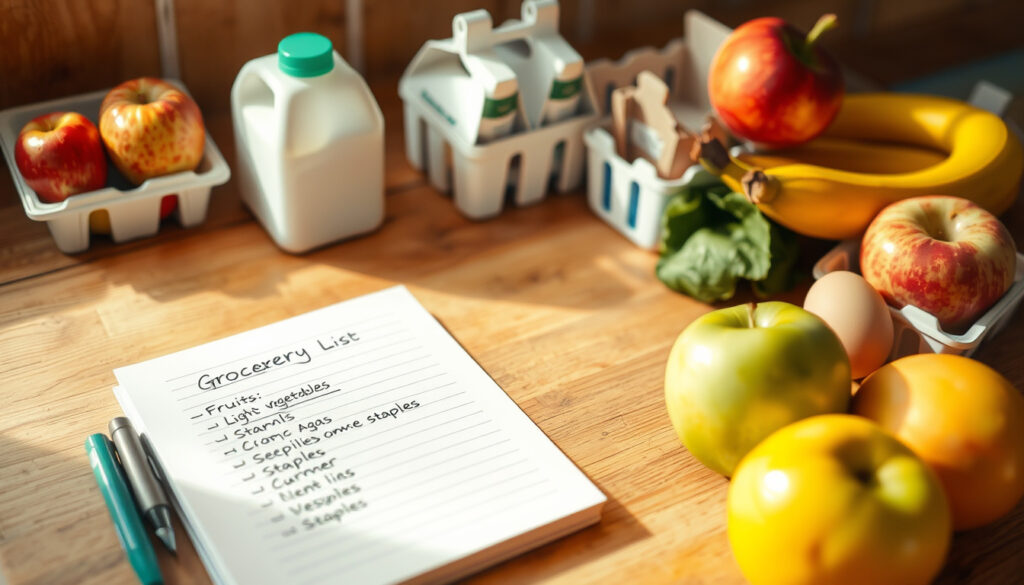
How to Make a Grocery List: Simple Steps & Methods
If you’ve ever stared at bare refrigerator shelves wondering what to buy, or found yourself wandering the same aisle three times during a single shop, you’re not alone. Most people either overbuy and waste food, or underbuy and end up ordering takeout twice a week. A grocery list fixes both problems — and learning how to make one properly takes less than ten minutes. This guide walks you through the simplest methods, including the viral 5-4-3-2-1 system that shoppers swear cuts their shopping time in half, according to Healthline.
Essential Food Groups: 5 · Popular List Methods: 5-4-3-2-1, 3-3-3 · Weekly Planning Steps: 3 · Top Stockpile Foods: 10 · Mobile List Tools: Google, iPhone Notes
Quick snapshot
- Shop for five food groups: fruits, vegetables, whole grains, lean proteins, dairy (Healthline)
- Organize by store aisles to save time and avoid impulse buys (Stationery Pal)
- The 5-4-3-2-1 method uses distinct items, not portions (MenuMagic)
- Exact origins of the numbered methods — no single documented creator
- Specific launch dates for Will Coleman’s viral TikTok videos
- Long-term user success rates or expert nutritional critiques
- Chef Will Coleman shares 5-4-3-2-1 on TikTok, goes viral pre-2023
- Will Coleman features method on TODAY show from cookbook “From Cart to Kitchen”
- MenuMagic blog promotes app integration for 2023–2026
- Phone-based lists like Google Keep and iPhone Reminders replace paper entirely
- Family-sized variations scale up for 2–4 people with more produce and grains
- Meal planning apps automate the 5-4-3-2-1 count and store aisle sorting
| Key fact | Detail |
|---|---|
| Food Groups to Include | Fruits, vegetables, whole grains, lean proteins, dairy |
| Average List Items | 20–50 per week |
| Time Saved by Methods | Half shopping time |
| 5-4-3-2-1 Vegetables | 5 |
| 5-4-3-2-1 Fruits | 4 |
| 5-4-3-2-1 Proteins | 3 |
| 5-4-3-2-1 Carbs/Grains | 2 or 1 |
| 5-4-3-2-1 Treat | 1 |
How do I make a simple grocery list?
The basic approach starts before you ever open a note-taking app. Walk through your kitchen, check what staples you already have — flour, oil, spices, canned goods — and write down what you actually need to restock, according to The Everygirl. Then plan your meals for the week using the five food groups: fruits, vegetables, whole grains, lean proteins, and dairy, as recommended by Healthline.
Plan meals first
Before making your list, sketch out three to five dinners that share ingredients. For example, chicken and rice work for two different meals if you buy a large pack and portion it out, Healthline explains. This cuts your total item count and reduces waste.
List by categories
- Produce section: spinach, broccoli, carrots, bell peppers, zucchini
- Meats and proteins: chicken, eggs, tofu, salmon
- Bakery or deli: whole wheat bread, tortillas
- Pantry: rice, pasta, canned tomatoes
- Dairy: milk, cheese, yogurt
One Reddit user describes their ideal shop order as “Produce > Meats > Bakery/Deli > Snack foods > Pantry Ingredients > Dairy,” which matches most store layouts and keeps you moving in one direction without backtracking, as noted by Stationery Pal. For more on eating well while managing costs, see our Eat Well for Less guide.
Check pantry
Pantry staples like cooking oil, salt, spices, and canned beans stay on hand permanently — they are excluded from the weekly item count in the 5-4-3-2-1 method, MenuMagic clarifies. Checking your pantry first prevents double-buying and keeps your list lean.
What is the 5-4-3-2-1 grocery method?
The 5-4-3-2-1 grocery method answers the question “what should I buy?” ahead of time by limiting how many items you choose from key food groups each week, MenuMagic explains. It assigns a number to each category: five vegetables, four fruits, three proteins, two carbs, and one treat. Chef Will Coleman popularized a variation of this system on TikTok where he swapped “carbs” for two sauces or spreads plus one grain, as The Everygirl reports.
Each number represents distinct items, not portions. A bag of carrots counts as one vegetable — you are not buying five carrots, you are buying five vegetable types. This distinction prevents confusion and keeps the math simple, MenuMagic clarifies.
5 fruits and vegetables
Choose five vegetable varieties: spinach, broccoli, carrots, bell peppers, and zucchini. Choose four fruits: apples, bananas, oranges, and berries. These twelve items cover your weekly produce needs without overstocking, per Manhattan Nutrition Clinic.
4 proteins
Pick four protein sources: chicken, eggs, tofu, and canned salmon. Proteins tend to be the most expensive category, so planning ahead here saves the most money, Healthline recommends.
3 carbs
Three carb options: brown rice, whole wheat pasta, and crackers. These store well and form the base of most dinners, Stationery Pal notes.
2 snacks
Two snack foods: nuts and hummus, or pretzels and cheese. Keep snacks separate from treats so the one treat you allow yourself carries real meaning, Stationery Pal advises.
1 treat
One treat: dark chocolate, a bakery cookie, or a small ice cream. Including a treat makes healthy habits sustainable by avoiding deprivation, Healthline states. The method prevents impulse buying by focusing on category limits rather than willpower.
What is the 3-3-3 rule for groceries?
The 3-3-3 rule offers a simpler alternative to 5-4-3-2-1, focusing on three categories only: three proteins, three vegetables, and three staples, as MenuMagic describes. This version reduces food waste by focusing on essentials and is easier to remember for beginners.
- 3 proteins: chicken, eggs, black beans
- 3 vegetables: spinach, tomatoes, zucchini
- 3 staples: rice, pasta, canned tomatoes
The 3-3-3 approach suits anyone who finds the 5-4-3-2-1 numbers overwhelming or who shops for just one or two people. It reduces decision fatigue by pre-setting nine items as the week’s total grocery load, MenuMagic explains.
The 3-3-3 rule omits fruits and snacks entirely, which may not provide enough dietary variety for some shoppers. Consider adding a fourth category for fruits if you are prone to low fiber intake.
What is the 321 grocery method?
The 321 grocery method splits the week into three protein days, two vegetable days, and one carb day, MenuMagic describes. User tests reportedly cut shopping time in half because the structure tells you exactly what to buy for each day without planning full meals. It works best for people who eat similar meals every week and want maximum simplicity.
- 3 proteins: salmon, chicken breast, tempeh
- 2 vegetables: kale, carrots
- 1 carb: quinoa
The 321 method is essentially a compressed version of 5-4-3-2-1 that prioritizes protein over everything else. For athletes, growing teenagers, or anyone with higher protein needs, this structure ensures you never run short on the most filling macro, Healthline notes. If you want quick weeknight dinner ideas that match these categories, check our Chicken Recipes for Dinner collection.
How to make a grocery list on my phone?
Phone-based grocery lists have replaced paper for most shoppers under forty, and the tools keep improving. Google Keep, iPhone Reminders, and dedicated apps like MenuMagic all sync across devices, so your list updates in real time whether you are at home or standing in the produce aisle, per MenuMagic.
Use Google shopping list
- Open Google Keep and create a checklist titled “Weekly Groceries”
- Add items as you run out, using the checkbox to mark them purchased
- Share the list with a partner or roommate so anyone can add milk
- Access it via Google Assistant on smart speakers for hands-free reading
Google Keep also sorts items by category automatically if you use labels like “produce,” “dairy,” or “protein,” keeping your shop organized without manual sorting, MenuMagic confirms.
iPhone apps and notes
- Open the Notes app, create a new note, and enable the checklist format
- Use the Reminders app with Siri integration: “Hey Siri, add chicken to my grocery list”
- Share notes via iCloud so your partner sees updates instantly
- Sort by store aisle using section headers like “PRODUCE” or “PANTRY”
iPhone Reminders works with location-based alerts, reminding you to buy something when you pass a specific store, Healthline notes. This is useful for shoppers who forget items because they planned the list at home but shopped later.
Templates for quick lists
- Use the 5-4-3-2-1 template as a recurring note in your Notes app
- Duplicate last week’s note and clear the checkboxes — takes five seconds
- Save a family version with extra items scaled up for multiple people
- Use MenuMagic or similar apps that generate a pre-filled 5-4-3-2-1 list and organize it by store aisle, MenuMagic
What we know and what remains unclear
Confirmed
- The five food groups standard comes from the Academy of Nutrition and Dietetics
- The 5-4-3-2-1 method involves five vegetables, four fruits, three proteins, two carbs, and one treat
- Each number represents distinct items, not portions
- Chef Will Coleman popularized the method on TikTok and featured it on the TODAY show
- The method reduces decision fatigue by pre-setting category limits
- Including a treat makes the plan sustainable by avoiding deprivation
Unclear
- The exact origins of the numbered methods — no single creator or publication date documented
- Specific launch dates for Will Coleman’s viral TikTok videos
- Quantitative studies on actual food waste reduction or budget savings
- Long-term user success rates or expert critiques from nutrition professionals
What experts and shoppers say
The 5-4-3-2-1 method answers the question “what should I buy?” ahead of time by limiting how many items you choose from key food groups each week.
— MenuMagic (AI Meal Planning Blog)
It is ideal for anyone who wants to save time and money without the stress of complicated meal prep.
— The Everygirl (Lifestyle Publication)
Chef Will Coleman joins TODAY’s Jenna Bush Hager and Sheinelle Jones to break down how his viral 5-1 grocery method turns shopping and recipe planning into a simple formula.
— TODAY Show (NBC News Program)
Organise your list around the shop layout.
— Love Food Hate Waste (Food Waste Charity)
For busy American shoppers, the choice is clear: start with a pantry audit, adopt the 5-4-3-2-1 template on your phone this week, and plan at least two overlapping meals that share a protein and a carb. Within two weeks, most users find they spend half the time in the store, waste less food, and actually eat more vegetables — because the list tells them what to buy before they ever feel hungry in the aisle.
Frequently asked questions
What are the top 10 foods to stockpile?
The ten most versatile stockpile items are: canned tomatoes, dried rice, dried pasta, canned beans, peanut butter, oats, frozen vegetables, eggs, onions, and potatoes. These items store for weeks and form the base of dozens of meals, according to Healthline.
What is the 5-4-3-2-1 eating rule?
The 5-4-3-2-1 eating rule assigns numbers to food categories: five vegetables, four fruits, three proteins, two carbs, and one treat. Each number represents distinct items you buy per week, not portions. Pantry staples like oil and salt are excluded from the count, as MenuMagic explains.
Do you make or do a shopping list?
Both “make a shopping list” and “do a shopping list” are acceptable English phrases. “Make” is more common in American English, while “do” appears more frequently in British English. Use whichever feels natural in your context.
What is a shopping list?
A shopping list is a written record of items you intend to buy during a grocery trip. It organizes purchases by category or store section, prevents impulse buying, and reduces food waste by ensuring you buy only what you need for planned meals.
How to add to shopping list?
Open your list app (Google Keep, iPhone Notes, or a dedicated grocery app), type the item name, and add it to the appropriate category section. Most apps let you add items via voice using Siri or Google Assistant. For shared lists, your partner or roommate sees the update instantly via cloud sync.
How to create a grocery list on a budget?
Start with pantry staples you already own, plan meals around sale items, and use the 5-4-3-2-1 method to cap your categories. Buy produce in season, choose store brands over name brands, and batch-cook proteins like chicken or eggs to use across multiple meals. A $70 weekly budget for one adult can cover all five food groups if you prioritize whole foods over processed options, per MenuMagic.
How to plan weekly meals for grocery list?
Pick three to five dinners that share at least one ingredient each. For example, chicken and rice appear in two meals, and spinach appears as a side in one and in a smoothie in another. Write down the unique ingredients plus the five food groups you need to fill gaps, then convert that into a categorized list. The 5-4-3-2-1 template does this work automatically if you use an app like MenuMagic, per Healthline.
More related posts
 Bed Bath and Beyond Tauriko: Hours, Location & Online Shopping
 Spanish Night Classes in Auckland: Best Evening Courses & Schools
 Patience (Game): Rules, How to Play & Strategies
 What Does a Heart Attack Feel Like – Symptoms in Men and Women
 Gmail Passwords Exposed: Data Leak Hits 48M Accounts
 New Zealand KiwiSaver Changes 2025-2026: Rates, Dates Explained
 Super Rugby Draw 2026: Full Schedule, Fixtures & Finals Format
 Tongariro Expeditions Safety Breach – DOC Suspension and Key Facts