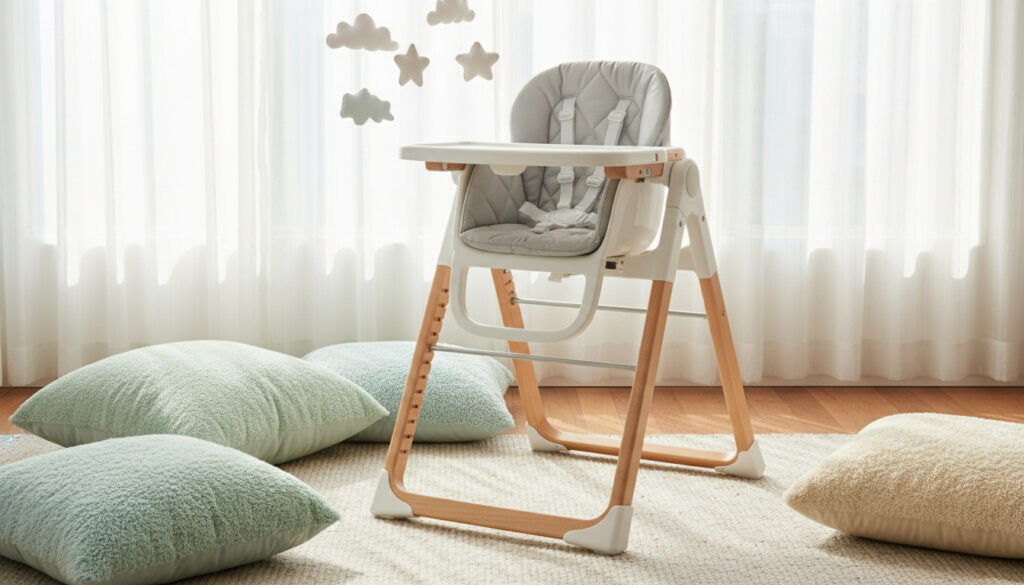
Baby Bunting High Chair – Top Picks for Safety and Comfort
Navigating the High Chair Market at Baby Bunting
Choosing the right high chair represents one of the more consequential purchasing decisions for new parents in New Zealand. Baby Bunting, as the region’s largest specialty retailer of baby goods, maintains an extensive inventory of feeding solutions ranging from compact budget models to premium convertible systems designed to transition from infancy through the preschool years.
Current market analysis reveals significant diversification in the high chair segment, with manufacturers emphasizing longevity, ease of cleaning, and adherence to updated safety protocols. For New Zealand consumers, understanding the intersection of international safety standards and local availability requires careful navigation of both product specifications and retail channels.
Product Categories Available
The retailer stocks several distinct categories of high chairs, each addressing different spatial constraints and lifestyle requirements. Parents exploring comprehensive feeding safety guidelines will find that traditional full-size high chairs remain the dominant category, offering padded seating, multiple recline positions, and substantial tray systems. These units typically accommodate children from six months through three years.
Space-saving hook-on models attach directly to dining tables, eliminating the footprint of conventional stands while maintaining security standards. Convertible high chairs transform into booster seats or youth chairs, extending utility beyond the traditional high chair phase. Portable and foldable options target families requiring mobility or dealing with limited storage.
Critical Safety and Compliance Insights
Regulatory compliance varies significantly across the inventory. While all high chairs sold in New Zealand must meet basic safety requirements, Product Safety New Zealand has noted that the Australian market’s stricter voluntary standards have influenced product availability across the Tasman. Models certified to the Australian/New Zealand standard AS/NZS 4684:2009 provide specific assurances regarding structural integrity and stability testing.
Recent safety surveillance has highlighted concerns regarding inclined sleepers attached to high chairs, prompting recalls of specific models internationally. Parents should verify that any purchased unit features a five-point harness system and a crotch post to prevent submarining incidents where infants slide beneath the tray.
| Model Category | Price Range (NZD) | Key Features | Weight Capacity |
|---|---|---|---|
| Entry-Level Full-Size | $150 – $250 | Basic padding, removable tray, wipe-clean surfaces | 15kg |
| Mid-Range Convertible | $250 – $450 | Multiple configurations, adjustable footrests, premium fabrics | 20kg+ |
| Premium European Imports | $450 – $800 | Grow-with-me designs, ergonomic profiling, sustainable materials | 30kg+ |
| Hook-On/Travel | $80 – $200 | Clamp systems, carry bags, machine-washable covers | 15kg |
Consumer NZ testing protocols consistently demonstrate that price correlates poorly with safety performance across the range of models available at major retailers.
Technical Specifications and Materials
Contemporary high chair construction favors polypropylene plastics and aluminum framing to balance weight reduction with durability. Those researching detailed baby gear evaluations should note that cushioning materials have shifted away from vinyl coverings toward breathable, stain-resistant textiles that withstand commercial laundering without degradation.
Tray mechanisms require particular scrutiny; single-hand release systems offer convenience but must demonstrate resistance to accidental disengagement by toddlers. Adjustment ranges for seat height and footrest positioning directly impact ergonomic suitability as children develop through different growth phases.
Historical Development of Safety Standards
The evolution of high chair safety reflects broader changes in child product regulation. Ministry of Health nutrition guidelines emphasize that prior to 2009, New Zealand relied primarily on generic stability requirements without specific testing protocols for high chairs. The introduction of AS/NZS 4684:2009 established mandatory testing for tip-over resistance, tray retention, and structural load capacity.
Recent amendments have addressed entrapment hazards in folding mechanisms and chemical compliance regarding phthalates and heavy metals in surface coatings. The transition from three-point to five-point harness systems became standard industry practice during the mid-2010s, though older inventory occasionally surfaces in secondary markets.
Clarifying Common Misconceptions
Misunderstanding regarding appropriate introduction timing persists among first-time parents. Plunket clinical recommendations consistently advise delaying solid food introduction until approximately six months when infants demonstrate independent sitting capacity and head control. While marketing materials often suggest four-month readiness, premature introduction increases aspiration risk.
Weight limitations frequently confuse consumers; the 15kg threshold common to basic models typically corresponds to age three, whereas premium convertible systems accommodate children up to six years when configured as youth chairs. Parents should disregard age recommendations in favor of individual developmental markers and specific product weight ratings.
Market Position and Value Analysis
Baby Bunting’s pricing structure generally aligns with mid-market positioning, though promotional cycling creates significant variance in actual transaction costs. Safekids Aotearoa observes that the retailer’s price-match policy requires verification against identical stock-keeping units from approved competitors, excluding marketplace vendors and auction platforms.
Warranty terms vary by manufacturer, with domestic brands typically offering two-year coverage against manufacturing defects while European imports may limit coverage to twelve months. Extended protection plans available at point of sale cover accidental damage but exclude normal wear components such as harnesses and casters. For more information on shopping in Paris, consult this Westfield Forum des Halles guide Westfield Forum des Halles guide.
Expert Perspectives
“The investment in a quality high chair pays dividends through the toddler years. Parents consistently underestimate how frequently they’ll utilize this equipment—often three to five times daily for several years.”
— Pediatric Occupational Therapy Association, Feeding Special Interest Group
“We see the most satisfaction with models that offer tool-free harness adjustment. When parents struggle with rethreading straps during messy meal times, the safety system gets compromised.”
— Product Safety Consultant, Consumer NZ
Summary of Key Considerations
Selecting an appropriate high chair requires balancing immediate spatial constraints against long-term utility. Families in compact Auckland apartments may prioritize foldability over convertibility, while rural households with dedicated dining spaces benefit from substantial, stationary units. Regardless of specific model selection, verification of current safety standard compliance remains non-negotiable.
The retailer’s inventory adequately covers the spectrum from basic functionality to premium aesthetics, though New Zealand consumers face limited access to certain European boutique brands available in larger Australian markets. Price-conscious shoppers should monitor end-of-financial-year clearance periods when previous season colorways undergo significant markdown.
Frequently Asked Questions
What is the appropriate age to transition a baby to a high chair?
Most infants develop sufficient trunk stability for high chair use between five and six months of age. Key readiness indicators include the ability to maintain unsupported sitting posture for several minutes and the loss of the tongue-thrust reflex that pushes foreign objects from the mouth. Premature introduction before four months increases aspiration risk and provides no nutritional benefit.
Do high chairs sold at Baby Bunting meet New Zealand safety standards?
All high chairs retailed through licensed New Zealand distributors must comply with the Consumer Guarantees Act and Fair Trading Act, which incorporate product safety standards. Look specifically for compliance marking referencing AS/NZS 4684:2009 or the European standard EN 14988. The retailer maintains documentation of certification for specific models upon request.
How do I clean and maintain a high chair according to manufacturer guidelines?
Surface cleaning requires warm soapy water and non-abrasive cloths; harsh chemical disinfectants degrade plasticizers and textiles over time. Removable fabric components typically specify cold water washing on gentle cycles. Harness straps should never be submerged in washing machines as this compromises fiber integrity—instead, wipe with damp cloths and mild detergent.
Can I use a second-hand high chair safely?
Pre-owned high chairs require inspection for recalled models, structural cracks in plastic components, and frayed harness webbing. Avoid units manufactured before 2009 that may not meet current stability standards. Verify that all original safety components remain intact, including crotch posts and tray locking mechanisms. Missing instruction manuals can usually be downloaded from manufacturer websites.
What distinguishes convertible high chairs from standard models?
Convertible systems utilize modular components to transition from traditional high chair configuration to booster seat mode for dining chairs, and subsequently to youth chair or stool configurations. While initial investment exceeds standard models by forty to sixty percent, the extended usability period through age five or six often yields better cost-per-use metrics than purchasing separate seating solutions for each developmental stage.
More related posts
 Gmail Passwords Exposed: Data Leak Hits 48M Accounts
 Super Rugby Draw 2026: Full Schedule, Fixtures & Finals Format
 Adolescence: True Story, Episodes, Cast & Ending Explained
 400 USD to NZD: Current Rate & Best Conversion Tips
 Compare Term Deposit Rates NZ: Highest 12-Month Bank Rates
 Auckland Airport Park and Ride Rates, Options & Savings
 Last Minute Cruise Deals NZ: Best All Inclusive & Fly-Cruise
 Most Awarded Pie in NZ: Rosedale’s 2025 Supreme Win