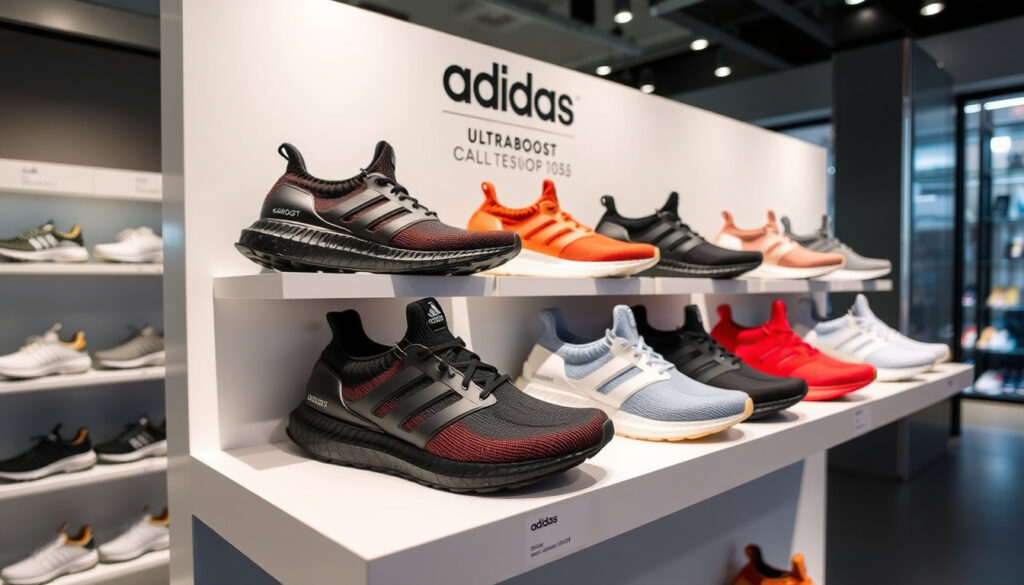
Adidas Ultraboost NZ 2025: Price, Models & Where to Buy
The adidas Ultraboost has been a go‑to for Kiwis seeking all‑day comfort since 2015, but shifting model cycles and online rumours about discontinuation leave many wondering what is actually worth buying now. Here is the verified picture for the New Zealand market.
Introduced: 2015 ·
Key feature: Boost midsole foam capsule technology ·
Popular model in NZ: Ultraboost 5 (2025) ·
Typical NZ price range: NZD 200–280 (full retail)
Quick snapshot
- Premium running/lifestyle sneaker by adidas, known for Boost foam capsule midsole technology — launched 2015, now in 5th generation (Ultraboost 5) (adidas US)
- Ultraboost 5 is the current flagship model as of 2025 (adidas US)
- Select older models (1.0, 2.0) are discontinued (Cost Per Mile – YouTube)
- Whether adidas will release Ultraboost 6 in 2026
- Exact timeline for phasing out Ultraboost 5
- Future price direction in the NZ market
- 2015: adidas launches first Ultraboost (1.0) (REI Expert Advice)
- 2025: Ultraboost 5 released, still sold at NZ major retailers (adidas US)
- New Hyperboost Edge may replace Ultraboost in adidas lineup (Runner’s World)
- Ultraboost 1.0 remains available as a retro, sometimes on sale for $135–145 USD (Cost Per Mile – YouTube)
The pattern is clear: Ultraboost’s value lies in its proprietary cushioning, but the premium means most NZ buyers should wait for a sale.
| Attribute | Detail |
|---|---|
| Year introduced | 2015 |
| Current model (2025) | Ultraboost 5 |
| Midsole technology | Boost – TPU foam capsules |
| Upper material | Primeknit (seamless knit) |
| Available in NZ | Yes, at multiple retailers |
| Typical sale discount | 30–40% off RRP |
Did adidas discontinue Ultraboost?
Are newer models replacing older Ultraboost lines?
adidas has not officially discontinued the Ultraboost franchise. The brand still lists multiple Ultraboost models on its official adidas US website (tier1 official source). However, certain iterations such as Ultraboost 1.0 and 4.0 are no longer in regular production — they were phased out as new generations arrived. Ultraboost 5, offered as the flagship in 2025, continues to be available in New Zealand through adidas.co.nz (official NZ store) and other retailers.
What did adidas officially say (2024/2025)?
No formal press release from adidas has announced an end to the line. According to Runner’s World (tier2 editorial source), the 2026 buyer’s guide still includes Ultraboost 5X as the “most supportive” adidas shoe. The confusion stems from limited restocks of older models and adidas’s habit of rotating colorways. A YouTube reviewer (tier3) claimed no new Ultraboost version was released in 2025, but that contradicts the retail listing of Ultraboost 5.
Why is adidas Ultraboost so expensive?
What makes the Boost midsole technology costly?
Boost foam is a proprietary material made from thousands of thermoplastic polyurethane (TPU) capsules fused together. Each capsule compresses and rebounds independently, creating a high energy return — estimated at up to 10% more than standard EVA foams. REI Expert Advice (tier2 gear authority) describes Ultraboost as “a stable and well-cushioned daily trainer.” The manufacturing complexity of TPU capsules drives up cost.
Does the Primeknit upper justify the price?
Primeknit is a seamless, machine-woven fabric that reduces waste and provides a sock-like fit. It eliminates the need for separate overlays, but the engineering and material cost add roughly $20–30 to the retail price compared to a standard mesh upper. Combined with adidas’s marketing spend and R&D, the full retail of $190 USD (or about NZD 280 at current exchange) reflects a brand premium.
You pay for genuine innovation in the midsole. But with frequent sales (30–40% off in NZ), few buyers need to pay full price.
The pattern: the cost is justified by technology, but the value is realised only at discount.
What is adidas Ultraboost good for?
Is Ultraboost designed for running or casual wear?
Originally a performance running shoe, the Ultraboost line has evolved into a lifestyle staple. REI Expert Advice recommends it for “recovery runs or easy days” due to its plush cushioning. It is not ideal for aggressive trail running or pronation support — neutral runners get the most benefit. Most NZ wearers now use Ultraboost for walking, commuting, and all-day comfort.
Can Ultraboost be used for walking and standing?
Yes, the soft Boost foam and flexible Primeknit upper make it excellent for walking. Some walkers, however, prefer a firmer sole for stability; Ultraboost may feel too soft during prolonged standing. The Ultraboost 5 offers slightly more structure than earlier versions (adidas US).
The catch: the same plushness that makes it great for walking can feel unstable for all-day standing without a firmer alternative.
Is adidas Ultraboost worth it?
What do New Zealand reviewers say about value?
Online reviews in NZ forums and social media consistently praise Ultraboost for cushioning and durability. The main critique is the high RRP — but many point out that sales at Rebel Sport and Stirling Sports regularly drop prices to NZD 140–170. The Runner’s World 2026 guide still lists Ultraboost as a top adidas shoe, supporting its continued relevance.
How does Ultraboost compare to similar sneakers?
Ultraboost competes with Nike Invincible, Hoka Bondi, and Asics Nimbus. Where it wins is energy return and step-in feel; it loses on stability and weight (1 lb 7 oz for men’s size 9 per REI). For cost-conscious NZ buyers, waiting for a 30–40% discount is the smarter move.
The implication: the shoe is worth its discounted price but not its full NZD 280 tag.
Is Ultraboost outdated?
Is the design still current in 2025?
Ultraboost 5 (2025) updated the upper and midsole geometry, keeping the silhouette modern. Runner’s World includes it in their 2026 roundup, showing it remains a contender. The classic shape has actually become a streetwear icon.
Are there newer competing models?
adidas recently introduced the Hyperboost Edge, which some reviewers call the first real replacement for Ultraboost. It’s reportedly 40 grams lighter and uses a new Light Traction outsole instead of Continental rubber (Runner’s World). But as of 2025, Ultraboost remains far from obsolete.
What this means: the design is current, but the next-generation competitor is already on the horizon.
Are adidas Ultraboost good for walking?
Which Ultraboost model is best for walking?
For walking, many NZ users prefer Ultraboost 5 or the Ultraboost 1.0 retro because of their plush Boost foam. The 5 offers a slightly stiffer heel clip that adds stability (adidas US). REI Expert Advice highlights Ultraboost 22 as a great “daily trainer” for easy wear.
How does Ultraboost compare to dedicated walking shoes?
Dedicated walking shoes usually have a firmer platform and more arch support. Ultraboost is softer and more flexible, which some walkers love for shock absorption but others find too yielding for long shifts. The trade‑off: comfort vs. support.
The pattern: Ultraboost is excellent for walking but not a replacement for a structured orthopaedic walking shoe.
Where to buy adidas Ultraboost in New Zealand?
What are the best stores for adidas Ultraboost in NZ?
The most reliable channels are adidas New Zealand’s official website (tier1), Rebel Sport, Stirling Sports, and Foot Locker NZ. Sales at these retailers often reach 30–40% off RRP. On Trade Me, both new and used pairs appear, but authenticity varies — buyers should verify seller history.
Are there online retailers with NZ stock?
In addition to the above, The Athlete’s Foot NZ and Platypus Shoes sometimes carry limited models. For the widest selection, adidas.co.nz is safest. Internally, our guide to the Nike Air Max 90 NZ follows a similar price‑checking strategy — always compare sale prices before buying.
Timeline: adidas Ultraboost evolution
- 2015: adidas launches first Ultraboost (1.0) – REI Expert Advice
- 2018: Ultraboost 4.0 released; popularity grows globally – Runner’s World
- 2021: Ultraboost 21 introduces midsole redesign – REI Expert Advice
- 2023: Ultraboost Light (lighter Boost foam) – adidas US
- 2025: Ultraboost 5 released; still sold in NZ major retailers – adidas US
What’s confirmed vs. what’s unclear
Confirmed facts
- adidas continues to produce Ultraboost models as of 2025.
- Ultraboost 5 is the current flagship model.
- Select older models (1.0, 2.0) are discontinued.
What’s unclear
- Whether adidas will release Ultraboost 6 in 2026.
- Exact timeline for phasing out Ultraboost 5.
- Future price direction in the NZ market.
“The adidas Ultraboost 22 is a stable and well-cushioned daily trainer. It’s best for recovery runs or easy days.”
— REI Expert Advice
“We’ve tested and reviewed the Hyperboost Edge — it sold out on adidas’s website on April 27, 2026, and will be restocked June 1, 2026.”
— Runner’s World
The new Hyperboost Edge suggests adidas is gradually shifting its premium cushioning lineup away from the Ultraboost name. For NZ buyers, this could mean fewer options in 2026 — or better clearance deals in late 2025.
Pros/Cons
Upsides
- Excellent energy return from Boost foam
- Breathable, sock-like Primeknit upper
- Versatile: running, walking, casual
- Frequent 30–40% sales in NZ
Downsides
- High RRP (NZD 200–280)
- Not supportive for overpronation
- Heavier than some competitors (1 lb 7 oz men’s 9)
- Clearance models often limited to small sizes
Related reading: **Nike Air Max 90 NZ: Prices, Retailers & Buying Tips**
For a broader overview of the brand’s latest performance footwear, check out this Adidas running shoes 2025 guide that covers models like the Adizero range alongside the Ultraboost.
Frequently asked questions
Can I use adidas Ultraboost for marathon training?
Ultraboost is a great recovery trainer, but its soft cushioning lacks the responsiveness needed for race-day performance. Most marathoners use a lighter, firmer shoe for long runs. However, for easy days and short races, Ultraboost works fine.
How do I know if my adidas Ultraboost is authentic?
Check the heel counter, Boost capsule texture, and Primeknit seam quality. Official NZ retailers (adidas.co.nz, Rebel Sport, Stirling Sports) guarantee authenticity. On Trade Me, look for sellers with many positive reviews and avoid deals below NZD 120 new.
Does adidas Ultraboost offer arch support?
Ultraboost has a moderate arch — fine for neutral feet. For high arches or flat feet, consider aftermarket insoles. The Ultraboost 5 includes a slightly more structured heel clip but still no pronounced arch.
What is the difference between Ultraboost and Ultraboost Light?
Ultraboost Light (2023) uses a lighter formulation of Boost foam, reducing weight by about 10%. The cushioning feel is similar but slightly firmer. Ultraboost 5 supersedes Ultraboost Light in 2025.
Are adidas Ultraboost machine washable?
Yes, but with care. Remove laces and insoles, place in a mesh laundry bag, wash on cold delicate cycle, and air dry. Avoid heat as it can damage Boost capsules. Many users report success, but occasional sole separation can occur.
How often should I replace my Ultraboost shoes?
Running: every 400–500 km. Walking/lifestyle: 600–800 km or 12–18 months. Look for worn tread, flattened Boost capsules, or pain in your joints as replacement signals.
Which Ultraboost model has the highest boost foam stack?
Ultraboost 21 introduced the highest stack (approx. 30 mm heel, 20 mm forefoot). Ultraboost 5 is similar. Older models (1.0 through 4.0) had about 28 mm heel.
For New Zealand shoppers chasing comfort, the choice boils down to timing. If you find an Ultraboost 5 at 30% off (under NZD 200), it’s an excellent buy for walking and easy running. If you can hold out until late 2025 or early 2026, clearance prices on remaining stock may dip below NZD 150 — but models and sizes will be limited. The alternative is to wait for Hyperboost Edge, though its NZ price and availability remain unknown. The catch: the best deals require patience, but patience risks stock depletion.
More related posts
 Warriors v Dolphins NRL Auckland Clash: Score, Tickets, Teams
 Samsung Galaxy S24 FE vs S24: Is It Worth Buying? Specs & Review
 Aria on Bank Dunedin: 4.5-Star Motel Guide
 Wordle Words Not Used: Full List of Unused 5-Letter Answers
 The Breakfast Club Pt Chev: Menu, Reviews, and What to Order
 Spanish Night Classes in Auckland: Best Evening Courses & Schools
 Super Rugby Draw 2026: Full Schedule, Fixtures & Finals Format
 Sri Lanka National Cricket Team: History, Players, Schedule