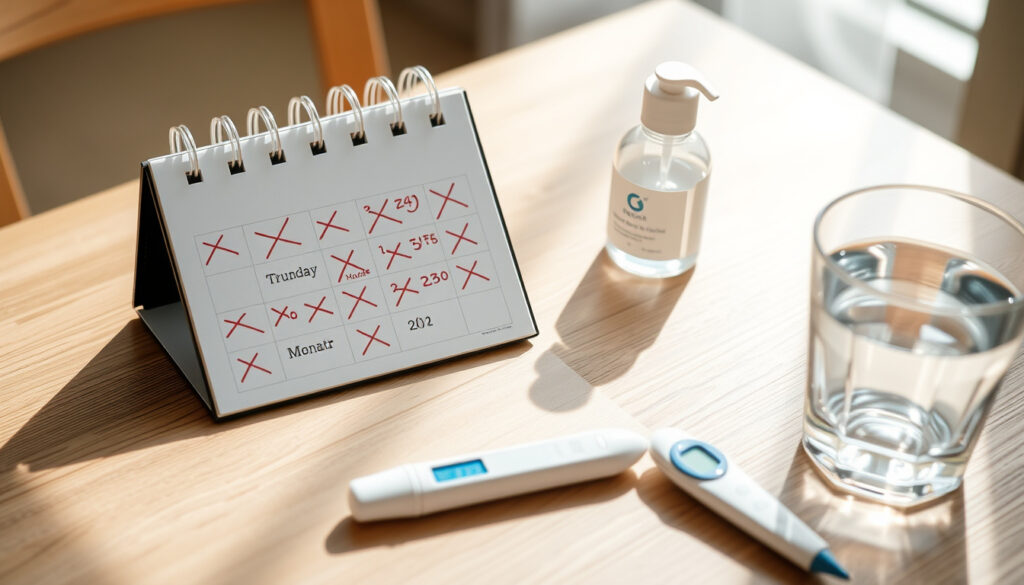
How Long Does COVID Last? Timeline, Recovery & Tips
If you or someone in your household tests positive for COVID-19, the first question is almost always the same: how long does this last? The answer depends on vaccination status, the variant, and your overall health, but official 2025 guidance from the CDC and WHO now gives a much clearer picture than earlier in the pandemic.
Typical COVID-19 illness duration (mild to moderate): 7–10 days ·
Incubation period (exposure to symptoms): 2–14 days, most commonly 3–6 days ·
Contagious period (before and after symptoms): 2 days before to 10 days after symptom onset ·
Long COVID recovery (prolonged symptoms): Up to 12 weeks or longer ·
Peak symptom severity: Days 3–5 of illness ·
Isolation guideline (CDC, 2025): At least 5 days, then mask through day 10
Quick snapshot
- 7–10 days for mild to moderate cases (WebMD (health information publisher))
- Incubation: 2–14 days, most commonly 3–6 (CDC (U.S. public health agency))
- Long COVID can persist beyond 12 weeks (WHO (global health agency))
- Exact duration of 2025 viral sublineages (XBB, JN.1) still being tracked
- Long-term effects of new variants not yet fully characterized
- Individual variation due to immune status and comorbidities
- Day 0: Exposure → Days 3–6: Symptom onset (CDC (travel health guideline))
- Days 1–2 before symptoms: Most contagious (CDC (travel health guideline))
- Days 3–5: Symptom peak (NHS (U.K. health service))
- Day 5+: May end isolation if improving (CDC (prevention guidance))
- Week 12+: Possible long COVID (NHS (U.K. health service))
- CDC dropped strict 5-day isolation in 2024; now uses symptom-based guidance (ABC News (major U.S. news outlet))
- Antiviral treatment (Paxlovid) must start within 5 days (CDC (treatment guidelines))
- Return to work: at least 5 days isolation, fever-free for 24 hours (ABC News (major U.S. news outlet))
Seven key facts, one pattern: the timeline is consistent across official sources but the rules for when you can leave isolation have shifted in 2025.
| Metric | Value |
|---|---|
| Incubation period | 2–14 days (most common 3–6) |
| Average illness length | 7–10 days |
| Contagious period start | 2 days before symptoms |
| Contagious period end | 10 days after symptom onset |
| Peak severity day | Days 3–5 |
| Isolation minimum | 5 days (CDC 2025) |
| Long COVID definition | Symptoms lasting >12 weeks |
How long normally does COVID last?
For most people with mild to moderate illness, COVID-19 runs its course in about a week. The WebMD (consumer health resource) notes that recovery takes “a few days to a couple of weeks,” while early research suggested roughly two weeks for mild cases and up to six weeks for severe or critical illness.
How long does COVID last after testing positive?
- From the day you test positive, symptoms typically last 5–10 days.
- The CDC (travel health guideline) states that most immunocompetent people are no longer infectious after 8–10 days, though NAAT tests can remain positive longer.
- If you test positive but have no symptoms, you may still be contagious for up to 10 days.
How long does the new COVID strain last?
- Omicron sublineages (XBB, JN.1) tend to cause shorter illness — often 5–7 days — compared to earlier variants like Delta.
- The WHO (global health agency) notes that variant evolution can affect duration, but the overall window remains 2–14 days from exposure.
- Because these variants are relatively new, exact duration data is still being collected.
How long does COVID last if vaccinated?
- Vaccinated individuals generally experience shorter illness and lower viral loads.
- The NHS (U.K. health service) states vaccination lowers the risk of severe disease, hospitalization, and death.
- In practice, vaccinated people often recover in 5–7 days instead of 10.
The pattern is consistent: duration varies, but the 7–10 day window holds for most.
What are the worst days of COVID?
Symptoms don’t arrive all at once — they build. Understanding the peak can help you prepare and know when to seek medical attention.
How long does COVID last in adults?
- For adults, the illness typically peaks around days 3–5 after symptom onset.
- Common worst symptoms: high fever, body aches, cough, and fatigue.
- NHS (U.K. national health service) advises that most adults feel better within a few weeks, but it can take longer.
What are the signs COVID is getting better?
- Fever drops without medication.
- Energy levels start returning.
- Cough becomes less frequent and less intense.
- Sense of smell and taste may begin to return (for many, this takes weeks).
The worst days are days 3–5. If you’re still very sick after day 7, it’s a sign to check in with a healthcare provider — especially if fever persists or breathing becomes difficult.
Most people turn the corner after day 5, but full recovery takes patience.
Are you still infectious after 5 days of COVID?
This is where the guidance has changed most. In 2024, the CDC moved away from a strict 5-day isolation rule to a symptom-based approach. The catch: you can still spread the virus even after you feel better.
When is COVID most contagious?
- According to the CDC (travel health guideline), “the majority of transmission appears to occur in the early period of infection, especially in the 1–2 days before symptoms start and within the first few days after symptom onset.”
- You’re most contagious in the 24–48 hours before you feel sick and the first 3 days of illness.
How long does COVID last in your body?
- The virus can still be detected by PCR tests for weeks, but that doesn’t mean you’re contagious.
- The CDC (travel health guideline) says most immunocompetent people are not infectious after 8–10 days.
- People with immunocompromising conditions may shed virus longer — but a positive test doesn’t automatically mean infectiousness.
Even under 2025 CDC guidance, you should still stay away from others until at least 24 hours after symptoms improve and you’ve been fever-free without medication. Then add five more days of precautions — masking, distancing, and good ventilation.
Being cautious after day 5 reduces the risk of spreading the virus to others.
What’s the quickest way to get rid of COVID symptoms?
If you want to shorten the illness, the window for antivirals is narrow. Here’s what actually works — and what doesn’t.
- Test early and consult a doctor about antivirals if you’re in a high-risk group.
- Rest and stay hydrated.
- Use fever reducers (acetaminophen or ibuprofen) for fever and aches.
- Monitor oxygen levels with a pulse oximeter if at risk; call a doctor if readings drop below 94%.
- Avoid overexertion — pushing too soon can prolong recovery.
What helps COVID go away faster?
- Antivirals: CDC (treatment guidelines) says Paxlovid must start within 5 days of symptom onset; remdesivir within 7 days; molnupiravir within 5 days.
- Symptom management: Rest, hydration, acetaminophen or ibuprofen for fever and aches.
- Oxygen monitoring: Use a pulse oximeter if you’re at high risk; call a doctor if readings drop below 94%.
How to get rid of COVID quickly?
- The CDC (treatment guidelines) states that most people with mild COVID recover at home without medical treatment.
- No supplement or “quick cure” has been proven to eliminate the virus faster — antivirals are the only intervention shown to reduce duration.
- If you’re eligible, ask your doctor about Paxlovid as soon as you test positive.
Time is the main healer, but early intervention matters most.
Can I go back to work after 3 days of COVID?
Three days is generally not enough. The 2025 CDC guidance still recommends at least 24 hours of improving symptoms and no fever before ending isolation — and for most people that takes longer than 3 days.
Guidelines for returning to work or school after isolation
- The ABC News (major U.S. news outlet) reported that the updated CDC guidance says sick people should stay home until at least 24 hours after symptoms improve and they are fever-free without medication.
- After returning to normal activities, take added precautions for 5 more days: wear a mask, keep distance, improve air flow.
- Check your employer’s policy — some still require a negative test or a full 5-day isolation.
Going back at 3 days risks infecting coworkers and slows your own recovery. Most public health authorities say wait until day 5 at the earliest, and only if you’re genuinely improving.
Rushing back isn’t worth the setback for you or your colleagues.
COVID-19 recovery timeline
- Day 0 – Exposure to virus (CDC (prevention guidance))
- Days 3–6 – Symptoms begin (incubation ends) (CDC (travel health guideline))
- Days 1–2 before symptoms – Contagious period starts (CDC (travel health guideline))
- Days 3–5 of illness – Symptom peak (worst days) (NHS (U.K. health service))
- Day 5 – CDC recommends first opportunity to end isolation if improving (CDC (prevention guidance))
- Day 7–10 – Most mild cases recover; contagious period often ends (WebMD (health information publisher))
- Week 12+ – Long COVID may persist beyond 12 weeks (NHS (U.K. health service))
This timeline gives you a realistic map of the illness and when to relax precautions.
What’s confirmed and what’s still unclear
Confirmed facts
- Incubation range 2–14 days (CDC (public health authority))
- Contagious period starts 2 days before symptoms (CDC (travel health guideline))
- Vaccination reduces illness duration and severity (NHS (U.K. health service))
- Antivirals must start within 5–7 days (CDC (treatment guidelines))
What’s unclear
- Exact duration of new variants (e.g., XBB sublineages)
- Long-term effects of 2025 strains
- Individual variability due to immune status and comorbidities
- Duration for mild cases based on older data may not reflect current viral behavior (WebMD (health information publisher) – medium confidence)
- Exact contagious period for immunocompromised individuals is not precisely defined (CDC notes variability)
“Symptoms usually begin 3–6 days after exposure and last up to 10 days, with some individuals experiencing symptoms for a longer period.”
“People with COVID-19 should isolate for at least 5 days and wear a mask through day 10.”
— CDC (U.S. public health agency guidelines, March 2025)
“Most people feel better within a few weeks, but it can take longer to recover.”
— NHS (U.K. health service guidance)
The big picture is clear: for the vast majority, COVID-19 is a 7–10 day illness with a 2–3 day peak. The uncertainty lies in new variants and individual immune responses — but the official playbook from CDC, WHO, and NHS gives you a reliable framework. For the average vaccinated adult, the choice is simple: test early, rest hard, and don’t rush back. Your coworkers and your body will thank you.
healthline.com, cdc.gov, nyc.gov, health.clevelandclinic.org
Related coverage: 2025 COVID timeline updates fördjupar bilden av How Long Does COVID Last 2025 – Symptoms, Contagion and Recovery Timeline.
Frequently asked questions
How long does COVID last on surfaces?
The virus can survive on surfaces for hours to days depending on material — but surface transmission is rare. The CDC focuses on airborne spread as the primary route.
How to avoid catching and spreading COVID-19 infection?
Stay up to date on vaccines, wear a mask in crowded indoor spaces, improve ventilation, and stay home when sick.
How long does COVID last 2026?
As of early 2026, the typical duration remains 7–10 days for mild cases. New variants may shift slightly, but the incubation and contagious windows haven’t changed.
What is long COVID?
Long COVID refers to symptoms that persist for 12 weeks or more after the initial infection. Common symptoms include fatigue, brain fog, and shortness of breath.
Can you get COVID again after recovery?
Yes. Reinfection is possible, especially if you had an earlier variant or if your immunity wanes. Vaccination reduces the risk of severe illness from reinfection.
More related posts
 Where to Eat Near Me: Dublin, Galway & Cork Guide
 How Long Does Shein Take to Ship to NZ? Times & Costs
 2025 Exam Timetable: Key Dates for Leaving Cert & University
 Most Awarded Pie in NZ: Rosedale’s 2025 Supreme Win
 What Does a Heart Attack Feel Like – Symptoms in Men and Women
 iPhone 17 Pro Max Colours: Which Finish to Pick
 NRL Ladder Games Today: Round 10 Standings & Fixtures
 Why Is My Vagina Itchy? Causes & Relief Guide