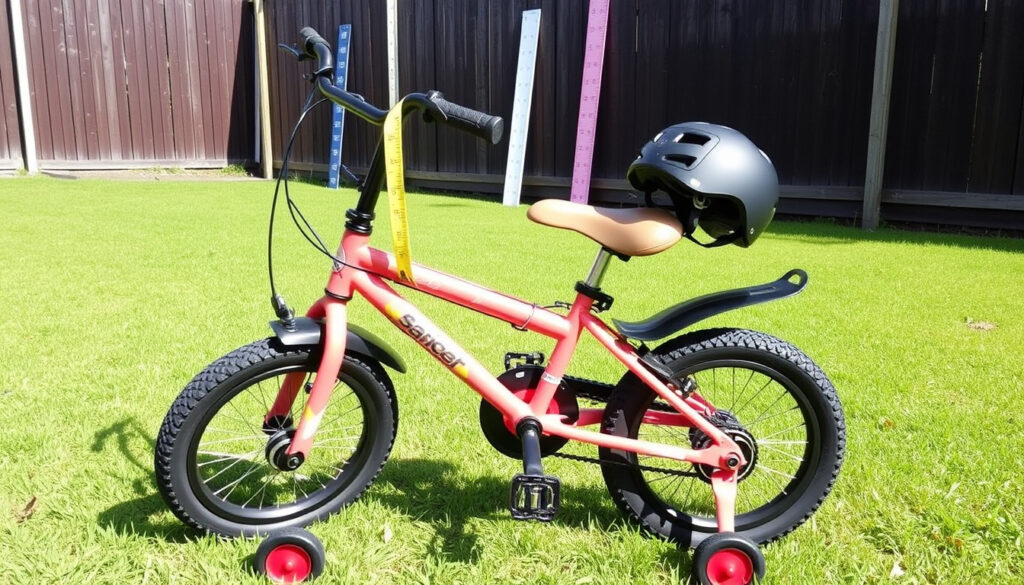
16 Inch Bike NZ: Age, Height & Best Kids Bike Guide
You’ve watched your child rocket past the balance-bike phase and now they’re eyeing a “real” pedal bike — but the sizing charts feel like a foreign language. Picking the right 16-inch bike in New Zealand means matching wheel size to your child’s height and inseam, not just their age.
Typical age range: 4–7 years ·
Recommended height: 98–122 cm (38–48 in) ·
Inseam length requirement: 48–61 cm (19–24 in) ·
Common wheel size measurement: Outer tire diameter (16 in) ·
Number of brands available in NZ: 20+ (including Trek, Giant, Avanti, Malvern Star) ·
Average starting weight of 16-inch bike: 7–9 kg (15–20 lb)
Quick snapshot
- Age 4–7 for 16-inch bikes (Schwinn Bikes sizing guide)
- Height 38–48 inches (Trek Bikes NZ buying guide)
- Inseam 19–24 inches (Schwinn Bikes)
- Evocycles NZ – wide selection of kids’ bikes
- 99 Bikes NZ – multiple brands and sizes
- Trek Bikes NZ – high-end kids’ models
- Lightweight frame (aluminum or steel) ((99 Bikes NZ buying guide))
- Coaster or hand brakes ((99 Bikes NZ buying guide))
- Adjustable seat and handlebars (99 Bikes NZ buying guide)
- Exact price ranges for 16 inch bikes in NZ fluctuates by brand and sale periods
- Whether a specific 3-year-old can ride a 16-inch bike depends on individual growth curves
Six key specs, one pattern: NZ retailers and global brands agree 16-inch bikes serve children from about 3 to 7 years, but the exact fit depends more on the child’s height and inseam than their age.
| Specification | Value |
|---|---|
| Ages | 4–7 years (typical) |
| Height | 98–122 cm |
| Inseam | 48–61 cm |
| Wheel diameter | 16 inches (measured from tire outer edge) |
| Bike weight (avg.) | 7–9 kg |
| Common brake types | Coaster (pedal) + front hand brake |
The implication: brands like Trek Bikes NZ suggest a height of 104.1–116.8 cm for 16-inch bikes, while 99 Bikes NZ cites 84–112 cm, meaning a child at the lower end of the range might need a 14-inch instead. The trade-off: choosing based on age alone can leave you with a bike that’s either too big or too small.
NZ parents face a tighter squeeze than global buyers because local retailers carry fewer budget options and returns on kids’ bikes are rare. A 2 cm mismatch in stand-over height can make a child feel unsafe, and an unsafe bike often gets abandoned.
What Age Is a 16-Inch Bike For?
Typical age range for a 16 inch bike
- Major sources like Schwinn Bikes and Trek Bikes NZ recommend 16-inch bikes for children aged 4 to 7 years.
- Height and inseam are more accurate measures; typical height range is 38–48 inches (96–122 cm) and inseam 19–24 inches (48–61 cm).
- Weight and riding ability also matter — a child who’s still wobbly may benefit from a slightly smaller bike.
Why age alone is not enough
A 4-year-old at the 90th percentile for height will comfortably fit a 16-inch bike, while a 6-year-old at the 10th percentile might still need a 14-inch. Schwinn Bikes emphasizes that the “golden rule” is to choose by inseam rather than age, a view echoed by Trek Bikes NZ.
The pattern: every NZ retailer’s guide we reviewed warns against using age as the sole criterion, yet most websites still display age-first sizing charts.
What Height Is Best for a 16-Inch Bike?
Height and inseam measurements explained
- Height range from Schwinn Bikes: 38–48 inches (96–122 cm).
- Inseam range from Trek Bikes NZ: 40.6–55.8 cm (about 16–22 inches).
- Some NZ retailers, like 99 Bikes NZ, suggest a broader height range of 84–112 cm (33–44 inches).
How to measure your child at home
- Have your child stand barefoot against a wall. Place a book on top of their head and mark the wall. Measure from floor to mark.
- For inseam, use a measuring tape from the crotch (perineum) down to the floor, keeping the tape snug but not tight.
- Compare the inseam number to the bike’s minimum seat height. Your child should be able to stand flat-footed over the top tube with a 1–2 inch clearance.
The catch: some brands, like Liv Cycling New Zealand, list height differently — 48–58 cm stand-over height for their 16-inch models, which translates to a child height of roughly 96–112 cm. Cross-checking multiple sources prevents a mismatch.
A child who fits the height range but has a short inseam relative to their height may struggle to touch the ground. Trek Bikes NZ advises prioritising stand-over height over total height for a safer, more confident ride.
Should You Get a 14 or 16 Inch Bike for a 4 Year Old?
14 vs 16 inch wheel: key differences
- 14-inch bikes typically fit ages 3–5, while 16-inch bikes suit ages 4–7 (Schwinn Bikes).
- Overlap at age 4: a tall 4-year-old may fit a 16-inch, while a small 4-year-old may be better on a 14-inch.
- Weight difference: 14-inch bikes weigh about 6–7 kg, while 16-inch bikes range from 7–9 kg, which can matter for a 4-year-old’s ability to start and stop.
Three wheels sizes, one fork in the road: a 4-year-old at average height sits exactly at the intersection of the 14-inch and 16-inch recommendations.
| Dimension | 14-inch bike | 16-inch bike |
|---|---|---|
| Typical age range | 3–5 years | 4–7 years |
| Height range | 84–102 cm | 96–122 cm (some NZ retailers say 84–112 cm) |
| Inseam range | 40–48 cm | 48–61 cm |
| Approximate weight | 6–7 kg | 7–9 kg |
| Common brake type | Coaster brake only | Coaster + front hand brake |
The implication: for a 4-year-old who measures 102 cm or taller, a 16-inch bike gives more room to grow. For a 4-year-old under 96 cm, a 14-inch bike offers less weight and a more comfortable fit for building confidence. For an average-sized 4-year-old (96–102 cm), the decision hinges on riding ability — confident riders can handle the extra weight and height.
When to size up to a 16 inch
If your child can comfortably stand over a 14-inch bike with bent knees, it’s time to consider a 16-inch. 99 Bikes NZ notes that 16-inch bikes are the “step up after 12-inch bikes,” implying that children who have outgrown a 14-inch may find the 16-inch more appropriate.
Can a 7 Year Old Ride a 16-Inch Bike?
Fit considerations for a 7 year old
- Most 7-year-olds will be above the 16-inch height/age range (Schwinn Bikes), except smaller children.
- If a 7-year-old fits the 16-inch bike now, they may outgrow it quickly — typically within 6–12 months.
- Consider a 20-inch bike if the child is close to the upper limit of the 16-inch range (height over 122 cm).
Signs your child has outgrown a 16 inch
- Knees hit the handlebars when turning.
- Feet are flat on the ground with knees fully bent when seated.
- The child complains of discomfort in the knees or back after short rides.
The pattern: Cycle Trading NZ lists 16-inch bikes for children “approximately ages 5–7 years” and 99–117 cm tall, reinforcing that a 7-year-old near the top of that height band has effectively outgrown the size.
A 7-year-old on a 16-inch bike that’s too small will have poor posture and reduced control. Trek Bikes NZ recommends checking stand-over height annually, since children’s growth spurts can make a perfect fit uncomfortable within months.
Should a 3 Year Old Ride a 12 or 16 Inch Bike?
12 vs 16 inch: fitting the youngest riders
- 12-inch bikes are recommended for ages 2–4 (Schwinn Bikes).
- A 16-inch bike is generally too large for a typical 3-year-old.
- If the child is exceptionally tall (over 38 inches or 96 cm), a 16-inch might fit, but the weight and handling could be problematic.
Balance bikes and pedal bikes for toddlers
For most 3-year-olds, a balance bike (no pedals) or a 12-inch pedal bike with training wheels is the safer choice. 99 Bikes NZ suggests that 16-inch bikes are “for children who have outgrown 12-inch bikes,” meaning a typical 3-year-old is best suited to a 12-inch. The exception: a 3-year-old who measures 96 cm or taller and can comfortably stand over the 16-inch frame could make the leap, but the heavier bike may discourage independent riding.
The catch: a 16-inch bike at 7–9 kg is roughly 50% heavier than a 12-inch bike. For a small child, that extra weight can transform a joyful first ride into a discouraging struggle.
Key Features to Look For in a 16-Inch Kids Bike
Frame material and weight
- Aluminum frames are lighter (typically 7–8 kg) but cost more; steel frames are heavier (8–9 kg) and cheaper.
- Lightweight bikes are easier for children to balance, start, and stop.
- 99 Bikes NZ recommends aluminum frames for younger riders who are still learning.
Brake system
- Coaster (pedal) brakes are standard on 16-inch bikes and are easy for small hands to use.
- Front hand brakes provide better stopping power but require the child to have enough hand strength to squeeze the lever.
- Trek Bikes NZ recommends models with both coaster and hand brakes for a gradual introduction to hand braking.
Adjustable components
- Seat height should be tool-free adjustable to accommodate growth spurts.
- Handlebar height and angle adjustability can improve comfort.
- Schwinn Bikes notes that a properly adjusted bike reduces the risk of falls and injuries.
A 16-inch bike with a lightweight aluminum frame, both brake types, and tool-free seat adjustment gives your child the longest usable life and the safest learning curve. For NZ families, models from Trek, Giant, and Malvern Star (available at Evocycles NZ) consistently meet these criteria.
Where to Buy a 16-Inch Bike in New Zealand
Local bike shops
- Evocycles NZ – offers personalised fitting advice and a range of brands from entry-level to premium.
- 99 Bikes NZ – has buying guides and multiple locations.
- Trek Bikes NZ – high-end kids’ models with warranty and service.
Big-box and online retailers
- Kmart and The Warehouse – budget options starting around NZ$100–150.
- Trade Me – second-hand market with prices typically NZ$50–120.
- Online direct brands – may offer lower prices but lack local fitting support.
The implication: a bike shop fitting today saves you a return trip tomorrow. For NZ parents, the extra NZ$50–100 spent at a specialised retailer often pays for itself in correct sizing and fewer adjustments.
Related reading: **Best Double Sided Tape NZ: Strongest, Heavy Duty & Buying Guide**
abbikes.co.nz, cycletrading.co.nz, bikehike.org, twowheelingtots.com, ebicycles.com, caseycycles.com.au, bikesized.com
Frequently asked questions
What is the weight limit for a 16 inch bike?
Most 16-inch bikes support a rider weight of about 20–30 kg (44–66 lb), though specific limits vary by brand. Check the manufacturer’s specifications before purchasing.
Are 16 inch bikes suitable for learning to ride?
Yes, 16-inch bikes are an excellent size for children who have mastered a balance bike or are transitioning from training wheels. 99 Bikes NZ notes they commonly come with training wheels and no gears, making them ideal for beginners.
How much does a 16 inch bike cost in New Zealand?
Prices range from NZ$100–150 for budget models (Kmart, The Warehouse) to NZ$350–600 for premium brands (Trek, Giant, Malvern Star) at specialist retailers like Evocycles NZ. Second-hand bikes on Trade Me typically cost NZ$50–120.
What brands offer 16 inch bikes in NZ?
Major brands available in New Zealand include Trek, Giant, Avanti, Malvern Star, Liv, and Schwinn. Local retailers like 99 Bikes NZ and Evocycles NZ stock most of these.
Do 16 inch bikes come with training wheels?
Many 16-inch bikes include training wheels as standard equipment or offer them as an optional accessory. 99 Bikes NZ notes that 16-inch bikes commonly come with training wheels and no gears.
How long will a 16 inch bike fit my child?
For a child who fits the size range now, a 16-inch bike typically provides 1–3 years of use before they outgrow it. Trek Bikes NZ recommends checking stand-over height annually.
Is a 16 inch bike good for off-road riding?
16-inch bikes with knobby tires and a lightweight frame can handle light trails and off-road paths. For rougher terrain, consider a 20-inch bike with suspension, but for NZ’s urban pathways and parks, a 16-inch bike with decent tread is perfectly adequate.
For parents in New Zealand, the choice between a 14-inch, 16-inch, or 20-inch bike depends on one clear step: measure your child’s height and inseam, prioritise stand-over clearance, and test the weight of the bike before buying. The wrong size means a bike that gathers dust; the right size means a summer of neighbourhood rides, park trips, and the quiet joy of watching your child pedal ahead with confidence.
More related posts
 Flights from Dunedin to Auckland: Time, Airlines & Fares
 Chicken Recipes for Dinner: Quick, Easy & Viral Hits
 Docking Station for Laptop: Complete Buying Guide
 Five Nights at Freddy’s Age Rating & True Story Guide
 Date and Orange Scones: Fluffy Recipe, Tips & Health Benefits
 Homes for Sale in Auckland NZ 2025: Prices & Guide
 New World Victoria Park Fire Details – Timeline, Facts and Updates
 Warriors Next Game 2025 – Date Time Opponent TV Tickets