Pink Batts Wall Insulation – R-Values, Installation & Costs Guide
Pink Batts wall insulation represents one of Australia’s most widely used residential insulation solutions, manufactured by Fletcher Insulation. These glasswool batts deliver both thermal performance and acoustic control across standard wall cavities, with options ranging from R1.5 to R4.3 in material R-value.
For homeowners and builders across Australia and New Zealand, understanding the specifications, installation requirements, and safety certifications of Pink Batts enables informed decisions during construction or renovation projects. The range has evolved significantly since earlier concerns about installation quality, with current products meeting stringent Australian standards.
This guide examines the complete specifications, proper installation methods, fire safety ratings, and practical costs associated with Pink Batt wall insulation products available in 2025.
What Are Pink Batts and What R-Values Are Available for Wall Insulation?
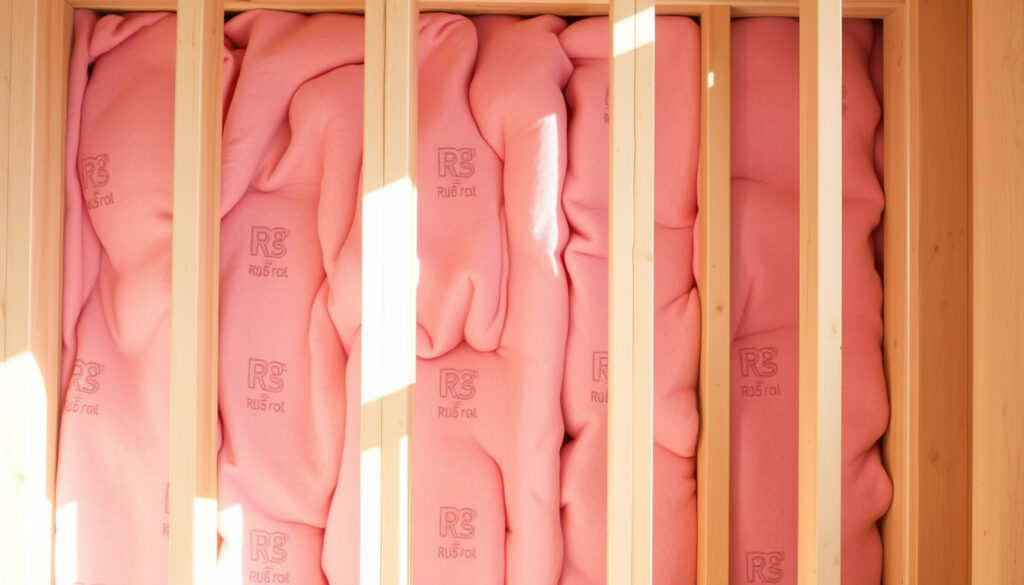
Pink Batts are flexible glasswool insulation batts engineered specifically for installation within timber frame wall cavities. Fletcher Insulation produces these products at their Australian manufacturing facilities, incorporating up to 80% recycled glass content in the manufacturing process. The distinctive pink colouring comes from the binder used in production, which also contributes to the product’s fire-resistant properties.
Flexible glasswool with bio-soluble fibres (FBS-1)
R1.5 to R4.3 for wall applications
Timber frame walls, residential ceilings, new builds and retrofits
AS/NZS 4859.1, AS 3999, CodeMark certified (CM 30006)
The thermal resistance of Pink Batts products is tested at 23°C according to AS/NZS 4859.1, with results being direction-independent. This means the insulation performs equally whether heat flows inward or outward through the wall cavity. Higher R-values indicate greater thermal resistance, with R2.5 suiting most Australian climate zones and R4.3 delivering superior performance for keeping interior temperatures above 18°C in challenging conditions.
Key insights for specifiers and homeowners include:
- Standard wall batts come in widths of 430mm and 580mm, designed for standard stud spacings of 450mm and 600mm centres respectively
- High-density (HD) variants reduce R-value loss in compressed spaces per AS 3999 Appendix E, making them suitable for tighter cavities
- Packs typically contain 12 to 24 batts, covering between 5.99m² and 16.15m² depending on the specific product
- The R2.5 HD range uses a softer, next-generation formulation that handles more comfortably during installation
- Thickness ranges from 70mm for R1.5 products up to 140mm for R4.0 HD options
- All products carry a lifetime warranty when installed according to Fletcher guidelines
| Product | Thickness | Width | Length | Batts/Pack | m²/Pack |
|---|---|---|---|---|---|
| R1.5 Wall | 70mm | 430mm | 1160mm | 24 | 11.97 |
| R1.5 Wall | 70mm | 580mm | 1160mm | 24 | 16.15 |
| R2.0 Wall | 90mm | 430mm | 1160mm | 24 | 11.97 |
| R2.0 Wall | 90mm | 580mm | 1160mm | 24 | 16.15 |
| R2.0 HD Wall | 70mm | 430/450/580/600mm | 1160/1200mm | 12 | 5.99-8.6 |
| R2.5 HD Wall | 90mm | 430/450/580/600mm | 1160/1200mm | 12-14 | 5.99-10.58 |
| R4.0 HD Wall | 140mm | 430/580mm | 1160mm | 5 | 2.49-3.36 |
How Do You Install Pink Batts Wall Insulation?
Proper installation of Pink Batts wall insulation directly affects the thermal performance achieved in service. The products are designed for friction-fit installation between timber studs, meaning they should fill the cavity completely without requiring compression. Compressing batts reduces their effective R-value, which defeats the purpose of selecting a specific insulation rating.
Preparation Before Installation
Before handling any insulation material, electrical power to the work area must be isolated at the fuse box and tagged to prevent accidental reconnection. Measure the actual stud spacing throughout the wall, as construction tolerances can result in variations from the standard 450mm or 600mm centre measurements. Calculate the total area requiring insulation and sketch any fixtures such as downlights or electrical outlets that will need clearance.
Allow Pink Batts to acclimatise by unpacking them at least 24 hours before installation. This stabilises the thickness of the batts after compression in packaging, ensuring they reach their intended dimensions when fitted. Using only batts that match the stud spacing type prevents gaps or compression issues during installation.
Wall Installation Process
For wall cavities, each batt should be cut to length and friction-fitted firmly between adjacent studs. The batt must fill the full depth of the cavity without being forced or compressed. High-density variants exist specifically for situations where standard batts might be compressed, such as in older walls with irregular stud spacing or where services penetrate the cavity. The official Fletcher installation guide provides detailed specifications for each product type.
When cutting batts to length, always cut slightly oversize (approximately 5mm extra) to ensure a snug fit that fills the cavity completely without gaps at the top or bottom.
Ceiling Considerations for Wall Installers
When installing insulation in ceiling spaces adjacent to wall top plates, maintain the required clearance from heat sources. Recessed downlights and other heat-generating fixtures require a minimum 50mm clearance from insulation material, as specified in AS 3999 Appendix B. High-density batts are recommended for areas near recessed lighting to reduce the risk of heat accumulation and potential fire hazards.
For ceiling installations, work from below where possible, using temporary supports if needed. Tape edges of batts where they meet at joist intersections to prevent movement over time. Professional installers often use a combination of standard batts for open ceiling cavities and HD variants in areas with limited clearance or heat sources.
Are Pink Batts Safe and Fire-Rated for Home Use?
Safety concerns around Pink Batts insulation stem largely from events between 2009 and 2010, when a poorly executed Australian government subsidy program led to numerous house fires, electrocutions, and an estimated 18 deaths. These incidents prompted immediate program suspension and fundamental changes to industry standards, training requirements, and product formulations.
Current Fire Safety Ratings
Pink Batts are classified as non-combustible and will not easily burn or melt when exposed to typical fire conditions. This property derives from the glasswool composition and the binder materials used in manufacture. The products carry internationally certified low chemical emissions ratings, making them suitable for indoor residential applications without concerns about off-gassing.
Maintain a minimum 50mm clearance from heat fixtures including recessed downlights, extractors, and heat lamps. This clearance is mandated by AS 3999 and must be enforced regardless of insulation type or fire rating.
Fletcher Insulation holds CodeMark certification (CM 30006) for Pink Batts products, demonstrating compliance with the relevant building code requirements across Australian jurisdictions. This certification provides builders and homeowners with independent verification that the products perform as specified.
Health and Handling Safety
Pink Batts utilise bio-soluble fibres classified as FBS-1, meaning they dissolve harmlessly in the lungs if inhaled in small quantities during installation. This represents a significant improvement over earlier insulation products that used potentially harmful mineral fibres. Nevertheless, following basic handling precautions during installation remains advisable.
The products contain no asbestos, which was a concern with some older insulation materials but is not present in any currently manufactured Pink Batts products. Standard personal protective equipment including gloves, long sleeves, and eye protection is recommended when handling glasswool insulation to minimise skin and respiratory irritation during installation.
What Is the Cost of Pink Batts Wall Insulation?
The installed cost of Pink Batts wall insulation varies based on several factors including the R-value selected, the total area requiring insulation, whether the work involves new construction or retrofit applications, and whether installation is completed as a DIY project or by professional installers. Understanding these variables helps homeowners budget appropriately for insulation projects.
Material Costs by R-Value
Material pricing for Pink Batts products increases with higher R-values, reflecting the greater material density and thickness required. Packs typically cover between 6m² and 17m² depending on the product specification, with higher-density variants generally covering less area per pack due to their compressed format for tighter applications. Current pricing information should be obtained directly from suppliers including Insulation.com.au or Price Rite Insulation as prices fluctuate with market conditions.
Installation Cost Considerations
Professional installation adds a significant component to total project cost but often results in optimal performance due to proper handling, fitting, and compliance with safety standards. Installer fees vary by region and project complexity, with factors including ceiling height, access difficulties, and whether the property is occupied influencing quotes. For larger projects or where safety concerns exist around electrical work, engaging qualified installers is typically the recommended approach.
When comparing insulation costs, calculate the total cost per square metre including materials, installation, and any required safety preparations. The lifetime warranty offered by Fletcher requires proper installation according to their guidelines, which professional installers can certify.
For homeowners planning renovation budgets, understanding the relationship between insulation R-value and ongoing energy savings helps justify the initial investment. Higher R-values increase material costs but typically reduce heating and cooling expenses over the building’s lifetime. Regional climate zone requirements in Australia may mandate minimum R-values for wall insulation in new construction, making early specification essential for building code compliance.
Pink Batts for External Walls: Comparisons and Buying Guide
Pink Batts are specifically designed for internal wall cavity applications between timber studs. For external wall insulation scenarios, alternative products or construction approaches may be more appropriate depending on whether the goal is insulating an existing cavity wall, adding insulation to an external façade, or constructing new walls with higher performance requirements.
Pink Batts Versus Alternative Insulation Products
When comparing insulation options for residential applications, homeowners and builders evaluate factors including thermal performance, acoustic properties, fire safety, environmental impact, and cost. The following comparison focuses on key differentiators between Pink Batts glasswool and Rockwool mineral wool products.
| Factor | Pink Batts (Glasswool) | Rockwool (Mineral Wool) |
|---|---|---|
| Weight | Lighter for equivalent R-value | Heavier construction |
| Handling | Softer, more flexible texture | Stiffer, potentially more irritating |
| Fire Rating | Non-combustible | Non-combustible |
| Recycled Content | Up to 80% recycled glass | Often recycled slag or rock |
| Typical Cost | Generally more affordable | Often higher per square metre |
| Acoustic Performance | Excellent | Excellent, potentially superior |
Both product types deliver excellent acoustic control, with Rockwool sometimes providing marginally superior sound dampening due to its denser composition. For thermal performance, the R-value specification matters more than the product type, assuming both are installed correctly without compression or gaps.
Where to Purchase Pink Batts
Pink Batts products are available through a network of authorised Australian suppliers. Insulation.com.au serves as a direct outlet for Fletcher Insulation products, while trade suppliers including Bowens, No Gap Insulation, and Insulation Easy stock various product ranges. Builders and homeowners should verify supplier authorisation to ensure genuine products and maintain warranty eligibility.
For major construction projects, Insulation Easy provides comprehensive installation guidelines alongside product supply, offering a combined material and installation service. Professional installation ensures compliance with the warranty conditions that require adherence to Fletcher’s published installation requirements.
Historical Development and Safety Improvements
The history of Pink Batts insulation in Australia is marked by a significant crisis that fundamentally reshaped the industry. Between 2009 and 2010, the Australian government implemented a subsidised ceiling insulation program that ultimately resulted in 18 deaths, numerous house fires, and electrical incidents. The program was halted amid evidence of rushed installations by unqualified operators using inappropriate products.
- Pre-2009: Standard Pink Batts products sold through normal trade channels with quality installation practices
- 2009-2010: Government subsidy program leads to rapid growth in unqualified installers, resulting in safety incidents
- 2010: Program suspended following safety incidents; industry-wide review initiated
- Post-2010: Stricter AS/NZS standards implemented including AS/NZS 4859.1 for R-value testing and AS 3999 for installation fixtures
- 2010s onwards: Improved training requirements, CodeMark certification (CM 30006) for Fletcher products, non-combustible upgrades across the range
- 2024-2025: Current products meet all modern safety requirements with updated R-value certifications through to R4.3
The transformation of the insulation industry following these events demonstrates how regulatory responses can drive meaningful safety improvements. Current Pink Batts products bear little resemblance to the materials involved in those incidents, with comprehensive changes to formulation, standards, and installation requirements creating a substantially safer product range.
Established Facts and Areas of Uncertainty
Reviewing the available evidence reveals both clearly established information about Pink Batts wall insulation and some areas where uncertainty or variation exists that homeowners should understand.
| Category | Details |
|---|---|
| Established Information | |
| Material Composition | Glasswool with up to 80% recycled content, FBS-1 bio-soluble fibres, no asbestos |
| Fire Performance | Non-combustible classification verified through testing and CodeMark certification |
| R-Value Testing | Material R-value tested at 23°C per AS/NZS 4859.1, direction-independent results |
| Standards Compliance | Products meet AS/NZS 4859.1 and AS 3999; CodeMark certified (CM 30006) |
| Information Requiring Further Verification | |
| Regional Pricing | Costs vary significantly by region, quantity, and supplier; obtain local quotes |
| Long-term Moisture Performance | Performance in persistently humid environments requires specific assessment |
| Actual Installed R-Value | Total R-value depends on installation quality; compression or gaps reduce performance below stated material R-value |
The distinction between material R-value and installed R-value is particularly important for homeowners. The stated R-values for Pink Batts products represent laboratory-measured thermal resistance of the material itself. In actual building applications, the achievable R-value depends on proper installation without compression, complete filling of cavities without gaps, and appropriate clearance from heat sources.
The Role of Pink Batts in Residential Energy Efficiency
Wall insulation contributes to overall building thermal performance by reducing heat transfer through the building envelope. In Australian residential construction, walls typically represent a significant portion of the total envelope area alongside ceilings and floors, making specification of appropriate wall insulation essential for achieving comfortable indoor temperatures and managing heating and cooling costs.
Pink Batts products are suitable for both new construction and retrofit applications in timber frame walls. The flexibility of the glasswool material accommodates minor variations in stud spacing and cavity dimensions, while the friction-fit installation method avoids the need for mechanical fasteners that might create thermal bridges or compromise air barriers. For homeowners planning renovations, combining wall insulation upgrades with ceiling and floor insulation improvements typically yields the most significant energy savings.
The acoustic performance of Pink Batts provides additional benefits beyond thermal control. Sound transmission through walls is reduced by the fibrous glasswool structure, which absorbs and dampens vibrations. This acoustic benefit is particularly valuable in multi-level homes, properties near busy roads or airports, and where internal privacy between rooms is desired. The climate control guide from Fletcher Insulation provides detailed information on achieving specific acoustic ratings with Pink Batts products.
Official Sources and Industry Standards
Pink Batts are manufactured by Fletcher Insulation and meet the requirements of AS/NZS 4859.1 and AS 3999. The products are CodeMark certified (CM 30006) demonstrating compliance with the Building Code of Australia.
— Fletcher Insulation Technical Documentation
Fletcher Insulation maintains comprehensive technical documentation for Pink Batts products including installation guides, product data sheets, and specification sheets for each product variant. The January 2026 wall product and installation guide represents the most current guidance for specification and installation of wall insulation products.
Material R-value is tested at 23°C per AS/NZS 4859.1 and is direction independent. The actual total R-value achieved in a building application will depend on the quality of installation.
— Australian/New Zealand Standard AS/NZS 4859.1
Standards Australia maintains the AS/NZS 4859.1 standard that governs thermal resistance testing for insulation materials, ensuring consistent measurement methodology across all products marketed in Australia and New Zealand. Compliance with this standard provides assurance that stated R-values are accurate and comparable across different manufacturers.
Summary
Pink Batts wall insulation offers a proven solution for thermal and acoustic control in Australian residential construction, with products ranging from R1.5 to R4.3 to suit various climate requirements and performance targets. The glasswool composition provides non-combustible fire performance, with up to 80% recycled content supporting environmental sustainability goals.
Successful installation requires measuring stud spacing accurately, allowing batts to stabilise before fitting, and installing without compression to achieve the stated material R-value. Professional installation ensures warranty compliance and optimal long-term performance. When planning insulation upgrades or new construction, obtaining multiple quotes from authorised suppliers helps ensure competitive pricing, while referencing official Fletcher documentation verifies current product specifications.
For homeowners calculating total construction or renovation budgets, the Cordell Sum Sure Calculator – Accurate Australian Rebuild Guide provides tools for estimating costs including insulation materials and installation.
Frequently Asked Questions
What are Pink Batts made from?
Pink Batts are made from glasswool, a material manufactured from melted glass fibres. The products contain up to 80% recycled glass content and use FBS-1 bio-soluble fibres that dissolve harmlessly if inhaled. They contain no asbestos.
Do Pink Batts contain asbestos?
No. Pink Batts products manufactured by Fletcher Insulation contain no asbestos. The glasswool composition uses only approved materials that meet current Australian safety standards.
Can Pink Batts be used in ceilings?
Yes. While Pink Batts are optimised for wall applications, they can also be installed in ceiling cavities. Special considerations apply near heat sources including recessed downlights, which require 50mm clearance from insulation per AS 3999.
How long do Pink Batts last?
Pink Batts carry a lifetime warranty when installed according to Fletcher guidelines. The glasswool material does not degrade under normal conditions, making it a permanent addition to the building envelope once correctly installed.
What R-value do I need for wall insulation in Australia?
R-value requirements vary by climate zone and building code requirements in your location. R2.5 suits most Australian climates, while higher R-values to R4.3 provide superior performance for extreme temperature regions or high-performance energy-efficient designs.
Are Pink Batts safe for someone with allergies or respiratory conditions?
The FBS-1 bio-soluble fibres used in Pink Batts are designed to dissolve if inhaled, reducing long-term respiratory risk. However, during installation, dust from handling any insulation material may cause temporary irritation. Wearing appropriate personal protective equipment during installation is recommended.
Can I install Pink Batts myself?
DIY installation is possible for competent homeowners following the preparation and installation guidelines. However, the lifetime warranty requires installation according to Fletcher specifications, which professional installers can certify. Complex situations involving electrical services or limited access typically benefit from professional installation.
More related posts
 What Is a Browser Fingerprint? How It Works & How to Stop It
 The Little Mermaid (2023): Hit or Flop? Casting Controversy
 Doom: The Dark Ages: Hit or Flop? Worth Buying in 2025
 What Do Eels Eat? Wild, Freshwater, and Pet Diet Guide
 New Zealand vs New Caledonia: World Cup Qualification Story
 Off the Grid with Colin and Manu: Inside Their Friendship
 New Zealand Mortgage Rates Decrease: 2026 Cuts & Forecasts
 How to Pack a Suitcase Efficiently: Rules & Methods