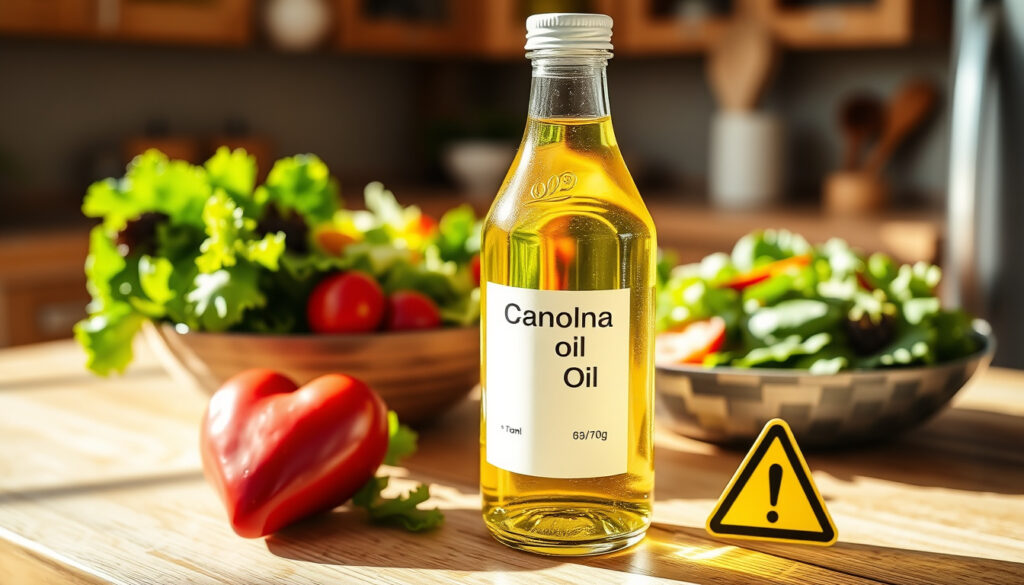
Is Canola Oil Bad for You? Health Risks and Benefits Explained
Few kitchen staples spark as much debate as a bottle of canola oil. For every claim that it’s a heart-healthy workhorse, there’s a warning about inflammation and processing. So where does the science actually land? This article sorts through the evidence — from saturated fat numbers to the European ban myth — so you can decide for yourself.
Saturated fat content: 7% of total fat ·
Omega-3 fatty acids: 9.1 g per 100 g ·
Omega-6 fatty acids: 18.6 g per 100 g ·
Smoke point: 400°F (204°C) ·
Monounsaturated fat: 62%
Quick snapshot
- Low in saturated fat (7%) (Cymbiotika (health & wellness platform))
- High in unsaturated fats (93%) (Cymbiotika (health & wellness platform))
- Supports cholesterol management when replacing saturated fats (NIH/PMC (U.S. National Institutes of Health))
- Contains omega-6 fatty acids (18.6 g/100 g) (Healthline (evidence-based health publisher))
- Omega-6 to omega-3 ratio about 2:1 (Cymbiotika (health & wellness platform))
- Some studies link high omega-6 to inflammation, but evidence is mixed (Medical News Today (health news outlet))
- High smoke point (400°F) suitable for frying (Healthline (evidence-based health publisher))
- Neutral flavor works for most dishes (Medical News Today (health news outlet))
- Stable when heated; resists oxidation (NIH/PMC (U.S. National Institutes of Health))
- American Heart Association approves (Healthline (evidence-based health publisher))
- Harvard Nutrition Source calls it generally healthy (Healthline (evidence-based health publisher))
- Some cardiologists prefer olive oil for extra benefits (Medical News Today (health news outlet))
Canola oil’s nutritional profile is often the starting point of the conversation. Here are the verified numbers per 100 grams:
| Nutrient / Property | Value |
|---|---|
| Fat composition | 7% saturated, 62% monounsaturated, 31% polyunsaturated (NIH/PMC (U.S. National Institutes of Health)) |
| Smoke point | 400°F (204°C) (Healthline (evidence-based health publisher)) |
| Omega-3 per 100 g | 9.1 g |
| Omega-6 per 100 g | 18.6 g (Healthline (evidence-based health publisher)) |
| Vitamin E | 17.46 mg per 100 g |
What are the negatives of canola oil?
Is canola oil inflammatory?
- Canola oil contains 18.6 g of omega-6 and 9.1 g of omega-3 per 100 g (Healthline (evidence-based health publisher)).
- Excessive omega-6 relative to omega-3 is thought to promote inflammation; the ideal ratio is about 1:1 (Cymbiotika (health & wellness platform)).
- A 2020 study found that participants consuming only olive oil had significantly lower blood levels of interleukin-6 (a marker of inflammation) compared to those consuming only canola oil over six weeks (Healthline (evidence-based health publisher)).
- Animal studies show that compounds formed during heating of canola oil increased certain inflammatory markers in rats (Healthline (evidence-based health publisher)).
Is canola oil cancerous?
- No direct human studies link canola oil consumption to cancer.
- Some animal studies have raised concerns: a rat study demonstrated that a canola oil diet significantly decreased lifespan and led to sizable increases in blood pressure compared to a soybean oil diet (Healthline (evidence-based health publisher)).
- Canola oil is generally recognized as safe (GRAS) by regulatory authorities (Cymbiotika (health & wellness platform)).
The implication: current evidence does not support a cancer risk in humans, but the animal data warrant further research.
Is canola oil bad for your heart?
- In 2006, the FDA authorized a qualified health claim stating that eating about 1.5 tablespoons (19 grams) of canola oil daily may reduce coronary heart disease risk due to unsaturated fat content (NIH/PMC (U.S. National Institutes of Health)).
- A 2013 industry-funded review linked canola oil intake to beneficial effects on total cholesterol and LDL cholesterol (Healthline (evidence-based health publisher)).
- A 2018 study suggests that people who use canola oil for cooking may be more likely to have metabolic syndrome (Medical News Today (health news outlet)).
Canola oil’s low saturated fat helps LDL cholesterol, yet some observational studies tie it to metabolic syndrome. The difference may be the food context — deep-fried foods versus home cooking.
The pattern: the cardioprotective effects of canola oil appear strongest when it replaces saturated fat in whole-food cooking rather than in ultra-processed contexts.
Is canola oil better than olive oil for health?
What is the difference between olive oil and canola oil?
Both oils are recommended by the American Heart Association, but their fatty acid profiles differ sharply. Three contrasts stand out:
- Canola oil has higher omega-3 (9.1 g vs ~1 g per 100 g) and lower saturated fat (7% vs 14–20%) than olive oil (Healthline (evidence-based health publisher)).
- Olive oil has higher monounsaturated fat (73% vs 62%) and is rich in polyphenols with antioxidant effects.
- Canola oil has a higher smoke point (400°F vs 350–375°F for extra virgin olive oil), making it better for high-heat frying (Healthline (evidence-based health publisher)).
Two oils, one question: which one fits your cooking style and health goals? Here’s a side-by-side:
| Aspect | Canola Oil | Olive Oil |
|---|---|---|
| Saturated fat | 7% | 14%–20% (Healthline) |
| Monounsaturated fat | 62% | 73% |
| Omega-3 per 100 g | 9.1 g | ~1 g |
| Smoke point | 400°F (204°C) | 350–375°F (177–191°C) |
| Polyphenols | Low | High |
| Best uses | Frying, baking, neutral cooking | Dressings, low-heat sautéing, finishing |
Choose canola when heat stability matters; choose olive when antioxidant content and flavor are the priority. For daily heart health, both beat butter or coconut oil.
What this means: neither oil is inherently superior; the choice depends on cooking method and overall dietary pattern.
Do cardiologists recommend canola oil?
Which oil should be avoided?
- The American Heart Association lists canola oil as a heart-healthy option, citing its low saturated fat (Healthline).
- Some cardiologists prefer olive oil due to minimal processing and higher polyphenol content (expert opinion).
- Canola oil contains 7% saturated fat, well below the 20% threshold that raises LDL (Cymbiotika).
- Partially hydrogenated oils (trans fats) are the unhealthiest oils and should be avoided entirely (Medical News Today).
The pattern: major health organizations endorse canola oil, but individual cardiologists often lean toward extra-virgin olive oil when patients ask for the single best choice.
What is the most unhealthy oil?
What is the unhealthiest oil for cooking?
- Partially hydrogenated oils (industrial trans fats) are the worst, linked to heart disease and inflammation (Healthline).
- Coconut oil and palm oil are high in saturated fat (82% and 50% respectively) and can raise LDL cholesterol when used heavily (Medical News Today).
- Canola oil is not considered unhealthy by major health organizations, despite its processing concerns (Cymbiotika).
The unhealthiest oils are those high in trans fats (check labels for “partially hydrogenated”) and tropical oils used in processed foods. Canola oil sits in a middle zone — far safer than trans fats, but less studied than olive oil for long-term daily use.
The implication: canola oil is not the worst option, but for daily raw use olive oil offers more proven benefits.
Why is canola oil banned in Europe?
The truth about canola oil
- Canola oil is not banned in Europe; it is widely sold and consumed across EU countries (Medical News Today).
- The myth stems from confusion over EU regulations that set limits on erucic acid levels in oils (below 5%), which canola oil easily meets (BuzzRx (health education platform)).
- Canola oil complies with all EU safety standards and is approved for human consumption (Cymbiotika).
The catch: this persistent rumor is a classic case of a regulation misread. Europe didn’t ban canola — it banned the high-erucic-acid rapeseed oil that canola was bred to replace.
Upsides
- Low in saturated fat (7%) – supports heart health
- High smoke point (400°F) – excellent for frying and high-heat cooking
- Neutral flavor – versatile for baking, stir-fries, and dressings
- Contains beneficial omega-3 fatty acids (9.1 g/100 g)
- Approved by the FDA with a qualified health claim for reducing coronary heart disease risk (NIH/PMC)
Downsides
- Relatively high in omega-6 (18.6 g/100 g) – may promote inflammation in high-omega-6 diets
- Most canola oil is highly refined using hexane and bleaching agents – a processing concern
- Some animal studies associate canola oil with increased blood pressure and reduced lifespan (Healthline)
- Lacks the antioxidant polyphenols found in olive oil
- Observational data link canola oil cooking to higher rates of metabolic syndrome (Medical News Today)
Confirmed facts
- Canola oil is low in saturated fat and high in unsaturated fats (Cymbiotika)
- It is recommended by the American Heart Association as part of a heart-healthy diet (Healthline)
- Canola oil is not banned in Europe; it meets EU safety standards (Medical News Today)
What’s unclear
- Health impact of the refining process (hexane, bleaching) – little human data
- Long-term effects of high omega-6 intake from canola oil on systemic inflammation
- Whether organic or expeller-pressed varieties offer significant health advantages over refined canola oil
“Canola oil is generally considered a ‘healthy’ oil because it is very low in saturated fat.”
Dr. Guy Crosby, Harvard T.H. Chan School of Public Health (Healthline)
While canola oil is low in saturated fat and recommended by the American Heart Association, some studies suggest potential downsides, and for those seeking alternative health benefits, cranberry juice benefits might be of interest.
“Some studies suggest that canola oil may increase inflammation and negatively impact memory and heart health.”
Healthline editorial (Healthline)
“The debate over canola oil safety centers on its omega-6 content and potential inflammatory effects.”
Verywell Health (expert health source)
Why this matters: The scientific consensus is split: regulatory bodies endorse canola oil for heart health, while independent researchers flag the omega-6 imbalance and processing concerns. For the average home cook, the evidence suggests canola oil is a safe, affordable choice for high-heat cooking, but not the only — or necessarily the best — option for every meal. For someone looking to minimize daily inflammation risk, the clear move is to pair canola oil (when frying) with a cold-pressed olive oil (for dressings and low-heat use), or to opt for expeller-pressed organic canola if you want to avoid hexane. The verdict is not black-or-white, but the data support one conclusion: canola oil is far from the villain it’s sometimes made out to be, yet it’s also not the unqualified hero its marketing once claimed.
Frequently asked questions
Is canola oil a heavily processed food?
Most commercial canola oil is refined using heat, hexane, and bleaching agents. Cold-pressed or expeller-pressed varieties undergo less processing.
Does canola oil contain trans fat?
Refined canola oil contains trace amounts of trans fat (usually under 1%), well within FDA limits. Unrefined versions have negligible trans fats.
Can canola oil be used for deep frying?
Yes. Its high smoke point (400°F) and neutral flavor make it a popular choice for deep frying (Healthline).
Is canola oil safe for everyday cooking?
Yes, major health organizations consider canola oil safe for daily use in moderate amounts. Variety in oils is still recommended.
What is the difference between refined and unrefined canola oil?
Refined canola oil has a higher smoke point and longer shelf life but loses some nutrients. Unrefined (expeller-pressed) retains more flavor and vitamin E.
Does canola oil go rancid quickly?
Canola oil has a moderate shelf life (about 1 year unopened). It oxidizes faster than olive oil due to higher polyunsaturated content, so store it in a cool, dark place.
Is organic canola oil healthier?
Organic canola oil is produced without synthetic pesticides and often uses expeller-pressing instead of hexane extraction, but its fatty acid profile is identical to conventional canola oil.
More related posts
 Boundary Fence Rules NZ: Height, Costs & Disputes Guide
 Apex Car Rental Auckland: Honest Review & Guide
 A Court of Mist and Fury in Order: ACOTAR Series Guide
 Maeve Courtier-Lilley – Unverified Ibiza Incident Reports
 West End Schnapper Bar Whangārei: Menu, Photos, Delivery
 What Is My Car Worth? Free Valuation Guide for Ireland
 Grey Lynn Community Centre: Services, Bookings & More
 Is Kylee Guy Still With Kent Martin? Life After Earthquake