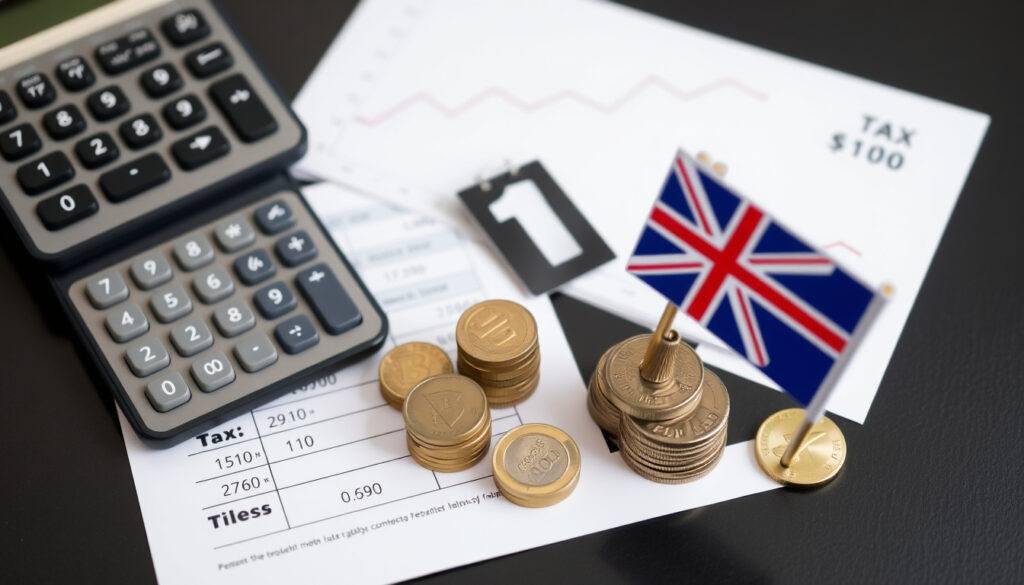
NZ Tax Brackets 2024: Complete Guide to Rates & Examples
Tax season just got trickier: New Zealand’s tax brackets shifted mid-year, with a new 39% top rate taking effect on 31 July 2024. If you’re trying to figure out how much of your pay cheque goes to Inland Revenue, the 2024-25 New Zealand tax brackets are your starting point.
New Zealand income tax rate (lowest bracket): 10.5% ·
New Zealand income tax rate (highest bracket, 2024): 39% ·
Tax-free threshold (2024-25): $0 – $15,600 ·
33% tax bracket applies to income over: $78,100 (2024-25)
Quick snapshot
- Five tax brackets: 10.5%, 17.5%, 30%, 33%, 39% (Inland Revenue – Tax rates for individuals)
- 39% rate applies to taxable income over $180,000 (IRD)
- No tax-free threshold; first dollar taxed at 10.5% (IRD)
- Exact impact of secondary tax codes on total tax across multiple jobs (IRD – Secondary tax codes)
- Future tax rates for 2025-26 and beyond (not yet announced) (IRD)
- 31 July 2024: New tax thresholds took effect mid-year (IRD)
- 1 April 2025: Next financial year starts with unchanged brackets (IRD)
- Tax rates for 2025-26 likely to remain the same unless new legislation passed (New Zealand Treasury – Budget 2024)
- Use IRD’s yearly-income calculator to get exact figures for your situation (IRD – Work out tax on your yearly income)
These five brackets determine how much tax you pay on every dollar earned.
| Label | Value |
|---|---|
| Number of tax brackets (2024-25) | 5 |
| Lowest marginal rate | 10.5% |
| Highest marginal rate | 39% |
| Tax on $70,000 (approx net) | $54,200 |
| Tax on $100,000 (approx net) | $71,300 |
What are the NZ tax brackets for 2024?
The New Zealand income tax system has five progressive brackets for the 2024-25 financial year (after the mid-year adjustment on 31 July 2024). The Inland Revenue (IRD) sets these rates, which apply to all resident individual taxpayers.
Income threshold and rate table (2024-25)
Five brackets, one pattern: the more you earn, the higher the rate on each additional dollar. There is no tax-free threshold – the first dollar is taxed at 10.5%.
| Taxable income range | Marginal tax rate |
|---|---|
| $0 – $15,600 | 10.5% |
| $15,601 – $53,500 | 17.5% |
| $53,501 – $78,100 | 30% |
| $78,101 – $180,000 | 33% |
| $180,001 and over | 39% |
Why this matters: Because the system is progressive, only the portion of income within each bracket is taxed at that rate. A salary jump from $78,000 to $80,000, for example, means only the extra $2,000 is taxed at 33% – not your entire salary.
How the 39% rate fits in
The top rate of 39% was introduced as a new bracket for income over $180,000, effective from 31 July 2024. Previously, the maximum was 33%. According to PwC’s tax summary (individual taxes on personal income), this change was part of the 2024 Budget and aims to increase revenue from high-income earners.
Taxpayers earning over $180,000 pay 39% on every dollar above that line. For someone earning $200,000, the 39% slice applies to $20,000 of income – meaning an extra $1,200 in tax compared to the old 33% top rate.
What is the 33% tax bracket in New Zealand?
The 33% bracket covers income between $78,101 and $180,000. It’s the second-highest marginal rate and applies to a wide range of mid-to-high salaries.
Income range for 33% rate
For the 2024-25 year, every dollar of taxable income between $78,101 and $180,000 is taxed at 33%. This bracket captures many professionals, managers, and dual-income households. According to IRD, the bracket was unchanged in the recent adjustments – only the top rate was added above it.
Difference between 30% and 33% brackets
The 30% bracket covers income from $53,501 to $78,100. The jump from 30% to 33% means the marginal tax rate increases by 3 percentage points once you earn above $78,100. For a worker earning $80,000, the extra $1,900 above the threshold incurs 33% instead of 30% – a difference of $57 in tax.
- 30% bracket: $53,501 – $78,100
- 33% bracket: $78,101 – $180,000
The pattern: The 33% bracket is where New Zealand’s progressive tax system starts to bite for higher earners, especially after the 39% top rate was added above it.
Who pays 39% tax in New Zealand?
The 39% rate applies to taxable income over $180,000. This threshold was introduced in the 2024 Budget and took effect on 31 July 2024 for most taxpayers.
Income threshold for 39% rate
From 31 July 2024, any resident individual earning more than $180,000 in taxable income pays 39% on the portion above that line. The IRD confirms this replaces the previous top rate of 33% for high-income earners.
Examples: how much tax at $200,000
For a gross income of $200,000, the tax calculation (using standard rates and excluding ACC earners’ levy) is:
- 10.5% on first $15,600 = $1,638
- 17.5% on next $37,900 = $6,632.50
- 30% on next $24,600 = $7,380
- 33% on next $101,900 = $33,627
- 39% on remaining $20,000 = $7,800
- Total tax: $57,077.50, leaving approximately $142,922 net (before ACC levy).
The trade-off: High-income earners – including business owners and investors – will see a noticeably higher tax bill on income above $180,000. For someone earning $250,000, the extra tax compared to the old 33% top rate is $1,200 per $10,000 above the threshold.
The 39% rate doesn’t apply to capital gains (New Zealand has no broad capital gains tax) but it does apply to most forms of employment income, business profits, and rental income.
The implication: For high-income earners, the new 39% bracket adds a meaningful cost on earnings above $180,000, making tax planning more important than before.
How much is $70,000 after taxes in New Zealand?
A gross salary of $70,000 falls into four brackets: 10.5%, 17.5%, 30%, and just touches the 33% bracket? Let’s calculate.
PAYE calculation for $70,000 salary
For the 2024-25 year, a $70,000 gross annual income is taxed as follows (using standard rates and excluding ACC levy and KiwiSaver):
- 10.5% on first $15,600 = $1,638
- 17.5% on next $37,900 = $6,632.50
- 30% on remaining $16,500 ($70,000 – $53,500) = $4,950
- Total tax: $13,220.50
- Net pay (before ACC levy): approximately $56,779.50
After the ACC earners’ levy (around 1.46% on gross earnings), the net pay is roughly $54,200. According to Hnry’s guide to NZ tax rates (tax software for freelancers), this estimate does not include student loan or KiwiSaver deductions, which would reduce take-home pay further.
Net take-home pay estimate
Most calculators report a net take-home of approximately $54,200 for a $70,000 salary, assuming no extra deductions. This puts your average weekly pay at about $1,042 after tax.
The implication: At $70,000, you’re in the 30% marginal bracket but a large portion of your income is still taxed at lower rates, so the effective tax rate is around 22.6%.
How much is $100,000 after tax in New Zealand?
A gross income of $100,000 pushes you into four brackets: 10.5%, 17.5%, 30%, and 33% on the portion above $78,100.
PAYE calculation for $100,000 salary
- 10.5% on first $15,600 = $1,638
- 17.5% on next $37,900 = $6,632.50
- 30% on next $24,600 ($78,100 – $53,500) = $7,380
- 33% on remaining $21,900 ($100,000 – $78,100) = $7,227
- Total tax: $22,877.50
- Net pay (before ACC levy): approximately $77,122.50
After ACC earners’ levy, the net income is around $71,300 (according to MoneyHub’s New Zealand tax brackets guide). This is a significant jump from the $70k example – your marginal rate is now 33%.
Difference from $70k after-tax outcome
Moving from $70,000 to $100,000 results in an additional $30,000 gross income, but the net increase is only around $17,100 because the extra earnings are taxed at 30% (first $8,100) and 33% (the rest). The effective tax rate rises to about 29%.
Why this matters: The after-tax gap between $70k and $100k is smaller than the gross difference suggests, but $100k still places you well above the national median personal income of $65,000–$70,000 according to Stats NZ – Labour Market Statistics (March 2024).
Is $100,000 a good salary in New Zealand?
With a net take-home of around $71,300 after tax and ACC, $100,000 gross puts you well above the national median. The question is whether that translates to comfortable living.
Median wage comparison
Stats NZ reports the national median personal income at $65,000–$70,000 as of March 2024. At $100,000, you earn roughly 40% more than the median worker. By that measure, it’s a strong salary.
After-tax spending power
After tax and ACC levy, $100,000 leaves about $71,300 for the year – roughly $5,940 per month. After rent or mortgage (say $2,000–$2,500), groceries ($600–$800), transport, and utilities, a single person can save a decent amount. For a family with dependents, the same income goes further in smaller cities than in Auckland or Wellington.
The catch: KiwiSaver and student loan deductions eat into that net figure. At the 3% KiwiSaver minimum, that’s another $3,000 gone. Still, $100,000 ranks as a high income nationally.
What are the New Zealand tax rates for foreigners?
Non-residents face a different tax treatment on certain income types, though employment income is taxed at the same progressive rates as residents.
Resident vs non-resident tax rates
Non-residents who work in New Zealand pay the same marginal rates (10.5% to 39%) on their employment income. However, on investment income like interest and dividends, non-residents pay lower withholding tax: 10.5% on interest and 15% on dividends. The IRD’s non-resident guidance (tax authority’s dedicated page) provides full details.
Tax code M vs special tax codes
Foreigners working in New Zealand use the same tax codes as residents: M for a main job, SB/S/SH/ST for secondary income. Non-residents with only New Zealand-sourced income may also use the M code. Special tax codes are available for those with complex situations.
The pattern: For employment income, the tax treatment is identical. The differences show up in investment income and certain withholding obligations.
Three common salaries, one clear trend: the proportion of tax grows as income increases.
| Gross annual income | Approximate tax (incl. ACC levy) | Approximate net take-home |
|---|---|---|
| $70,000 | $15,800 | $54,200 |
| $100,000 | $28,700 | $71,300 |
| $200,000 | $70,000 | $130,000 |
The pattern: The higher the salary, the larger the proportion lost to tax – from 22.6% at $70k to 35% at $200k. That’s progressive taxation in action.
Timeline: Key dates for NZ tax bracket changes
- 1 April 2024: New tax thresholds effective for most taxpayers (but old thresholds still applied until 30 July 2024) (IRD)
- 30 May 2024: New Zealand Budget 2024 announced the tax threshold changes (New Zealand Treasury – Budget 2024)
- 31 July 2024: New thresholds (including 39% bracket) fully took effect (IRD)
- 1 April 2025: Next financial year begins; current thresholds likely continue unless changed (IRD)
The catch: The 2024-25 tax year is a composite year with two sets of thresholds (before and after 31 July). The simplified table above uses the post-July rates, which are the ones that will apply from now on.
Confirmed facts
- Current tax rates for individuals from IRD as published for 2024-25 (IRD)
- 39% rate applies to income over $180,000 (IRD)
- Thresholds for 10.5%, 17.5%, 30%, 33% as per IRD official table (IRD)
What’s unclear
- Exact impact of secondary tax codes on total tax across multiple jobs (IRD – Secondary tax codes)
- Future tax rates for 2025-26 and beyond (not yet announced) (IRD)
- Whether the composite tax year calculation affects tax refunds for mid-year income changes (IRD)
“New Zealand uses progressive or gradual tax rates, meaning the rate increases as income increases.”
Inland Revenue (regulator – New Zealand tax authority)
“The 2024 Budget introduced a new top personal tax rate of 39% for income exceeding $180,000, effective from 31 July 2024.”
For the average New Zealand earner on $70,000 to $100,000, the new brackets mean a slightly higher share goes to tax at the top end, but the increase is modest for most. The real impact is on high-income earners above $180,000, who now face a 39% marginal rate. For anyone planning their finances, the advice is straightforward: use the IRD’s yearly-income calculator (official government tool) to get exact numbers for your situation – and factor in your KiwiSaver and student loan deductions separately. If you’re considering a move to New Zealand, the same brackets apply to residents, but non-residents may have different rates on certain investment income – check IRD’s non-resident guidance (tax authority’s dedicated page).
soloapp.nz, moneyhub.co.nz, en.wikipedia.org, bdo.nz, taxsummaries.pwc.com, ird.govt.nz
Frequently asked questions
What is the secondary tax rate in New Zealand?
Secondary tax codes apply to extra jobs or income sources. The rate depends on your total expected annual income from all sources. IRD provides specific secondary tax codes (e.g., SB, S, SH, ST) with rates matching your primary bracket. See IRD’s secondary tax codes page for full details.
How do I use the NZ income tax calculator?
The IRD’s yearly-income calculator works for any year from 2011 to the current year. Enter your total taxable income, and it shows the tax due. It does not include tax credits, KiwiSaver, or student loan deductions – you’ll need to adjust manually.
What is the M tax code rate in New Zealand?
The M tax code is the standard code for most employees with one job and no special circumstances. It uses the progressive tax rates (10.5% to 39%) applied to your pay as if it’s your only source of income. The rate itself isn’t fixed; it’s calculated per pay period based on the annual thresholds.
Do foreigners pay different tax rates in NZ?
Non-residents pay the same tax rates as residents on employment income earned in New Zealand. However, on investment income (interest, dividends) non-residents may pay lower withholding tax rates: 10.5% on interest, 15% on dividends. See IRD’s non-resident guidance for specifics.
What is the tax rate for dividends in New Zealand?
Dividends are generally taxed at your marginal rate, but most companies pay imputation credits (franking credits) to reflect tax already paid. Non-residents pay a 15% non-resident withholding tax on dividends. For residents, dividends are added to other income and taxed progressively.
How does the ACC earners’ levy affect my pay?
The ACC earners’ levy is a separate charge (1.46% of gross earnings for 2024-25) deducted from your pay along with tax. It funds the accident compensation scheme. It’s not tax-deductible and reduces your net pay.
Can I claim tax back if I earned less than $15,600?
New Zealand has no tax-free threshold, so even the first dollar is taxed at 10.5%. If your total tax deducted exceeds the correct amount (e.g., through wrong tax code), you may get a refund after filing your annual tax return. Use the IRD calculator to check.
More related posts
 Super Rugby Points Table 2025: Standings, Scoring & Playoffs
 NRL Ladder Games Today: Round 10 Standings & Fixtures
 NZ Spiders Identification Chart: Common & Venomous Guide
 Most Awarded Pie in NZ: Rosedale’s 2025 Supreme Win
 Area of a Triangle: Formula, Examples, and Calculator Guide
 Eat Well for Less – Budget Guide to Healthy Eating
 Times Tables .com: #1 Multiplication Practice Site Guide
 Long Island Iced Tea: Ingredients, ABV, Calories & Recipes