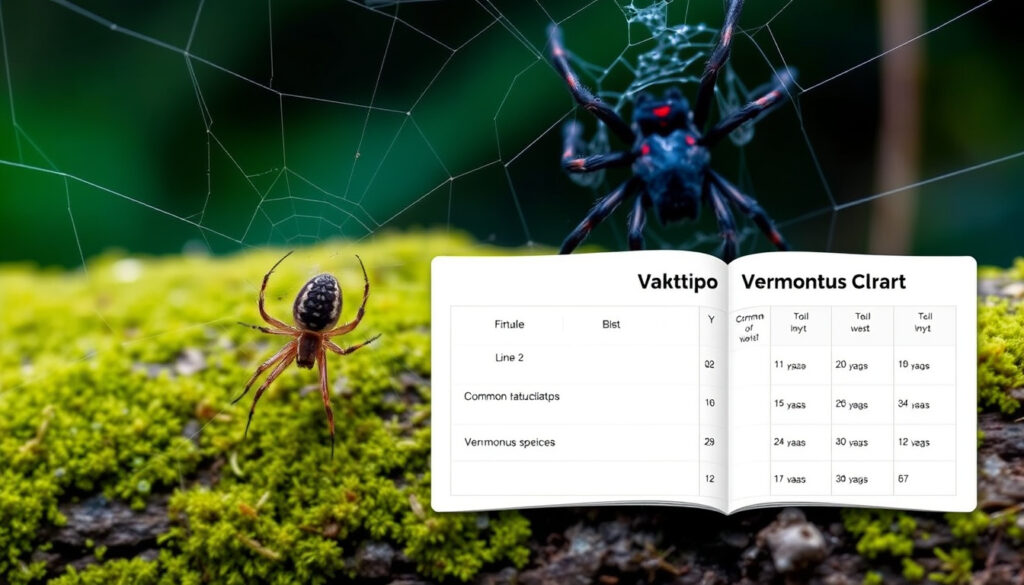
NZ Spiders Identification Chart: Common & Venomous Guide
New Zealand is home to thousands of spider species, but only a handful are ever seen indoors. Knowing which ones are harmless and which to avoid can turn a nervous glance into a confident identification. In this guide, you’ll learn the most common spiders, the only venomous ones, and a simple step-by-step method to identify any spider you encounter.
Number of spider species identified in New Zealand: 583 · Venomous species of medical concern: 2 (katipo and redback) · Most common spider in New Zealand homes: Common House Spider (Steatoda capensis) · Native venomous spider: Katipo (Latrodectus katipo)
Quick snapshot
- Katipo is the only native venomous spider (HealthEd (NZ Ministry of Health resource))
- Redback spider is an introduced venomous species (HealthEd)
- No spider-related deaths recorded in NZ for decades (Manaaki Whenua – Landcare Research (government research institute))
- Exact population numbers for some rare species are unknown (Manaaki Whenua – Landcare Research)
- Whether some reported spider bites are actually due to other arthropods (HealthEd)
- The full impact of climate change on spider distribution (Manaaki Whenua – Landcare Research)
- No spider-related deaths have been recorded in New Zealand for decades (Manaaki Whenua – Landcare Research)
- Use identification apps and field guides to identify spiders (Asian Society of Arachnology (arachnology experts))
- Learn to recognise venomous species to avoid unnecessary fear (HealthEd)
New Zealand’s spider diversity is concentrated in just a few species that people actually encounter regularly. The table below shows the key facts at a glance.
| Label | Value |
|---|---|
| Total spider species in New Zealand | 583 |
| Venomous native species | 1 (katipo) |
| Introduced venomous species | 1 (redback) |
| Most common indoor spider | Common House Spider |
What is the most common spider in New Zealand?
Common house spider (Steatoda capensis)
The common house spider, Steatoda capensis, is the spider most frequently found in New Zealand homes. It is small (8–12 mm), brown with pale markings, and builds tangled webs in corners and window frames. According to Manaaki Whenua – Landcare Research (the government research institute for New Zealand’s land-based ecosystems), it is harmless to humans and prefers indoor habitats.
Harvestman spider
Harvestmen are often mistaken for spiders, but they belong to a different arachnid order (Opiliones). The Asian Society of Arachnology (arachnology experts) notes that harvestmen have a single body segment (spiders have two), no silk glands, and cannot spin webs. They are common in gardens and under logs in New Zealand.
Wolf spider
Wolf spiders are common in New Zealand gardens and open areas. They are larger than house spiders, up to 30 mm, dark brown with lighter stripes. Unlike web-builders, they hunt actively on the ground. Manaaki Whenua – Landcare Research confirms that wolf spiders carry their egg sacs attached to their spinnerets, a behaviour that often causes alarm.
The common house spider is the most likely spider you’ll see indoors — and it’s completely safe. Wolf spiders look more intimidating due to their size but are also harmless.
The implication: most indoor spiders require no action — just recognition.
What is the only poisonous spider in New Zealand?
Katipo spider
The katipo (Latrodectus katipo) is the only native venomous spider in New Zealand. HealthEd (the official health education service of the NZ Ministry of Health) states that only adult females are capable of biting humans. The female is 8–10 mm, black with a distinctive red stripe on the abdomen, and lives in coastal sand dunes. Bites are extremely rare.
Redback spider
The redback spider (Latrodectus hasseltii) is an introduced venomous species, now established in some parts of New Zealand. HealthEd confirms it shares the same characteristic red hourglass marking as the katipo. Redbacks prefer dry, sheltered areas like sheds and garage corners. A safe and effective antivenom exists for both katipo and redback bites.
Tunnel web spider
Tunnel web spiders are large (up to 30 mm), dark brown, and live in silk-lined burrows. Despite their formidable appearance, Manaaki Whenua – Landcare Research explains they are not considered dangerous to humans. Their bite may cause local pain but no systemic effects.
If you suspect a katipo or redback bite, seek urgent medical attention even if symptoms are limited to a pin-prick sensation. Antivenom is available and highly effective.
The catch: knowing these two species matters far more than fearing all spiders.
Are spiders a big problem in New Zealand?
Spider bite statistics
Spiders are not a major problem in New Zealand. HealthEd reports that no spider-related deaths have been recorded for decades. Bites from katipo and redback spiders are extremely rare, and most spider bites cause only mild symptoms such as local pain or swelling.
Common fears versus reality
Many people overestimate the danger of spiders. Manaaki Whenua – Landcare Research notes that almost all spiders have venom, but most are shy and will only bite if threatened. Spiders actually provide valuable natural pest control by eating insects. For readers interested in other New Zealand wildlife, our guide to What Do Eels Eat? Wild, Freshwater, and Pet Diet Guide explores another important part of NZ’s ecosystem.
What this means: New Zealanders should shift focus from extermination to education.
How to find out what spider it is?
Use a spider identification app
Apps like iNaturalist and iSpiny let you upload photos and get community-based identification. Te Papa’s online identification guide (the national museum of New Zealand) is a reliable resource for New Zealand species.
Take a photo for Google Lens
Google Lens can identify spiders from photos with reasonable accuracy, though results vary depending on image quality. The Asian Society of Arachnology (arachnology experts) recommends starting by confirming the animal is actually a spider (two body parts, eight legs, no antennae).
Consult identification charts and field guides
Print or save a chart that includes the common species, their size, colour patterns, and typical habitats. The table earlier in this article serves as a starting point. For broader New Zealand nature context, see our article on Was There an Earthquake in NZ Just Now? Live Status for another aspect of living in New Zealand. Manaaki Whenua – Landcare Research offers a step-by-step approach: first confirm it’s a spider, then note size, leg pattern, and eye arrangement.
Step-by-step identification workflow
- Confirm it’s a spider – eight legs, two body parts, no wings or antennae. (Manaaki Whenua – Landcare Research)
- Note the size (body length in mm).
- Observe colour and pattern – any stripes, spots, or hourglass markings?
- Determine the habitat – indoors, garden, coastal sand dunes?
- Compare with identification resources like Te Papa’s guide or apps.
After identifying the spider, you can decide whether to leave it alone (most are harmless) or whether to manage it. Knowledge replaces fear with informed action. For a fun way to test your word skills, try a Free online spelling bee game.
The pattern: a structured workflow turns any encounter into a learning moment.
Why shouldn’t you squish spiders?
Wolf spider egg sacs
Squishing a wolf spider can release hundreds of spiderlings if she is carrying an egg sac. Manaaki Whenua – Landcare Research confirms that female wolf spiders carry their egg sacs attached to their spinnerets, so crushing them scatters the young.
Natural pest control
Spiders are efficient predators of insects, including mosquitoes and flies. Manaaki Whenua – Landcare Research explains that spiders help control insect populations, reducing the need for chemical pesticides. Keeping spiders around means fewer pest insects.
Ecological role
Many spiders are harmless and are an essential part of the ecosystem. Manaaki Whenua – Landcare Research notes that over 90% of New Zealand spiders are endemic, meaning they are found nowhere else. Killing them unnecessarily threatens local biodiversity.
The implication: every squashed spider is a lost pest-control ally.
What we know and what remains unclear
Confirmed facts
- Katipo spider is the only native venomous spider (HealthEd (NZ Ministry of Health resource)).
- Redback spider is an introduced venomous species (HealthEd).
- Wolf spiders carry egg sacs on their spinnerets (Manaaki Whenua – Landcare Research (government research institute)).
- No spider-related deaths recorded in NZ for decades (Manaaki Whenua – Landcare Research).
What’s unclear
- Exact population numbers for some rare species are unknown.
- Whether some reported spider bites are actually due to other arthropods.
- The full impact of climate change on spider distribution.
Expert perspectives
“Identifying spiders correctly is the first step toward conservation and public safety. Most people are terrified of spiders because they can’t tell the harmless ones from the venomous ones.”
– Spider researcher at Te Papa (Te Papa Collections Online)
“The common fear that white-tailed spider bites cause necrotic ulcers has been debunked by Australian studies. The real risk in New Zealand comes only from katipo and redback spiders, and even those bites are incredibly rare.”
– Pest control expert from Rentokil NZ (HealthEd)
The implication: Education, not extermination, is the best approach to spider management.
totalpestcontrol.co.nz, professionalpestmanager.com, termite.com, spiderid.com
Frequently asked questions
What does a white-tailed spider look like?
The white-tailed spider (Lampona cylindrata) has a grey to reddish body up to 20 mm long, with a distinctive white tip at the end of the abdomen. It is a hunter spider that often enters homes but, according to HealthEd, its bite is not considered poisonous and leaves no long-lasting effects.
Is the harvestman a spider?
No. Harvestmen belong to the order Opiliones, not Araneae. They have a single body segment, no venom glands, and cannot spin silk. The Asian Society of Arachnology recommends checking for two body segments and eight eyes (most spiders have eight) to tell them apart.
How can I prevent spiders from entering my home?
Seal cracks and gaps around doors, windows, and foundations. Reduce clutter indoors and keep firewood away from the house. Regular vacuuming of corners and window frames removes webs and egg sacs. Manaaki Whenua – Landcare Research notes that spiders come indoors looking for prey; controlling insects reduces their attraction.
Which spider bite requires medical attention?
Bites from katipo or redback spiders require urgent medical attention because they contain neurotoxic venom. Symptoms may begin with a pin-prick sensation and progress to pain, sweating, and nausea. HealthEd advises seeking help even for mild symptoms.
Do spiders in New Zealand climb walls?
Yes, many spiders can climb walls thanks to tiny hairs on their feet that create adhesion. Common house spiders and redbacks are adept climbers. Wolf spiders are more ground-dwelling and less likely to be found on walls.
Can spider bites cause infections?
Any break in the skin can become infected if bacteria enter the wound. However, HealthEd states that most spider bites cause only local pain and swelling, and infection is rare if the bite is cleaned properly. Persistent redness or pus should be checked by a doctor.
How long do common house spiders live?
Common house spiders (Steatoda capensis) typically live 1–2 years indoors. Females live longer than males and may produce several egg sacs in their lifetime. Manaaki Whenua – Landcare Research provides general life history data.
More related posts
 The Fellowship of the Ring – Summary, Characters and Analysis
 Indiana Pacers vs Oklahoma City Thunder Timeline: 2025 NBA Finals
 Silver Ferns Coaching Saga: Reinstatement, Timeline & Key Players
 Rajadewa138 Login: Complete Situs Slot Guide
 The Subtle Art of Not Giving a F*ck: Summary & Key Ideas
 Wordle Words Not Used: Full List of Unused 5-Letter Answers
 Five Nights at Freddy’s Age Rating & True Story Guide
 We t End Fi h Supply Menu: Price , Item & Ordering