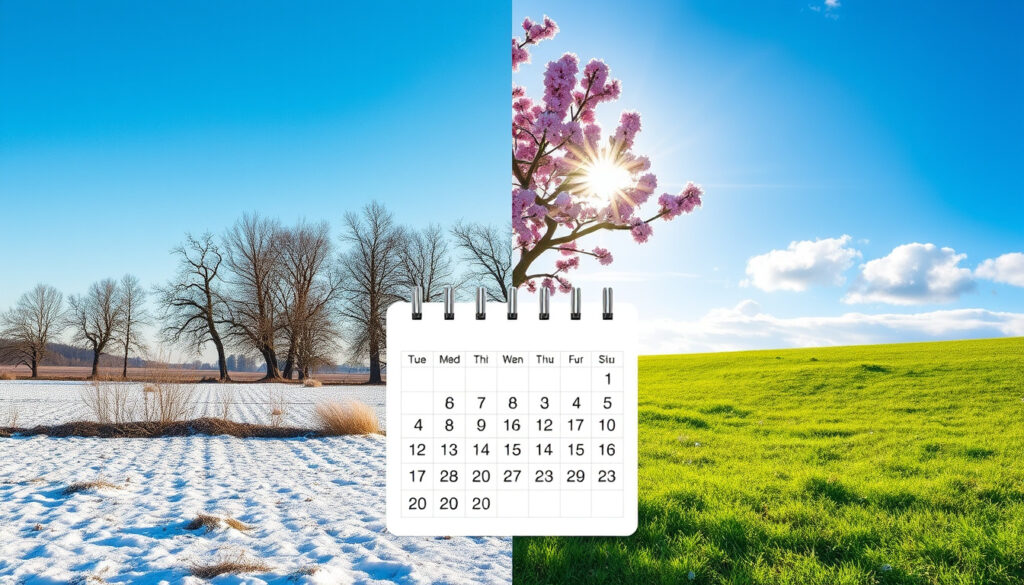
When Does Winter End? Astronomical & Meteorological Dates
The end of winter is not a single date—it depends on whether you measure by temperature, astronomy, or tradition. For Ireland, meteorological winter wraps up on 28 February 2026, while the astronomical version lingers until the March equinox around 20 March.
Astronomical winter ends March 19 or 20 (day before vernal equinox) ·
Meteorological winter ends February 28 (or 29 in leap year) ·
Gaelic winter ends February 1 ·
Ireland’s coldest month January ·
Darkest mornings occur Around winter solstice (late December)
Quick snapshot
- Astronomical winter ends 19 or 20 March (timeanddate.com – astronomy reference)
- Meteorological winter ends 28 February (Met Éireann – Irish weather service)
- Gaelic winter ends 1 February (Wikipedia – Irish calendar description)
- Whether Ireland will get snow in 2026 – depends on short-term weather patterns (Met Éireann – climate data)
- Key transition dates: 1 Nov (Gaelic start), 1 Dec (meteorological start), 21 Dec (solstice), 1 Feb (Gaelic end), 28 Feb (meteorological end), 20 Mar (astronomical end)
- After winter ends: spring begins – meteorological spring on 1 March, astronomical spring at the equinox
Six key facts, one pattern: the end of winter isn’t a single date—it depends on whether you measure by temperature, astronomy, or tradition.
| Label | Value |
|---|---|
| Astronomical winter ends | March 19 or 20 (day before vernal equinox) |
| Meteorological winter ends | February 28 (or 29 in leap year) |
| Gaelic winter ends | February 1 |
| Ireland’s coldest month | January |
| Darkest mornings near solstice | Late December |
| Snow in Ireland 2026 | Possible, but uncertain (Met Éireann forecast) |
What is the official end of winter?
Astronomical winter ends at the vernal equinox
- Astronomical winter runs from the winter solstice to the day before the March equinox. In 2026 the equinox falls on 20 March (timeanddate.com – equinox calendar). So winter ends on 19 or 20 March. This system depends on Earth’s 23.5° tilt and position relative to the Sun.
Astronomical boundaries are consistent worldwide but have no direct link to local weather—a fact that often surprises people expecting spring warmth on the equinox itself.
Meteorological winter ends on February 28 or 29
- Meteorological seasons are fixed for climatological consistency: winter = December, January, February. For Ireland, winter ends on 28 February (29 February in leap years) (Met Éireann – meteorological spring announcement).
- Met Éireann uses this framework for all official climate statements and seasonal forecasts.
The implication: the official end of winter depends on the purpose—weather data uses meteorological, astronomy uses astronomical.
How long is winter in Ireland?
Gaelic calendar: winter from November to February 1
- The Irish calendar places winter across November, December and January, with the season beginning at Samhain (1 November) and ending at Imbolc (1 February) (Wikipedia – Irish calendar).
- This traditional system aligns with the Celtic agricultural cycle, making it shorter than both meteorological and astronomical winter.
Meteorological winter in Ireland: December to February
- Met Éireann follows the standard three-month grouping, so winter runs 1 December to 28 February (Met Éireann – seasonal boundaries).
- This is the most commonly referenced length in daily weather forecasts and climate statistics.
When does winter end near Dublin?
- For Dublin and the wider Irish midlands, the end date follows the same rules: meteorological winter ends 28 February, astronomical winter ends 20 March 2026 (timeanddate.com – Dublin sunrise/sunset).
- Local frost and snow risk can persist into early March, meaning the “feel” of winter sometimes lingers past the meteorological end.
Ireland’s maritime climate means the coldest weather often arrives in January, not at the solstice—so winter’s peak chill trails its astronomical start by about a month.
The pattern: Ireland’s winter length varies by definition, but the maritime climate shapes the actual experience of cold and darkness.
Is November classed as winter?
Meteorological classification starts winter on December 1
- Under the meteorological system used by Met Éireann and most European weather agencies, winter begins on 1 December (Met Éireann – season definition). November is always autumn.
Gaelic calendar includes November as the first winter month
- In the traditional Irish calendar, November (Samhain) marks the start of winter. The three winter months are Samhain (November), Nollaig (December) and Eanáir (January).
- This explains why some Irish people colloquially refer to November as winter, even though official definitions disagree.
What this means: depending on the calendar you follow, November can be either autumn or winter—there’s no single right answer.
Which season is most people’s favorite?
Seasonal preferences
- Summer is reported as the happiest season and winter is considered the most romantic, according to sentiment analysis (Erasmus Generation Blog – season personalities).
Winter may be the least popular season for outdoor plans, yet it consistently tops lists for romance. For Irish tourism operators, that duality is an opportunity.
The catch: while summer wins for happiness, winter’s coziness gives it a different kind of appeal, especially in Ireland’s long dark evenings.
What is Ireland’s coldest month?
January is typically the coldest month
- Met Éireann’s climate records show January as the month with the lowest average temperatures. In 2026, the national mean air temperature was 5.31°C, making it the 59th coldest January in 127 years and the coldest since 2021 (Met Éireann – January 2026 climate statement).
The darkest mornings occur near the winter solstice
- Sunrise times are latest around the solstice (21 December), typically after 8:40 a.m. in Dublin (timeanddate.com – Dublin sunrise/sunset).
- By late February, mornings already brighten significantly, a sign winter’s grip is loosening.
Will Ireland get snow in 2026?
- Met Éireann’s forecast for early 2026 indicates “cold and wintry conditions” but cannot confirm specific snow events this far out (Met Éireann – January 2026 statement).
- January 2026 was cool and wet, with most stations recording rainfall above the 1991–2020 average. Snow was not widespread, but localised falls remain possible through February.
The implication: even after meteorological winter ends, the risk of cold and snow lingers into early spring.
Timeline: Winter 2025–2026 in Ireland
- 1 November 2025 – Winter begins in Gaelic calendar (Wikipedia – Irish calendar)
- 1 December 2025 – Meteorological winter starts (Met Éireann – spring announcement)
- 21 December 2025 – Winter solstice (astronomical start) (timeanddate.com – equinox calendar)
- January 2026 – Coldest month; mean temp 5.31°C (Met Éireann – climate statement)
- 1 February 2026 – Gaelic winter ends (Imbolc) (Wikipedia – Irish calendar)
- 28 February 2026 – Meteorological winter ends
- 20 March 2026 – March equinox; astronomical winter ends
The three-week gap between the meteorological and astronomical end dates means that “spring weather” can arrive before the official end of astronomical winter in Ireland.
The pattern: the timelines show a layered picture, with each definition marking winter’s edge differently.
What we know for sure – and what we don’t
Confirmed facts
- Astronomical winter ends on 19 or 20 March each year (timeanddate.com – equinox data)
- Meteorological winter ends on 28 February (29 in leap years) (Met Éireann – spring announcement)
- January is Ireland’s coldest month, with 2026 mean 5.31°C (Met Éireann – climate statement)
What is unclear
- Gaelic winter end (1 February) is based on traditional calendar, not official weather service definition
- Snow in 2026 remains uncertain – dependent on local weather patterns (Met Éireann – forecast)
The catch: while the astronomical and meteorological dates are fixed, the Gaelic calendar adds a cultural layer that doesn’t align with weather data.
Perspectives from meteorologists and cultural observers
“Astronomical winter ends the day before the vernal equinox. That’s the moment when the Sun crosses the celestial equator heading north.”
– Farmer’s Almanac (editorial astronomical reference)
“Meteorological winter runs from 1 December to 28 February. This system is used for climate statistics because it lines up with temperature patterns.”
– timeanddate.com (calendar and astronomy editors)
“In the Gaelic calendar, winter begins at Samhain (November) and ends at Imbolc (February 1). It’s a shorter, agricultural winter.”
– Wilderness Ireland (outdoor travel expert)
“January 2026 was cool and wet. Our forecast for early 2026 indicates cold and wintry conditions at times.”
– Met Éireann (Irish national weather service)
For Ireland, the practical consequence is clear: Meteorological winter ends on 28 February, and that’s the date most official communications use. But if you follow the Gaelic tradition, spring begins on 1 February. For anyone planning outdoor activities in early March, the three-week difference between the meteorological and astronomical end means you could still see wintry conditions halfway through spring by one definition. The takeaway for residents and visitors: trust the short-term forecast over the calendar to gauge winter’s end.
For a detailed breakdown of how Irish calendars define the season’s close, see winter end dates in Ireland.
Frequently asked questions
When does winter end in 2026?
Meteorological winter ends 28 February 2026. Astronomical winter ends 20 March 2026 (the March equinox). Gaelic winter ends 1 February 2026.
What is the difference between astronomical and meteorological winter?
Astronomical winter is based on Earth’s tilt and orbital position, starting at the solstice and ending at the equinox. Meteorological winter uses fixed 3-month periods for climate consistency – December, January, February.
Does winter start on December 1?
Meteorologically, yes. Astronomically, winter starts around 21 December (solstice). In the Gaelic calendar, it starts 1 November.
How long is winter in Ireland compared to other countries?
At about 3 months (meteorological) or 3–4 months (astronomical, Gaelic), Ireland’s winter length is typical for mid-latitude Northern Europe. The main difference is the relatively mild maritime temperatures compared to continental climates.
What is the winter solstice?
The winter solstice is the shortest day and longest night of the year, occurring around 21 December in the Northern Hemisphere. It marks the astronomical start of winter.
When does spring start?
Meteorological spring starts 1 March. Astronomical spring starts at the vernal equinox, around 20 March. Gaelic spring starts 1 February (Imbolc).
Why does the Gaelic calendar place winter start in November?
The Gaelic calendar is based on the Celtic agricultural cycle, where winter begins at Samhain (1 November) after the harvest ends, and ends at Imbolc (1 February) when lambing begins.
Related reading
More related posts
 Maggie Baugh Keith Urban: Dating Rumors and Tour Split
 Warriors v Dolphins NRL Auckland Clash: Score, Tickets, Teams
 First 20 Elements of the Periodic Table – List, Symbols, Properties
 Ms Rachel Toys in New Zealand: Where to Buy, Prices & More
 Old Fashioned Tomato Relish Recipe NZ: Authentic Guide
 What Does a Heart Attack Feel Like – Symptoms in Men and Women
 How to Grill Vegetables: Tips for Perfect Char & Healthy Results
 Death Notices Timaru Herald – Recent Obituaries Online