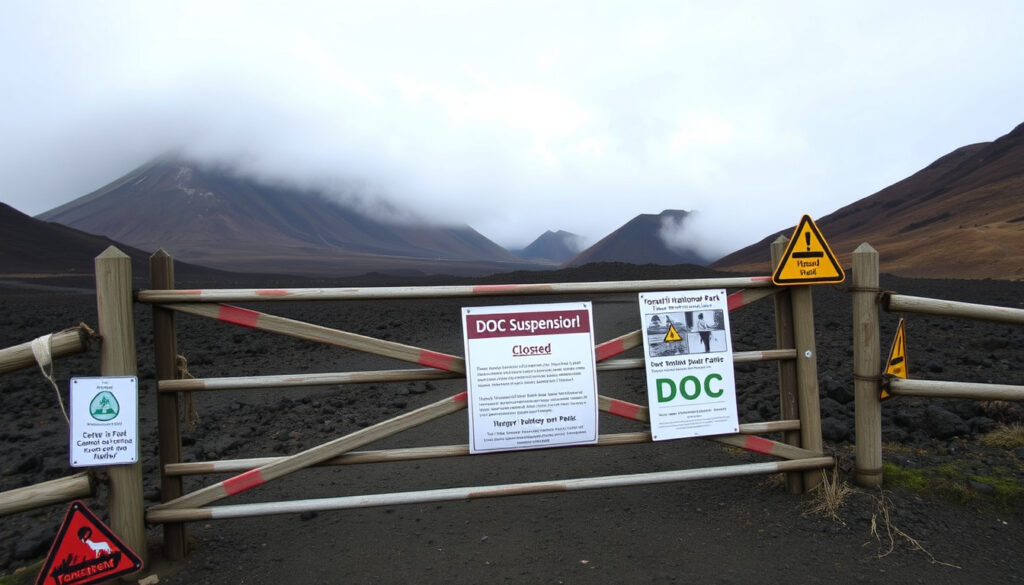
Tongariro Expeditions Safety Breach – DOC Suspension and Key Facts
The Department of Conservation has suspended Tongariro Expeditions from operating shuttle services on the Tongariro Alpine Crossing for two weeks after the company transported more than 100 hikers on February 7, 2026, despite an active Hazardous Weather Warning. The breach marks the first time a transport operator has faced such enforcement action on one of New Zealand’s most popular tramping tracks.
The suspension follows a pattern of similar violations by the company, which was formally warned in 2025 after another weather-related incident. DOC officials say the operator’s actions placed lives at risk and undermined the safety framework that other concession holders follow faithfully.
The two-week prohibition, running from March 9 through March 22, 2026, applies exclusively to Tongariro Expeditions. Competing shuttle operators continued normal services during the same period, according to DOC records.
What Happened: Key Facts of the Breach
Critical Takeaways from the Incident
- Transport services continued despite NIWA forecasts predicting high winds, low temperatures, heavy rain, and snow at the crossing.
- Competitors reported the violation to DOC, with at least two rival operators filing formal complaints during the Waitangi Day weekend period.
- Rival companies allege Tongariro Expeditions deployed up to 12 buses, carrying hundreds of hikers to the track start point.
- All concession holders must halt services when hazardous weather advisories are in effect, under their operating agreements with DOC.
- Repeated non-compliance can result in permanent revocation of concession rights.
- The suspension is the first-ever enforcement action of this kind against a Tongariro Alpine Crossing transport operator.
- Other shuttle operators remained fully operational throughout the suspension period.
Facts at a Glance
| Fact | Details | Source |
|---|---|---|
| Breach date | February 7, 2026 | DOC media release |
| Hazardous Weather Warning | Issued by NIWA; active during incident | Wilderness Magazine |
| Hikers affected | More than 100 hikers transported | DOC media release |
| Prior warning | Similar violation in 2025 | NewstalkZB |
| Penalty imposed | Two-week suspension (March 9–22, 2026) | DOC media release |
| Complaints filed by | At least two rival operators | NZ Herald |
| Company response | Declined to comment | NewstalkZB |
| Regulatory official | Libby O’Brien, DOC Operations Manager | Taupo News |
How the Rules Work: DOC Concession Requirements
Transport operators running services to the Tongariro Alpine Crossing must hold concessions granted by the Department of Conservation. These agreements include mandatory safety protocols that operators must follow when hazardous weather conditions are forecast.
Weather Advisory Triggers
NIWA issues Hazardous Weather Warnings based on meteorological assessments. When such warnings are active, concession holders are required to suspend their transport services entirely. This means no buses, shuttles, or other vehicles may transport hikers to the track start points within Tongariro National Park.
The requirement exists because the 20-kilometre Tongariro Alpine Crossing presents serious dangers during adverse weather. Exposed ridgelines, sudden temperature drops, and limited shelter make hikers vulnerable to hypothermia, disorientation, and falls. DOC has consistently emphasized that weather advisories protect visitors from potentially life-threatening situations.
Operators who fail to comply with weather-related cessation requirements face enforcement action under their concession agreements. Repeated violations can result in permanent revocation of operating rights within the park.
The Complaint Process
When an operator suspects a competitor of violating concession rules, they can report the matter directly to DOC. In this case, rival companies documented the February 7 operations and submitted formal complaints. DOC subsequently investigated the reports alongside its own monitoring of operator compliance.
The Company’s Track Record
Tongariro Expeditions had previously been warned about similar conduct in 2025, according to DOC records. At that time, the company was issued a formal reprimand via email, with officials explicitly threatening concession removal for any future violations. For those interested in the broader context of employment within New Zealand’s conservation and outdoor recreation sectors, industry reports indicate steady growth in tourism-related positions across the country.
Despite this warning, the February 2026 incident occurred. DOC’s investigation examined both the specific breach and the company’s broader pattern of behaviour. Investigators confirmed that Tongariro Expeditions was the sole operator found to have violated the weather cessation requirements on that date.
Company Silence
When contacted by journalists from NewstalkZB, Tongariro Expeditions declined to provide any comment on the suspension or the circumstances surrounding the breach. This response contrasts with DOC’s public statements outlining the rationale for enforcement action.
Official Response from Regulators
DOC Operations Manager Libby O’Brien spoke publicly about the suspension, emphasizing several key points. She stated that safety must always take priority over commercial considerations and that the actions of non-compliant operators unfairly disadvantage those who follow the rules.
O’Brien also stressed that cessation of services during hazardous weather is not optional for concession holders. The requirement exists because DOC has a responsibility to protect both visitors and the integrity of the park’s management framework.
The two-week suspension was designed to be substantial enough to deter future breaches while avoiding undue harm to the company’s long-term viability. DOC officials determined this balance appropriate given the circumstances and the company’s prior warning.
Timeline of Events
The following sequence outlines the key developments from the initial warning through the implementation of the suspension period.
- 2025 (date unspecified): Tongariro Expeditions commits a similar weather advisory violation and receives a formal warning from DOC.
- December 2025: DOC sends an email to all operators reminding them of weather cessation requirements after observing buses loading hikers despite active advisories.
- February 7, 2026: Tongariro Expeditions operates up to 12 buses, transporting hundreds of hikers during an active NIWA Hazardous Weather Warning.
- Waitangi Day weekend (2026): At least two competing operators file formal complaints with DOC regarding the February 7 operations.
- March 3, 2026: DOC issues a media release announcing the two-week suspension effective March 9.
- March 9, 2026: Suspension period begins; Tongariro Expeditions halts all operations within Tongariro National Park.
- March 22, 2026: Suspension period ends; company may resume operations unless further action is taken.
What We Know and What Remains Unclear
| Verified Information | Unconfirmed or Unknown |
|---|---|
| Breach occurred on February 7, 2026 | Exact date of the 2025 prior violation |
| NIWA Hazardous Weather Warning was active | Specific weather conditions during the incident |
| More than 100 hikers were transported | Whether any hikers required rescue or medical attention |
| Tongariro Expeditions operated up to 12 buses | Company’s reasoning for continuing operations |
| DOC issued formal warning in 2025 | Whether additional operators were involved in the 2025 incident |
| Two-week suspension from March 9–22, 2026 | Plans for ongoing monitoring of the operator |
| Company declined to comment | Whether WorkSafe New Zealand conducted any parallel investigation |
Why This Matters for Hikers
The Tongariro Alpine Crossing attracts thousands of visitors each year, many of whom rely on shuttle services to reach the track start point. The track crosses volcanic terrain including the famous Red Crater and passes through environments where weather conditions can change rapidly without warning.
When operators ignore hazardous weather advisories, they potentially expose hikers to conditions beyond their experience or equipment level. DOC advisories exist to ensure visitors understand the risks before attempting the crossing in challenging weather. When operators ignore hazardous weather advisories, they potentially expose hikers to conditions beyond their experience or equipment level, as highlighted by the recent Tongariro Expeditions incident which you can read more about here: Westpac Bonus Saver interest rate.
The actions of Tongariro Expeditions drew criticism from competitors who noted that compliant operators lose business when others continue running during advisories. This dynamic creates pressure on responsible companies while rewarding rule-breaking behaviour, a situation DOC sought to address through enforcement action.
Sources and Official Statements
Safety must always come first. The actions of one operator who fails to follow the rules puts lives at risk and is unfair to those operators who do the right thing.
— Libby O’Brien, DOC Operations Manager, March 2026 media release
Primary sources for this report include the official DOC media release announcing the suspension, reporting by Wilderness Magazine, and coverage from NewstalkZB and the NZ Herald. Additional context was drawn from Taupo News coverage.
The company did not respond to requests for comment. Available sources contain no mention of investigations by WorkSafe New Zealand or additional regulatory bodies.
Summary and Current Status
Tongariro Expeditions received a two-week suspension from DOC beginning March 9, 2026, after transporting hikers during an active Hazardous Weather Warning on February 7. The breach followed a similar incident in 2025 and marks the first enforcement action of its kind against a Tongariro Alpine Crossing transport operator. The company declined to comment, while DOC officials emphasized that safety requirements are mandatory for all concession holders. For those planning hikes on the crossing, checking current weather advisories and track conditions before commencing the track remains essential.
For related information on employment in the outdoor recreation sector, see our guide to Sport & Recreation Jobs – No College Degree Needed.
Frequently Asked Questions
Is Tongariro Expeditions still operating after March 22, 2026?
The suspension period ended on March 22, 2026. According to available sources, no further penalties or extensions had been announced as of early March 2026, meaning the company was permitted to resume operations unless DOC issued additional enforcement measures.
Were any hikers injured during the February 7 incident?
Available sources do not report any specific rescues, injuries, or medical emergencies directly attributed to the February 7 breach. DOC’s statements focused on the regulatory violation rather than outcomes for individual hikers.
How can hikers check weather conditions before attempting the crossing?
Hikers should consult NIWA weather forecasts and DOC advisory notices before planning their trip. Current track conditions and safety alerts are available through the DOC Tongariro National Park page.
Has this happened before with other operators?
DOC warned all operators in December 2025 after observing buses loading hikers despite advisories. However, the February 7 incident involving Tongariro Expeditions was the only confirmed violation investigated by DOC during this period.
What should I do if my shuttle operator ignores weather warnings?
Hikers who witness operators running during active advisories can report concerns directly to DOC. Safety should remain the priority, and visitors should feel empowered to make their own decisions about whether conditions are appropriate for their experience level.
Are there other transport options for the Tongariro Alpine Crossing?
Yes, multiple shuttle operators hold concessions for the crossing. These operators continued normal services throughout the suspension period affecting Tongariro Expeditions. Visitors can choose from several providers when booking transport.
What happens if operators breach the rules again?
Concession agreements allow DOC to escalate penalties for repeated violations. This can include extended suspensions or permanent revocation of operating rights within Tongariro National Park.
More related posts
 Taylor Swift New Album – Release Date and Tracklist
 Black Leather School Shoes NZ – Complete Buying Guide
 Best Business Phone Plans NZ 2025: Compare One NZ, Spark, 2degrees
 Adidas Ultraboost NZ 2025: Price, Models & Where to Buy
 ANZ Bank House Price Forecast 2026: 2% Growth Predicted
 Auckland to Napier Flights: Schedules & Prices
 What Is My Car Worth? Free Valuation Guide for Ireland
 Pizza Hut Te Awamutu: Menu, Deals, and Phone Number